MoSPI develops framework to measure knowledge economy's GDP contribution
Synopsis
India has no standard way to count how much knowledge — from software to traditional wisdom — adds to its GDP. MoSPI is now building that yardstick from scratch, with a four-chapter base paper, a Technical Advisory Group, and a public consultation deadline of 15 June 2026. It is a quiet but consequential move that could reshape how India values its intangible assets in national accounts.
Key Takeaways
MoSPI is developing a framework to measure the contribution of knowledge and knowledge products to the Indian economy.
A Technical Advisory Group (TAG) was constituted on the recommendation of Prof.
Ajay Kumar Sood , Principal Scientific Adviser to the government.
A brainstorming workshop in September 2025 produced a taxonomy of knowledge products and identified GDP -linked indicators.
The base paper covers four chapters , including a dedicated section on India's traditional knowledge .
Stakeholders and the public can submit feedback to MoSPI by 15 June 2026 .
The Ministry of Statistics & Programme Implementation (MoSPI) is developing a first-of-its-kind framework to measure the contribution of knowledge and knowledge products to the Indian economy, according to an official statement released on Saturday, 16 May 2026. The initiative addresses the growing centrality of knowledge in economic activity and aims to help policymakers capture rapidly evolving dynamics in a data-driven manner.
Why This Framework Is Needed
Rapid technological change and increasingly complex skill demands have made it essential to quantify how knowledge drives economic output, the ministry noted. In the absence of any comparable global precedent, MoSPI describes the exercise as a novel initiative — one that requires the active involvement of domain experts and a wide range of stakeholders to succeed.
How the Framework Was Developed
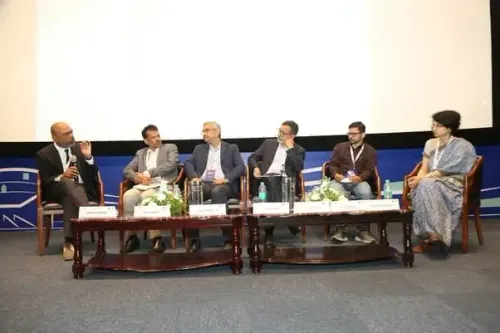
The process began with a meeting chaired by Prof. Ajay Kumar Sood, Principal Scientific Adviser to the Government of India, whose recommendations led to the constitution of a Technical Advisory Group (TAG). A brainstorming workshop held in September 2025 subsequently helped develop a taxonomy of knowledge products and identify quantitative indicators and data sources to measure their contribution to GDP.
Drawing on the TAG's inputs, workshop outcomes, and follow-up discussions, the ministry has prepared a base paper on the framework. The document spans four chapters: conceptual considerations on knowledge and the knowledge economy; available methodologies and quantitative measures; India's traditional knowledge and its dimensions and challenges; and a framework primer on valuing knowledge's contribution to the economy.
What the Base Paper Covers
Notably, the inclusion of a dedicated chapter on India's traditional knowledge signals an intent to account for indigenous intellectual assets — an area often overlooked in standard national accounts. This positions the framework as broader in scope than conventional intangible-asset accounting used by economies such as the United States or members of the European Union.
The four-chapter structure reflects the complexity of the task: moving from philosophical definitions of 'knowledge' to measurable, GDP-compatible indicators is a methodological challenge that even advanced statistical agencies have not fully resolved.
Public Consultation and Next Steps
MoSPI has invited comments and suggestions on the base paper from all stakeholders and the general public as part of its formal consultation process. Feedback must be submitted to the ministry by 15 June 2026, after which the framework is expected to be finalised at the earliest. The ministry said timely responses would enable early conclusion of the process.
With the consultation window now open, the outcome will likely shape how India accounts for intangible assets and knowledge-intensive sectors in its national statistics going forward.
Point of View
Services transacted. India's attempt to formally measure knowledge's contribution to GDP is overdue, but the real challenge lies in methodology: knowledge is non-rival, often non-priced, and notoriously hard to attribute. The inclusion of traditional knowledge in the framework is ambitious and politically resonant, but operationalising it without double-counting or subjective valuation will test the TAG's rigour. The June 2026 consultation deadline is tight for a framework with no comparable global template. If MoSPI moves too fast, it risks producing a number that looks authoritative but lacks statistical defensibility — the opposite of what India's credibility in international data forums requires.
NationPress
14 Oct 2026
Frequently Asked Questions
What is the MoSPI knowledge economy framework?
It is a first-of-its-kind statistical framework being developed by the Ministry of Statistics & Programme Implementation to measure how knowledge and knowledge products contribute to India's GDP. The framework is based on inputs from a Technical Advisory Group and a September 2025 brainstorming workshop.
Why does India need a framework to measure knowledge's contribution to GDP?
Rapid technological change and complex skill demands have made it increasingly important to quantify knowledge-driven economic activity. Currently, standard national accounts do not fully capture intangible assets such as software, research, or traditional knowledge, leaving a significant portion of economic value unmeasured.
What does the MoSPI base paper on knowledge economy cover?
The base paper spans four chapters: conceptual considerations on knowledge and the knowledge economy; available methodologies and quantitative measures; India's traditional knowledge and its dimensions and challenges; and a framework primer on valuing knowledge's contribution to the economy.
Who can submit feedback on the MoSPI knowledge framework, and by when?
All stakeholders and members of the general public are invited to submit comments and suggestions to MoSPI by 15 June 2026. Timely feedback will help the ministry finalise the framework at the earliest.
What role did Prof. Ajay Kumar Sood play in this initiative?
Prof. Ajay Kumar Sood, the Principal Scientific Adviser to the Government of India, chaired the meeting whose recommendations led to the constitution of the Technical Advisory Group (TAG) that has been guiding the development of the framework.