Will the MP Cabinet's 50% rebate boost Gwalior Trade Fair?
Synopsis
Union Minister Jyotiraditya Scindia praises MP CM Mohan Yadav's approval of a 50% motor vehicle tax rebate at Gwalior Trade Fair-2026, aiming to invigorate local trade and generate significant revenue for the state. This initiative marks a historic moment for Gwalior-Chambal, enhancing its economic landscape.
Key Takeaways
50% rebate on motor vehicle tax for Gwalior Trade Fair-2026.
Boosts local trade in Gwalior-Chambal region.
Initiated by the late Madhavrao Scindia in 1905.
Expected to generate Rs 1,000 crore in investments.
Approximately 8,000 jobs to be created over five years.
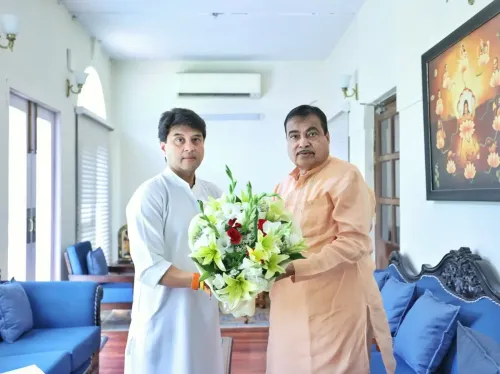
Bhopal, Jan 13 (NationPress) Union Minister for Communications, Jyotiraditya Scindia, expressed his appreciation to Madhya Pradesh Chief Minister Mohan Yadav for the Cabinet's decision to implement a 50 percent rebate on motor vehicle tax for automobile sales at the Gwalior Trade Fair-2026, approved on Tuesday.
Following the Cabinet's endorsement of the proposal, Union Minister Scindia remarked that this initiative will provide a significant boost to trade in the Gwalior-Chambal area and deliver direct advantages to the public.
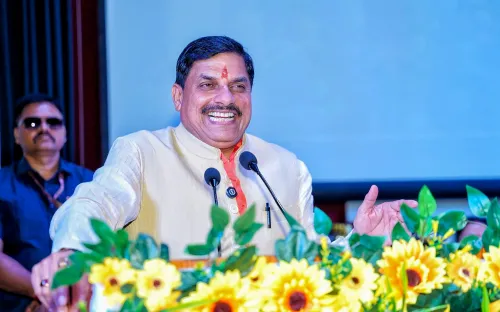
“The Madhya Pradesh Cabinet's decision to waive road tax on automobiles showcased at the globally recognized Gwalior Trade Fair is truly admirable. My heartfelt thanks to Chief Minister Mohan Yadav for his foresighted choice,” he noted on the social media platform X.
While highlighting the historical significance of the Gwalior Trade Fair, he mentioned that it was initiated by his father and former Union Minister, the late Madhavrao Scindia, in 1905, aiming to create a platform for local businesses.
“Today, it stands as one of Asia's largest and most esteemed trade fairs, cementing the economic, industrial, and cultural identity of the Gwalior-Chambal region,” he stated.
In a correspondence to Chief Minister Yadav on January 3, Union Minister Scindia had urged for a rebate on motor vehicle tax for automobile sales, stating that this decision would not only boost vehicle sales but also generate substantial revenue for the Madhya Pradesh government in a short time frame.
The Cabinet, led by Chief Minister Yadav, approved several key initiatives on Tuesday, including the 50 percent rebate in motor vehicle tax for automobile sales at both the Gwalior Trade Fair and the Ujjain Vikramotsav Trade Fair for this year.
Additional significant decisions included the Madhya Pradesh Space Act, 2026, and the Madhya Pradesh Tech Policy, 2026.
This groundbreaking policy is designed to stimulate innovation in satelite manufacturing, geospatial analysis, and downstream applications. It is anticipated to draw in Rs 1,000 crore in investments and create approximately 8,000 jobs over the next five years.
Point of View
The Madhya Pradesh Cabinet's decision to provide a 50% rebate on motor vehicle tax at the Gwalior Trade Fair is a strategic move aimed at revitalizing local commerce. This decision not only reflects the government's commitment to supporting regional businesses but also underscores the importance of trade fairs as a catalyst for economic growth. The historical significance of the Gwalior Trade Fair adds further weight to this initiative, marking a pivotal moment for the Gwalior-Chambal region.
NationPress
26 Sept 2026
Frequently Asked Questions
What is the purpose of the 50% rebate?
The rebate aims to boost automobile sales at the Gwalior Trade Fair-2026 and provide significant benefits to local traders.
Who initiated the Gwalior Trade Fair?
The Gwalior Trade Fair was initiated by former Union Minister Madhavrao Scindia in 1905.
What other decisions were made by the Madhya Pradesh Cabinet?
The Cabinet also approved the Madhya Pradesh Space Act, 2026, and the Madhya Pradesh Tech Policy, 2026, aimed at fostering innovation and job creation.