Is the Mumbai-Ahmedabad Bullet Train Making Steady Progress?
Synopsis
The Mumbai-Ahmedabad Bullet Train project is progressing steadily, with the installation of Overhead Electrification masts underway. This initiative not only marks a significant step in high-speed rail technology but is also poised to enhance connectivity and stimulate economic growth in the region.
Key Takeaways
OHE masts installation is in progress.
Over 20,000 masts to be deployed along the corridor.
Enhances electric traction for the Bullet Train.
Significantly expedites travel between Mumbai and Ahmedabad .
Supports job creation and local economies.
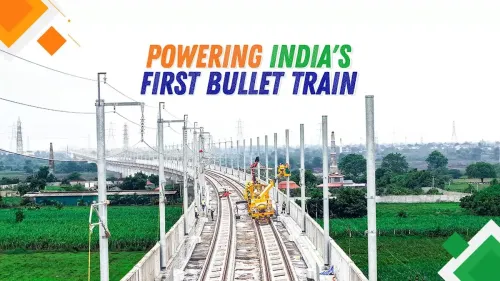
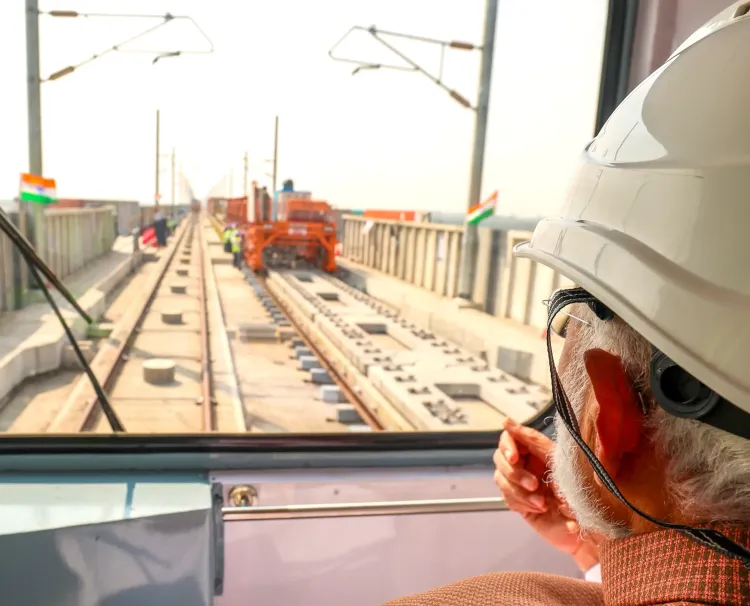
New Delhi, Jan 19 (NationPress) The Railways Minister, Ashwini Vaishnaw, announced on Monday that the Mumbai-Ahmedabad Bullet Train initiative is making significant strides, particularly with the ongoing installation of Overhead Electrification (OHE) masts along the route.
This development is a crucial milestone in facilitating electric traction for India's inaugural high-speed rail system and showcases the effective on-ground implementation of the 'Make in India' program.
It bolsters the nation's manufacturing capabilities while integrating globally recognized high-speed rail technology, the minister added.
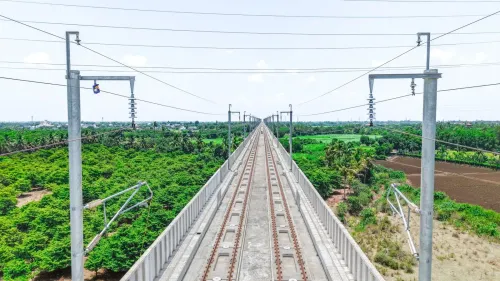
Vaishnaw elaborated that the OHE masts are being erected across vital segments of the alignment, including viaduct sections, to ensure safe, seamless, and efficient operations for high-speed trains.
These masts are essential components of the traction infrastructure needed to deliver a dependable power supply for bullet trains traversing this corridor.
The OHE masts will be positioned on elevated viaducts at significant heights above ground. In total, more than 20,000 masts, measuring between 9.5 to 14.5 meters, will be deployed along the route.
These structures will support the complete 2×25 kV overhead traction power system, which includes overhead wires, earthing systems, fittings, and other necessary components for bullet train operations.
To guarantee continuous traction power, a network of Traction Substations (TSS) and Distribution Substations (DSS) is being established throughout the Mumbai–Ahmedabad High Speed Rail corridor.
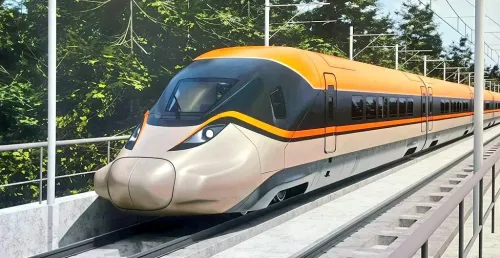
Upon completion, the Mumbai–Ahmedabad Bullet Train will significantly expedite travel between these two cities, enhancing connectivity along the corridor.
The minister indicated that this project will provide advantages to passengers, local economies, and Indian industries through job creation and reinforced manufacturing.
This initiative also signifies a pivotal move towards adopting advanced rail technologies and developing world-class railway infrastructure within the country.
Point of View
It is crucial to recognize the significance of the Mumbai-Ahmedabad Bullet Train project in shaping India's rail infrastructure. This initiative not only reflects the government's commitment to modernizing transportation but also highlights the importance of domestic manufacturing and technology transfer. The project's success is pivotal for enhancing regional connectivity and economic development.
NationPress
15 Oct 2026
Frequently Asked Questions
What is the current status of the Mumbai-Ahmedabad Bullet Train project?
The project is progressing steadily, particularly with the installation of Overhead Electrification masts along the route.
How many masts will be installed for the Bullet Train?
Over 20,000 Overhead Electrification masts will be installed, ranging from 9.5 to 14.5 meters in height.
What is the significance of the Overhead Electrification masts?
These masts are critical for providing a reliable power supply to support the high-speed train operations on the corridor.
What are the expected benefits of the Bullet Train project?
The project is anticipated to enhance travel speed, improve connectivity, create jobs, and bolster local economies.
Is the project aligned with any government initiatives?
Yes, it reflects the objectives of the 'Make in India' initiative, promoting domestic manufacturing and technology adoption.