NIDAR 2.0 launched: MeitY targets India's next drone innovators with VEGA chip focus
Synopsis
India's drone ambitions just moved from the cockpit to the chip. NIDAR 2.0 challenges students to build drone intelligence on the homegrown VEGA processor — a direct bet that the next frontier of indigenisation isn't the airframe, it's the silicon inside it.
Key Takeaways
MeitY and Drone Federation India launched NIDAR 2.0 on 13 July 2026 at Electronics Niketan, New Delhi.
The programme is part of the SwaYaan initiative and focuses on autonomous systems , indigenous avionics , and core drone components.
A key highlight is integration of India's VEGA processor , developed under the Digital India RISC-V (DIR-V) programme.
NIDAR 1.0 (launched March 2025 ) drew 3,448 students from 22 states and 109 cities ; 24 teams won prizes worth ₹40 lakh .
NIDAR 2.0 introduces two competition tracks , expanding scope beyond conventional drone platforms.
The Ministry of Electronics and Information Technology (MeitY), in partnership with the Drone Federation India (DFI), on Monday, 13 July 2026, launched NIDAR 2.0 — the second edition of the National Innovation Challenge for Drone Application and Research — under the SwaYaan initiative. The programme aims to advance indigenous drone technologies and autonomous systems among Indian students and researchers.
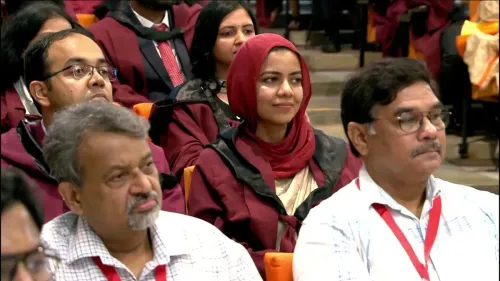
The launch event was held at Electronics Niketan, New Delhi, in a hybrid format, drawing students, faculty, government officials, and industry leaders from across the country.
What NIDAR 2.0 Introduces
MeitY Secretary S. Krishnan formally unveiled the problem statements, poster, and rulebook for the new edition. He underscored a fundamental shift in the programme's ambition — moving beyond drone operation toward building the core intelligence that powers autonomous systems.
'NIDAR 2.0 takes our students from just flying drones to building the drone's brain. When the drone's brain runs on India's own VEGA processor, we are not just training engineers. We are laying the foundation of a self-reliant drone industry,' Krishnan said.
The VEGA processor has been developed under the Digital India RISC-V (DIR-V) programme, a MeitY initiative designed to reduce India's dependence on foreign chip architectures and the licensing costs associated with them.
Key Officials and Participants
The launch also featured addresses by Amitesh Kumar Sinha, Additional Secretary, MeitY and CEO of the India Semiconductor Mission; Tulika Pandey, Scientist G and Group Coordinator at MeitY; and Smit Shah, President of the Drone Federation India. Senior officials from the Ministries of Civil Aviation, Defence, and Home Affairs, the Directorate General of Civil Aviation (DGCA), the armed forces, academia, and industry also participated.
Building on NIDAR 1.0's Success
The inaugural edition, launched in March 2025, attracted 3,448 students from 22 states, 4 Union Territories, and 109 cities. Participants developed autonomous drone solutions for disaster management and precision agriculture. A total of 93 teams reached the grand finale, with 24 teams winning prizes collectively worth ₹40 lakh.
Two New Competition Tracks
NIDAR 2.0 significantly broadens the challenge's scope, shifting focus from conventional drone platforms to autonomous systems, indigenous avionics, and core drone components. The new edition is structured around two distinct competition tracks, reflecting a deeper push into hardware-level innovation rather than application-layer development alone.
This comes amid India's broader push to build a self-reliant defence and civilian drone ecosystem, with the government targeting indigenisation across chip design, avionics, and airframe manufacturing. How NIDAR 2.0's cohort translates academic innovation into deployable products will be closely watched by both industry and policymakers.
Point of View
And past indigenisation challenges have stalled at exactly that handoff. The real measure of NIDAR 2.0 won't be prize-winning prototypes — it will be whether any of its cohort feeds into actual procurement pipelines for defence or civil aviation. That linkage remains unspecified.
NationPress
12 Oct 2026
Frequently Asked Questions
What is the SwaYaan initiative?
SwaYaan is a MeitY-led initiative aimed at fostering indigenous drone technology development in India. NIDAR is its flagship student innovation competition, now in its second edition for 2026-27.
What is the VEGA processor and why does it matter for drones?
The VEGA processor is an indigenous chip developed under MeitY's Digital India RISC-V (DIR-V) programme, designed to reduce India's reliance on foreign chip architectures and licensing costs. In the context of NIDAR 2.0, it is positioned as the core processing unit for autonomous drone intelligence, marking a shift toward hardware-level indigenisation.
How did the first edition of NIDAR perform?
The inaugural NIDAR edition, launched in March 2025, attracted 3,448 students from 22 states, 4 Union Territories, and 109 cities. A total of 93 teams reached the grand finale, with 24 teams winning prizes worth ₹40 lakh for solutions in disaster management and precision agriculture.
Who participated in the NIDAR 2.0 launch event?
The launch was attended by MeitY Secretary S. Krishnan, Additional Secretary and India Semiconductor Mission CEO Amitesh Kumar Sinha, MeitY Scientist G Tulika Pandey, and DFI President Smit Shah, along with officials from the Ministries of Civil Aviation, Defence, and Home Affairs, the DGCA, the armed forces, academia, and industry.