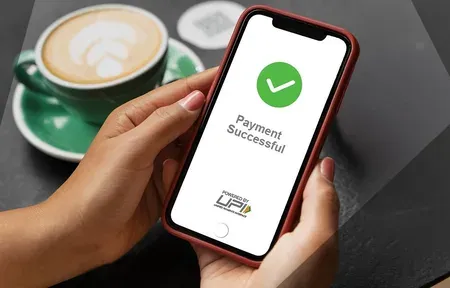
UPI free for users; limited merchant MDR possible above threshold, says govt
Synopsis
The government has moved to calm fears over UPI charges: users pay nothing, and any merchant MDR — if ever introduced — will be narrow, nominal, and far below card rates. With UPI clocking 2,366 crore transactions worth ₹29.9 lakh crore in a single month and live in 11 countries, the real story is whether India can sustain its free-payments miracle without a revenue model that doesn't depend on subsidies forever.
Key Takeaways
UPI will remain free for all consumers; no charges on person-to-person (P2P) transactions.
Any future MDR will cover only a limited set of merchant transactions above a specified threshold, at a nominal rate lower than card MDR.
The provision stems from the Taxation and Other Laws (Amendment) Bill, 2026 — an enabling clause, not an immediate fee order.
NPCI -led 'UPI and Services Steering Committee' will decide on MDR specifics after Parliament passes the Bill.
UPI processed 2,366 crore transactions worth ₹29.9 lakh crore in July 2026 alone and is live in 11 countries .
Government rejected claims of external influence on the policy, calling them 'unfounded and misleading.'
The Finance Ministry on Saturday, 8 August 2026 clarified that Unified Payments Interface (UPI) payments will remain free for consumers, while any future merchant discount rate (MDR) — if introduced — will apply only to a limited set of merchant transactions above a specified threshold and at a nominal rate. The clarification follows mounting public concern over a proposed amendment to the Payment and Settlement Systems Act, 2007.
What the Government Said
The ministry was unequivocal: all person-to-person (P2P) UPI transactions will continue to be free, and there will be no blanket MDR imposed on merchants. 'If introduced, MDR charges will apply only to a limited set of merchant transactions above a certain threshold and at a nominal rate,' the ministry stated.
Crucially, the government added that any such charges would be significantly lower than the MDR currently applicable to debit or credit card transactions — framing the potential levy as a calibrated measure, not a broad tax on digital payments.
The Legislative Trigger
The clarification is a direct response to debate sparked by the Taxation and Other Laws (Amendment) Bill, 2026, which proposes changes to the payments law. Critics had raised concerns that the amendment could open the door to charges on ordinary UPI users — fears the government moved to address by describing the provision as an 'enabling clause' aimed at long-term ecosystem sustainability, not an immediate fee imposition.
Once Parliament passes the Bill, the 'UPI and Services Steering Committee' — headed by the National Payments Corporation of India (NPCI) — will determine whether any MDR is introduced and at what rate, the ministry said.
Why Sustainability Is Now on the Table
UPI processed 2,366 crore transactions worth ₹29.9 lakh crore in July 2026 alone, according to the ministry. That scale demands continuous investment in cybersecurity, fraud prevention, and technology infrastructure — costs that the current subsidy-dependent model may not sustain indefinitely.
The government argued that a viable revenue model is necessary to attract more companies into the UPI ecosystem and reduce reliance on public subsidies. This comes amid growing international footprint: UPI is currently live in 11 foreign countries, with several more having expressed interest in adopting the platform.
Rejecting External Influence Claims
The ministry also pushed back against reports suggesting that foreign or external pressures were driving the proposed policy shift, calling such claims 'unfounded and misleading.' The government framed the amendment as a domestically driven, forward-looking measure to protect the resilience of a payment system that has become critical infrastructure for the Indian economy.
What Happens Next
The Taxation and Other Laws (Amendment) Bill, 2026 must clear Parliament before any MDR framework can be activated. The NPCI-led steering committee will then deliberate on specifics. For now, the government's message is clear: everyday UPI users face no imminent charges, and any future merchant levy will be narrow in scope and modest in size.
Point of View
But who sets it, who collects it, and whether small merchants — already squeezed — end up bearing a disproportionate share of the infrastructure cost.
NationPress
8 Aug 2026
Frequently Asked Questions
Will UPI transactions be charged for regular users?
No. The government has confirmed that UPI will remain completely free for consumers. All person-to-person (P2P) transactions will continue without any charge, and no blanket MDR will be imposed on merchants.
What is MDR and why is it being discussed for UPI?
MDR, or Merchant Discount Rate, is a fee that merchants pay on digital transactions to cover processing costs. It was waived on UPI in 2020 to drive adoption. The government is now exploring a limited, nominal MDR on select large merchant transactions to fund UPI's growing infrastructure needs.
Which transactions could attract MDR under the new amendment?
According to the Finance Ministry, only a limited set of merchant transactions above a specified threshold would attract MDR, if introduced. The rate would be significantly lower than MDR on debit or credit card transactions. No threshold amount has been publicly specified yet.
Who will decide the final MDR rate for UPI?
The 'UPI and Services Steering Committee,' headed by the National Payments Corporation of India (NPCI), will determine whether any MDR is introduced and at what rate — but only after Parliament passes the Taxation and Other Laws (Amendment) Bill, 2026.
Why is the government considering changes to UPI's free model?
UPI processed 2,366 crore transactions worth ₹29.9 lakh crore in July 2026 alone, requiring sustained investment in cybersecurity, fraud prevention, and infrastructure. The government argues that a sustainable revenue model is needed to reduce subsidy dependence and encourage more private players to invest in the ecosystem.