Mahavitaran privatisation ruled out; Bhiwandi franchise cut losses to 10%: Fadnavis
Synopsis
Maharashtra CM Devendra Fadnavis has put privatisation fears to rest — but the real story is Bhiwandi: a distribution circle where AT&C losses collapsed from 41% to 10% and bill recovery hit 98% under a two-decade Torrent Power franchise. It is now being held up as a blueprint, even as demands for replicating it elsewhere run into regulatory walls.
Key Takeaways
Maharashtra CM Devendra Fadnavis confirmed on 30 June that Mahavitaran will not be privatised.
The Bhiwandi Circle franchise under Torrent Power Limited cut AT&C losses from 41% to approximately 10% .
Energy bill recovery in Bhiwandi has reached 98% under the franchise model.
Fadnavis drew a firm distinction between distribution franchises and privatisation of state assets.
Member Rais Shaikh called the 2006–2026 Bhiwandi model a 'role model' and sought special incentives, which Fadnavis declined citing regulatory constraints.
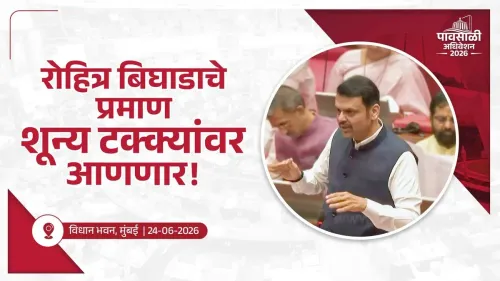
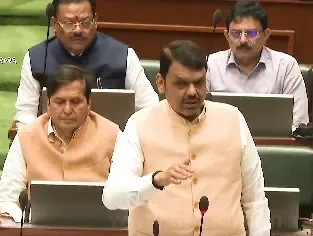
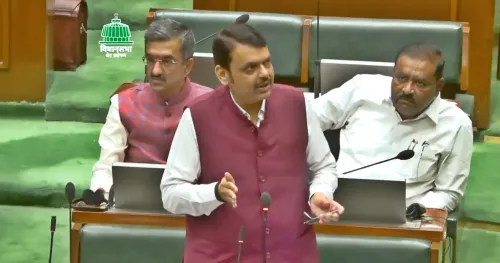
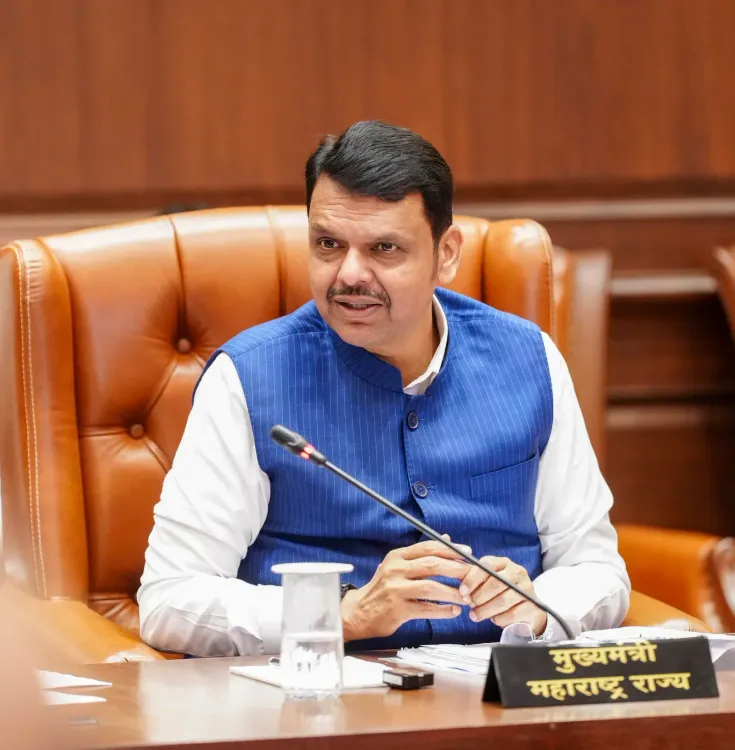
Maharashtra Chief Minister and Energy Minister Devendra Fadnavis on Tuesday, 30 June told the State Assembly that the state government has no intention of privatising Mahavitaran (Maharashtra State Electricity Distribution Company Limited), firmly defending the distribution franchise model as a targeted operational tool rather than an asset sale.
What Fadnavis Said in the Assembly
Responding to a query raised by member Rais Shaikh during the Question Hour, Chief Minister Fadnavis provided a detailed defence of the franchise arrangement, particularly the Bhiwandi Circle managed by Torrent Power Limited. He argued that bringing in private franchisees in high-loss zones is a precision intervention, not a structural privatisation of the public utility.
'Introducing localised distribution franchises to upgrade operational networks and stop revenue leakage does not equate to selling state assets. Mahavitaran continues to be a robust, state-managed enterprise,' Fadnavis asserted in the House.
Bhiwandi Turnaround: The Numbers
The Chief Minister cited the Bhiwandi franchise as a benchmark success. Before Torrent Power took over as distribution franchisee, the circle was burdened by rampant power theft, billing failures, and severe distribution leakage. The aggregate technical and commercial (AT&C) losses stood at as high as 41 per cent.
Under the franchise model, those losses have been brought down to approximately 10 per cent, while energy bill recovery has reached 98 per cent — a near-complete turnaround in collection efficiency. Shaikh himself acknowledged that the Bhiwandi franchise model between 2006 and 2026 has emerged as a role model, placing Bhiwandi at the top compared to Mahavitaran's broader loss profile.
Government's Position on Franchises vs Privatisation
Fadnavis drew a clear distinction between the franchise model and outright privatisation. He said public-private collaborations under franchising agreements are deployed exclusively in high-loss regions to ensure round-the-clock power supply for residents and industrial units, while shielding the state exchequer from sustained financial losses. Mahavitaran's foundational ownership, he stressed, remains with the state.
Shaikh's Demands and the Government's Response
Member Rais Shaikh urged the Chief Minister to consider extending special incentives to Bhiwandi in recognition of its operational achievements, but Fadnavis indicated this would not be feasible given existing regulatory protocols. Shaikh also pitched for a prepaid electricity system modelled on mobile services — where the consumer number stays static and consumers can purchase prepaid units from any service provider. He additionally demanded a waiver of interest charged to consumers, particularly for dues predating the franchise model's implementation. The Chief Minister did not commit to either demand.
What This Means for Maharashtra's Power Sector
The clarification comes amid broader scrutiny of state electricity utilities across India, where distribution losses remain a persistent drag on finances. Maharashtra's use of the franchise route — rather than full privatisation — reflects a middle path that several states have debated but few have sustained at scale. The Bhiwandi data, if independently verified, would represent one of the more credible turnaround cases in Indian power distribution. How far the model can be replicated in other high-loss circles across Maharashtra remains the central question going forward.
Point of View
Citing regulatory protocols, signals the limits of rewarding performance within the current framework. If Maharashtra cannot create a replication pathway for the Bhiwandi model, the turnaround risks remaining an isolated case study rather than a sector-wide reform lever.
NationPress
30 Jun 2026
Frequently Asked Questions
Is Mahavitaran being privatised?
No. Maharashtra Chief Minister Devendra Fadnavis categorically ruled out privatisation of Mahavitaran in the State Assembly on 30 June, clarifying that the state-run utility remains under government ownership.
What is the Bhiwandi distribution franchise model?
The Bhiwandi franchise model involves Torrent Power Limited operating as a distribution franchisee in the Bhiwandi Circle since 2006, handling billing, collection, and network management while Mahavitaran retains asset ownership. The arrangement has cut AT&C losses from 41% to around 10% and pushed bill recovery to 98%.
What is the difference between a distribution franchise and privatisation?
Under a distribution franchise, a private operator manages day-to-day electricity distribution in a defined area, but the underlying infrastructure and the utility itself remain state-owned. Privatisation would mean transferring ownership of the utility or its assets to a private entity — which Fadnavis says is not on the table.
What did MLA Rais Shaikh demand in the Assembly?
Rais Shaikh urged the government to grant special incentives to Bhiwandi for its efficiency gains, introduce a prepaid electricity system similar to mobile services, and waive interest on consumer dues predating the franchise model. The Chief Minister declined the incentive demand citing regulatory constraints and did not commit to the other proposals.
How significant is a 10% AT&C loss figure for Indian power distribution?
An AT&C loss of around 10% is considered among the best in India's power distribution sector, where the national average has historically hovered well above 15–20%. Bhiwandi's reduction from 41% to 10% is cited as one of the more credible turnaround cases in the country's electricity distribution landscape.