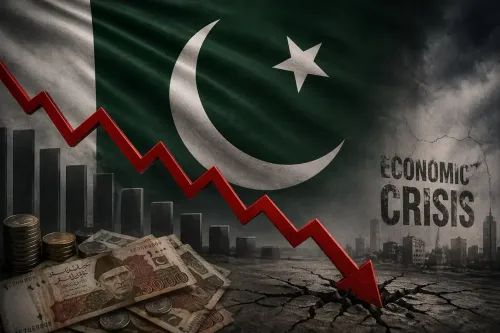
Pakistan macroeconomic strain deepens as global debt hits record highs
Synopsis
As global debt reaches record highs driven by advanced-economy borrowing, Pakistan sits in the crossfire — squeezed by higher oil prices, tightening global liquidity, and soaring refinancing costs. The report lays bare a structural fault line in global finance: large economies borrow freely while smaller ones like Pakistan pay the steepest price when conditions turn.
Key Takeaways
Global debt has surged to record highs , driven largely by sustained borrowing in major advanced economies, according to a Business Recorder report.
Pakistan faces compounded risks from tight external financing, energy import dependence, and persistent inflationary pressures.
Rising global oil prices , linked to geopolitical instability, are expected to push up transport, food, and overall inflation in Pakistan.
Emerging markets like Pakistan face significantly higher refinancing costs and greater capital flow volatility compared to advanced economies.
Pakistan's stabilisation path remains heavily dependent on multilateral support and external financing flows, leaving it exposed to global risk sentiment shifts.
Pakistan is facing renewed macroeconomic pressure as global debt has surged to unprecedented levels, compounding vulnerabilities across emerging economies already contending with tight external financing conditions and volatile commodity markets, according to a report published in Business Recorder.
Global Debt at Record Highs
The report's assessment of global financial conditions shows that overall debt has climbed to historic peaks, driven primarily by sustained borrowing in major advanced economies. While these larger economies continue to absorb substantial debt expansions with relatively limited immediate market disruption, the spillover effects are increasingly being felt in financially weaker, import-dependent nations such as Pakistan.
Why Pakistan Is Especially Vulnerable
Pakistan remains heavily reliant on external financing and is acutely sensitive to fluctuations in global commodity prices. The timing of this global debt surge adds another layer of complexity to an already fragile economic recovery. According to the report, persistent inflationary pressures, energy import dependence, and tightening global liquidity conditions continue to constrain the country's policy flexibility.
Recent increases in global oil prices — driven by geopolitical instability — have further compounded risks for energy-importing economies. Higher fuel costs are expected to feed into transport, food, and overall inflation, placing additional strain on households already enduring a prolonged cost-of-living squeeze.
A Structural Imbalance in Global Finance
The report flagged a widening structural imbalance in the global financial system. Advanced economies can sustain large-scale debt accumulation for extended periods without triggering immediate fiscal stress signals, while smaller emerging markets like Pakistan face significantly higher refinancing costs, tighter external account constraints, and greater exposure to capital flow volatility.
This divergence means that when global financial conditions tighten, it is economies at the periphery — not the centre — that face the sharpest and most rapid adjustment pressures. Notably, this dynamic is not new to Pakistan; the country has navigated multiple balance-of-payments crises over the past two decades, each time leaning heavily on multilateral support to stabilise.
Dependence on Multilateral Support
Pakistan's ongoing stabilisation efforts remain closely tied to external financing flows and multilateral backing, leaving the economy sensitive to shifts in global risk sentiment and commodity cycles. Any deterioration in these conditions risks derailing the fragile recovery path the country has been attempting to chart, according to the report.
As global financial conditions remain tilted in favour of advanced economies, the pressure on Pakistan's external account is unlikely to ease in the near term without a sustained improvement in domestic revenue generation and a reduction in import dependence.
Point of View
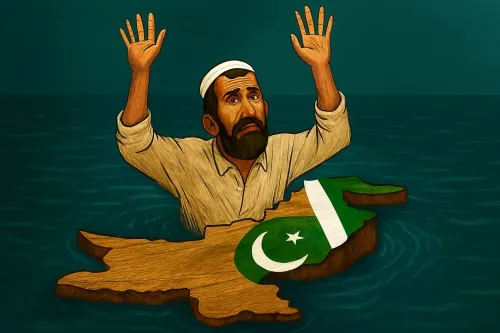
While frontier markets absorb the consequences. Pakistan's vulnerability is not simply a product of domestic mismanagement — though that is a factor — but of a system where the rules of debt sustainability are written by those least exposed to its costs. Until Pakistan meaningfully reduces its import bill and builds a credible domestic revenue base, each global tightening cycle will reset whatever stabilisation progress has been made.
NationPress
7 Oct 2026
Frequently Asked Questions
Why is Pakistan facing renewed macroeconomic pressure in 2025?
Pakistan is facing renewed macroeconomic pressure because global debt has surged to record highs, tightening external financing conditions and raising refinancing costs for emerging economies. Combined with rising global oil prices and persistent domestic inflation, the country's already fragile recovery path is under fresh strain.
How does record global debt affect Pakistan specifically?
Pakistan is heavily reliant on external financing and vulnerable to global commodity price swings. When advanced economies borrow at scale, it tightens global liquidity and raises the cost of capital for emerging markets like Pakistan, making it harder and more expensive to roll over existing debt or attract new investment.
What role do rising oil prices play in Pakistan's economic difficulties?
Pakistan is an energy-importing economy, so higher global oil prices directly inflate its import bill. These costs feed through to transport and food prices, worsening inflation and squeezing household purchasing power at a time when the cost-of-living crisis is already severe.
What is the structural imbalance flagged in the report?
The report highlights that advanced economies can sustain large debt accumulations for extended periods without immediate fiscal stress, while smaller economies like Pakistan face rapid and painful adjustment when global conditions tighten. This divergence reflects an unequal global financial system where the burden of adjustment falls disproportionately on the periphery.
How dependent is Pakistan on multilateral support for economic stability?
Pakistan's stabilisation efforts are closely tied to multilateral financing flows from institutions such as the IMF. This dependence means that any shift in global risk sentiment or a breakdown in multilateral negotiations could quickly destabilise the country's external accounts and recovery trajectory.