Electric trucks key to India's energy shift, says PM Advisor Tarun Kapoor at SIAM 2025
Synopsis
India's Prime Minister's Advisor Tarun Kapoor didn't mince words at SIAM 2025 — incremental change is off the table. With a five-year deadline, a push for domestic battery manufacturing, and a warning about rare-earth supply chain risks, the government is signalling a far more assertive EV and industrial policy is on the way.
Key Takeaways
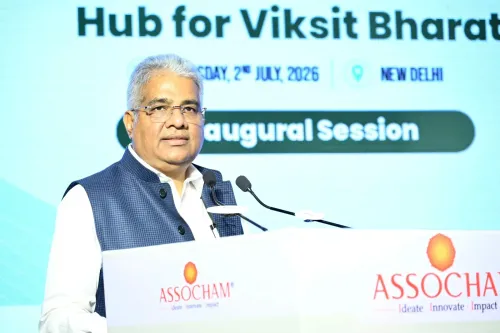
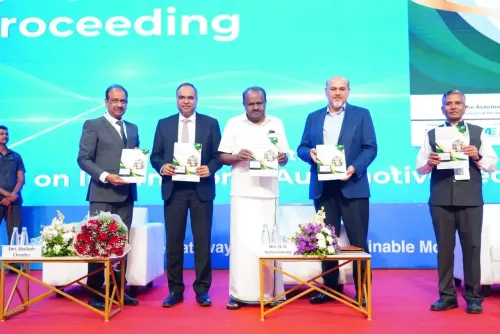
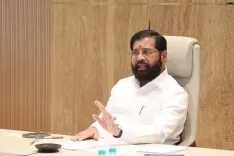
Tarun Kapoor , Advisor to the Prime Minister, spoke at the 66th SIAM Annual Convention in New Delhi on Thursday, 3 September .
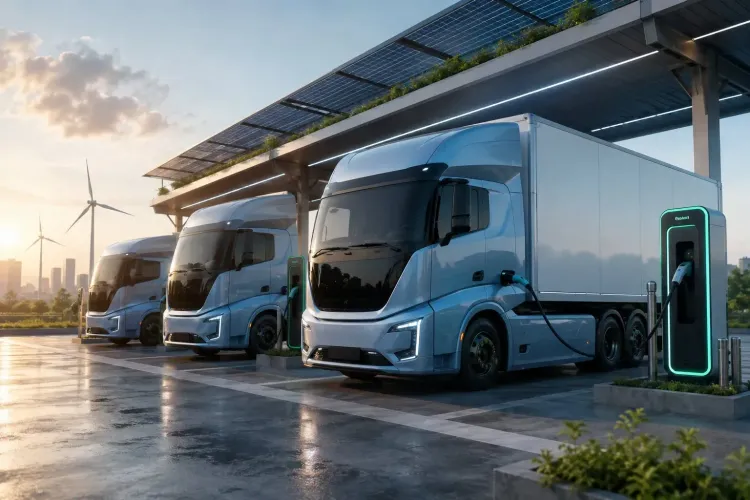
He called for India to promote electric trucks as a core part of its shift to domestically available alternative energy.
Kapoor set a five-year deadline for a major transformation of India's energy and mobility landscape, rejecting incremental approaches.
Domestic battery manufacturing was identified as the key to making electric trucks cost-competitive.
He warned of strategic risks from dependence on concentrated global supply chains, citing disruptions in rare-earth magnet supplies.
Kapoor hinted at significant upcoming government policy announcements, urging the automotive industry to prepare.
Prime Minister's Advisor Tarun Kapoor on Thursday called for a rapid push to promote electric trucks as a central pillar of India's transition to domestically available alternative energy sources, speaking at the 66th SIAM Annual Convention in New Delhi. Kapoor underlined that incremental steps would not suffice and that the country must target a wholesale transformation of its energy and mobility landscape within the next five years.
The Case for Electric Trucks
Kapoor noted that electric trucks are already being manufactured in India, signalling that domestic industrial capability is taking shape. However, he stressed that production must be scaled up significantly to make these vehicles affordable and market-competitive. 'We need to transition to alternative energy sources available in India as quickly as possible. For this, we must promote electric trucks,' he said.
He pointed to domestic battery manufacturing as a critical lever for cost reduction. 'If we add more value — such as manufacturing batteries locally in India — these trucks can potentially be available at a good, competitive price,' Kapoor said, framing local value addition as both an economic and strategic imperative.
A Five-Year Transformation Window
Kapoor set an ambitious benchmark for the industry, calling for a visible and sweeping shift within half a decade. 'If we want to set a timeline for ourselves, then we should see a very major transition in the next 5 years. We want the whole landscape to change, and those incremental changes will not really help us,' he said. The remarks signal that the government is preparing to push policy levers beyond voluntary adoption.
Semiconductors, Supply Chains, and Strategic Risks
Beyond electric mobility, Kapoor broadened his address to cover India's vulnerability in semiconductors and other critical automotive components. He cited recent disruptions in the supply of rare-earth magnets as a warning of the risks that come with heavy dependence on concentrated global supply chains. This comes amid a wider global scramble to secure critical mineral supply lines, with India actively seeking to diversify sourcing through bilateral agreements.
'Please expect some major things to come from our side, and the industry has to be prepared for that,' Kapoor said, hinting at forthcoming policy announcements without specifying their nature.
The Broader Sustainability Drive
Kapoor framed India's push as part of an irreversible global shift. 'The main change which is happening is that everyone is moving towards sustainability, towards energy efficiency, towards electric, towards fuels which are more environment-friendly — and we also have to do that,' he said. The SIAM Annual Convention, one of India's most prominent automotive industry gatherings, provided the backdrop for what amounted to a government call-to-action directed squarely at vehicle manufacturers and component suppliers.
With the Centre signalling major policy moves on the horizon, the automotive sector will be watching closely for concrete measures on EV incentives, battery manufacturing support, and semiconductor localisation in the months ahead.
Point of View
Making their electrification strategically significant in ways that car EVs are not. The rare-earth magnet supply chain warning is the more underreported signal here: India's EV ambitions are currently hostage to Chinese mineral dominance, and without a credible critical-minerals strategy, domestic battery manufacturing remains aspirational. The industry should read 'expect major things from our side' as a precursor to either a production-linked incentive for commercial EVs or a tightened emissions mandate — both of which will demand capital allocation decisions now, not in year four of the five-year window.
NationPress
19 Oct 2026
Frequently Asked Questions
What did PM Advisor Tarun Kapoor say about electric trucks at SIAM 2025?
Tarun Kapoor called on India to actively promote electric trucks as a key part of its shift to domestically available alternative energy, speaking at the 66th SIAM Annual Convention in New Delhi on 3 September. He said the country must target a major transformation of its mobility and energy landscape within the next five years, warning that incremental changes would not be sufficient.
Why is domestic battery manufacturing important for India's EV push?
Kapoor argued that manufacturing batteries locally in India is the primary way to bring down the cost of electric trucks and make them price-competitive. Relying on imported battery packs keeps vehicle costs high and exposes the industry to global supply chain volatility.
What supply chain risks did Kapoor highlight at the SIAM Convention?
He flagged recent disruptions in the supply of rare-earth magnets as evidence of the dangers of concentrating sourcing in a small number of global suppliers. He urged the automotive industry to strengthen domestic manufacturing of semiconductors and other critical components to reduce this vulnerability.
What is the SIAM Annual Convention?
The Society of Indian Automobile Manufacturers (SIAM) Annual Convention is one of India's most prominent automotive industry gatherings, bringing together manufacturers, policymakers, and component suppliers. The 66th edition was held in New Delhi in September 2025.
What policy announcements can the automotive sector expect from the government?
Kapoor did not specify details but said the industry should 'expect some major things' from the government's side and urged manufacturers to be prepared. Analysts expect potential measures around commercial EV incentives, battery manufacturing support, and semiconductor localisation.