POSCO union accepts 2.6% pay hike, ends 5-month wage standoff
Synopsis
After 31 rounds of talks, two partial strikes and a rejected tentative deal, POSCO's union has settled for a 2.6% base pay rise — a fraction of its 7.1% opening demand. The extra gain from holding out: 200,000 won and improved benefits. Safety concerns over staffing and ageing plants remain the unanswered question.
Key Takeaways
POSCO union members voted on 28 November 2026 to accept the company's pay offer after five months of talks.
The deal includes a 2.6 percent base pay rise, a one-off payment of 6.2 million won (US$4,600) and improved benefits.
The union had initially demanded a 7.1 percent base pay increase, a 600 percent performance bonus and 50 shares per worker.
A tentative deal reached on 30 October after 31 rounds of talks was rejected by members on 7 November .
Workers held two rounds of partial strikes in September .
POSCO has about 17,000 employees, including around 10,100 union members.
Unionised workers at South Korean steelmaker POSCO have voted to accept the company's revised pay offer, bringing an end to five months of wage negotiations, the union said on Saturday, 28 November 2026. Union members approved a 2.6 percent increase in base pay, a one-off payment of 6.2 million won (US$4,600) and improved benefits in a vote held the same day.
The outcome closes a dispute that saw partial strikes, a rejected tentative agreement and the threat of an indefinite walkout at one of South Korea's best-known industrial companies.
Key Terms of the Deal
The approved package is only marginally better than what was on the table earlier. Management's previous offer included a 2.5 percent rise in base pay and a one-off payment of 5 million won.
The final settlement adds 0.1 percentage point to the base pay increase, raises the one-off payment to 6.2 million won, and includes improved benefits, according to the union.
What the Union Had Demanded
The gap between the opening positions was wide. According to South Korean media reports, the union initially sought a 7.1 percent increase in base pay, a performance bonus equal to 600 percent of base pay, 50 company shares per worker and a holiday bonus equivalent to 200 percent of base pay.
Beyond wages, the union raised concerns over staffing shortages and ageing facilities, warning that these could increase the risk of workplace accidents. Notably, the accepted deal as described does not specify how these safety concerns will be addressed.
A Long Road to Agreement
The two sides first reached a tentative agreement on 30 October after 31 rounds of negotiations that began in June. That deal included a 2.6 percent base pay increase and a one-off payment of 6 million won.
Union members, however, rejected the tentative deal on 7 November, holding out for better terms. The final package differs from that proposal mainly by an additional 200,000 won in the one-off payment, alongside improved benefits.
The talks had been fraught for months. In September, unionised workers held two rounds of partial strikes after failing to narrow differences. In October, the union said wage negotiations had collapsed and warned it would launch an indefinite strike from early the following month, as the two sides remained divided over wage increases and other issues. At that stage, POSCO had offered a 2.5 percent base pay rise and a one-off payment of 5 million won (US$3,770).
Who Is Affected
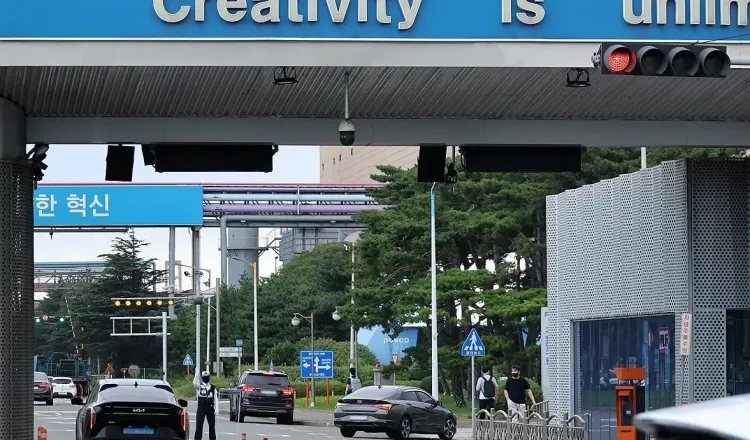
POSCO employs about 17,000 people, of whom around 10,100 are union members. The ratified deal applies to the unionised workforce and removes, for now, the risk of an indefinite stoppage at the steelmaker.
With the pay dispute settled, attention is likely to shift to whether the company acts on the staffing and facility concerns the union flagged during the negotiations.
Point of View
And only 0.1 percentage point above management's earlier offer. Holding out yielded an extra 200,000 won and unspecified benefits — a modest return for months of strike threats. The more consequential issue, staffing shortages and ageing facilities raising accident risk, appears unresolved in the publicly described terms. For India's own steel sector, scaling up capacity rapidly, it is a reminder that wage peace bought without addressing workplace safety tends to be temporary.
NationPress
28 Nov 2026
Frequently Asked Questions
What pay deal did POSCO workers accept?
POSCO's unionised workers accepted a 2.6 percent increase in base pay, a one-off payment of 6.2 million won (US$4,600) and improved benefits. The vote was held on Saturday, 28 November 2026.
What did the POSCO union originally demand?
The union initially sought a 7.1 percent base pay increase, a performance bonus equal to 600 percent of base pay, 50 company shares per worker and a holiday bonus of 200 percent of base pay. It also raised concerns about staffing shortages and ageing facilities.
Why did POSCO workers reject the earlier tentative deal?
Union members rejected the 30 October tentative agreement on 7 November, seeking better terms. That deal offered a 2.6 percent base pay rise and a 6 million won one-off payment.
Did POSCO workers go on strike?
Yes, unionised workers held two rounds of partial strikes in September after failing to narrow differences. In October, the union also warned of an indefinite strike after talks collapsed.
How many workers does the POSCO deal cover?
POSCO has about 17,000 employees, including around 10,100 union members. The ratified deal applies to the unionised workforce.