RBI holds repo rate at 5.25% in wait-and-watch move amid global uncertainty
Synopsis
The RBI held the repo rate at 5.25% and trimmed its FY27 GDP forecast to 6.6% — but the real story is what the central bank did not do. Amid crude price pressures, a weakening rupee, and monsoon uncertainty, the MPC chose deliberate inaction, signalling that the next move depends entirely on how the global situation unfolds.
Key Takeaways
RBI kept the repo rate unchanged at 5.25% with a neutral stance on 5 June .
FY27 GDP growth forecast revised down to 6.6% from 6.9% , with sharper moderation expected in H2.
New measures announced to attract foreign capital, including expansion of the Fully Accessible Route and concessional forex swaps for PSU ECBs.
Current account deficit projected at 2.1% of GDP in FY27 — elevated but below the 3.6% seen during the taper-tantrum episode.
Elevated crude prices, a weaker rupee, and below-normal monsoon risk cited as key inflation and growth watchpoints.
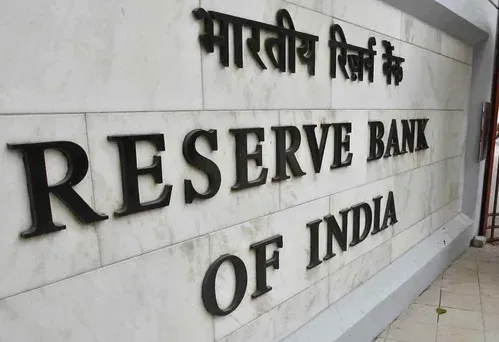
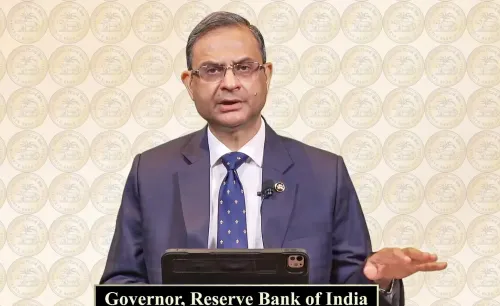
The Reserve Bank of India (RBI) has kept the repo rate steady at 5.25% with a neutral stance, a decision that industry leaders and economists on Friday, 5 June described as a deliberate wait-and-watch approach — designed to gauge the evolving impact of external developments on domestic growth and inflation before committing to further rate adjustments.
GDP Forecast Revised Downward
Alongside the rate decision, the RBI revised its FY27 GDP growth forecast downward to 6.6%, from an earlier projection of 6.9%. The central bank flagged a more pronounced moderation expected in the second half of the fiscal year, citing elevated energy prices, the risk of a below-normal monsoon, and persistent supply-side bottlenecks as key headwinds.
Measures to Attract Foreign Capital
Rajani Sinha, Chief Economist at CareEdge Ratings, highlighted a set of capital-inflow measures announced alongside the rate decision. These include expanding the universe of securities eligible under the Fully Accessible Route for foreign investors, providing concessional forex swap facilities for public sector undertakings raising External Commercial Borrowings (ECBs), and absorbing hedging costs on FCNR(B) deposits. The government also removed taxes on capital gains and interest income for foreign investors in government securities — a move aimed at deepening India's sovereign debt market participation.
On the external account, Sinha noted that while the current account deficit is expected to widen to 2.1% of GDP in FY27, it remains relatively contained compared with the taper-tantrum episode, when it averaged 3.6% of GDP.
What Industry Leaders Said
Srinivasan Vaidyanathan, Operating Partner at Essar Capital, called the RBI's decision 'a balanced response to a genuinely challenging macro environment.' He said the more telling signal was the central bank's evident caution on inflation, set against elevated crude prices and a weaker rupee. 'This suggests that while the RBI remains supportive of growth for now, it is increasingly vigilant about external risks, and future actions will depend heavily on how energy prices and currency dynamics evolve,' he said.
Ajay Kumar Srivastava, Managing Director and CEO of Indian Overseas Bank, said a cautious stance was warranted given geopolitical tensions in West Asia and elevated energy prices, even as the economy demonstrates resilience. 'By keeping rates steady, the RBI reinforces the sustainability of the ongoing recovery while ensuring predictability in borrowing costs, a welcome relief for both households and businesses,' he said.
Dhanpat Nahata, Managing Partner at Essar Capital, warned that markets are likely to remain sensitive to inflation and currency developments given rising global uncertainty. 'The neutral policy stance offers stability for now, but enterprises will continue to assess how evolving global conditions impact growth, liquidity and overall market sentiment,' he said.
What Comes Next
With the RBI signalling that future rate moves will hinge on energy price trajectories, currency dynamics, and monsoon outcomes, the next Monetary Policy Committee (MPC) meeting will be closely watched. For capital-intensive sectors, the current rate stability preserves investment predictability — but the window for further easing appears contingent on global conditions stabilising.
Point of View
But the downward GDP revision — from 6.9% to 6.6% — deserves more scrutiny than it is getting. A central bank that cuts its own growth outlook while refusing to ease rates is implicitly acknowledging that inflation risk now outweighs the growth imperative. The capital-inflow measures are a pragmatic hedge against rupee pressure, but they address symptoms rather than causes. If crude prices stay elevated and the monsoon disappoints, the RBI may find itself cornered — unable to cut without stoking inflation, unable to hike without choking a slowing economy.
NationPress
21 Sept 2026
Frequently Asked Questions
What did the RBI decide on the repo rate on 5 June?
The RBI kept the repo rate unchanged at 5.25% with a neutral policy stance on 5 June. The decision reflects a wait-and-watch approach as the central bank assesses the impact of global developments on domestic growth and inflation.
Why did the RBI revise its FY27 GDP growth forecast downward?
The RBI cut its FY27 GDP growth forecast to 6.6% from 6.9%, citing elevated energy prices, the risk of a below-normal monsoon, and persistent supply-side bottlenecks. A more pronounced growth moderation is expected in the second half of FY27.
What measures did the RBI announce to attract foreign investment?
The RBI announced expansion of the Fully Accessible Route for foreign investors, concessional forex swap facilities for PSUs raising ECBs, and absorption of hedging costs on FCNR(B) deposits. The government also removed taxes on capital gains and interest for foreign investors in government securities.
What is the current account deficit outlook for FY27?
The current account deficit is projected to widen to 2.1% of GDP in FY27. However, economists note this is significantly lower than the 3.6% of GDP recorded during the taper-tantrum episode, making it relatively manageable.
When will the RBI consider changing interest rates?
According to industry leaders and economists, future rate adjustments will depend heavily on how energy prices, currency dynamics, and monsoon outcomes evolve. The next Monetary Policy Committee meeting will be a key event to watch for fresh signals.