Renewables hit record high as coal's share in India's power mix falls to one-year low

Synopsis
India's renewables hit their highest-ever monthly output in July, with solar and wind briefly supplying 42.8% of the country's electricity in a single day. Yet coal output also rose 12.8% year-on-year — a paradox that reveals how fast demand is growing, and how dependent India still is on coal when hydro falters and El Nino drives up cooling loads at night.
Key Takeaways
Renewable energy generation rose 30% year-on-year to a record 36.25 billion kWh in July 2025 .
Coal's share in India's power mix fell to 65.7% in July, down from 69% in June — a one-year low.
Combined solar and wind output crossed 100 gigawatts for the first time on 13 July , supplying a record 42.8% of daily electricity.
Despite a lower share, coal-fired generation rose 12.8% year-on-year to 119.40 billion kWh , driven by strong demand and weak hydro output.
Hydropower fell for the second consecutive month , with its share dropping to 22.1% due to El Nino -linked rainfall deficits.
CREA warned of a potential power-generation gap of nearly 18 billion kWh , risking greater coal dependence in coming months.
India's renewable energy output climbed to a record monthly high in July 2025, pushing coal's share in the country's electricity generation mix down to its lowest level in a year, according to government data and calculations based on Grid-India daily figures. The shift reflects accelerating clean-energy capacity even as overall power demand remained robust.
Record Renewable Output
Renewable electricity generation surged 30 per cent year-on-year to 36.25 billion kilowatt-hours (kWh) in July, its highest-ever monthly figure. Renewables accounted for 20 per cent of India's total power-generation mix during the month, underscoring the scale of the country's clean-energy expansion.
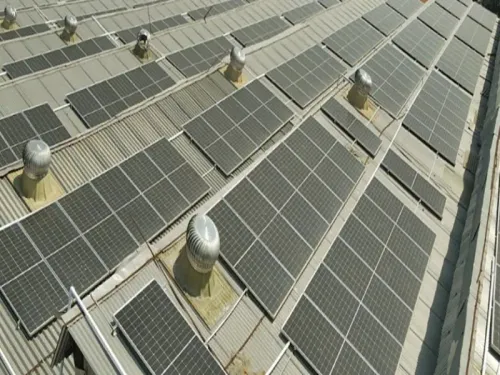
A landmark was crossed on 13 July, when combined solar and wind output crossed the 100-gigawatt mark for the first time, supplying a record 42.8 per cent of India's electricity in a single day. Analysts said the growing role of solar is increasingly helping meet rising daytime electricity demand. Manoj Kumar, an analyst at the Centre for Research on Energy and Clean Air (CREA), noted: 'Most of the peak power demand is happening during daytime where there is increased contribution from solar.'
Coal's Share Drops, But Output Rises
Coal's contribution to India's power mix fell to 65.7 per cent in July, down from 69 per cent in June — its lowest share in a year. However, in absolute terms, coal-fired generation actually rose 12.8 per cent year-on-year to 119.40 billion kWh, driven by strong overall demand and lower hydropower availability.
This apparent contradiction — a falling share alongside rising output — reflects the scale of demand growth rather than any retreat of coal. Analysts attributed the higher coal-based generation to weaker hydropower output and the effects of a strong El Nino pattern, which has driven above-normal temperatures and elevated demand for cooling, particularly at night when solar power is unavailable.
Hydropower Under Pressure
Hydropower generation declined for the second consecutive month as below-normal rainfall linked to El Nino reduced water availability. Hydro's share of the electricity mix fell to 22.1 per cent in July.
CREA warned that reduced hydropower generation, combined with rising electricity demand, could create a power-generation gap of nearly 18 billion kWh, potentially pushing greater reliance on coal-fired plants in the months ahead — a dynamic that could slow the pace of coal displacement despite the renewable surge.
What This Means for India's Energy Transition
July's data captures a dual reality in India's energy story: record-breaking renewable capacity additions are visibly reshaping the generation mix, yet coal remains the backbone of baseload supply, particularly during periods of weak hydro output and high nocturnal demand. The El Nino-driven stress on both hydro and cooling demand has, for now, kept coal output elevated even as its proportional share falls.
Whether renewables can sustain this momentum through the remainder of the year will depend heavily on battery storage deployment and the pace of grid integration — two areas where India's infrastructure is still catching up with its installed capacity.
Point of View
And mainstream coverage is picking only the flattering one. Yes, renewables hit a monthly record — but coal output also grew 12.8% year-on-year. India's energy transition is real, but it is running alongside demand growth, not ahead of it. The El Nino stress test has exposed a structural gap: when hydro underperforms and nocturnal cooling demand spikes, coal fills the void because storage capacity does not yet exist at scale. Until battery storage and grid flexibility catch up with installed solar and wind capacity, India's clean-energy milestones will coexist with rising absolute coal burn — a dynamic that complicates both climate commitments and energy-security planning.
NationPress
2 Aug 2026
Frequently Asked Questions
What record did India's renewable energy set in July 2025?
India's renewable electricity generation reached a record 36.25 billion kWh in July 2025, a 30% year-on-year increase and the highest monthly output ever recorded. Renewables accounted for 20% of the country's total power-generation mix that month.
Why did coal's share in India's power mix fall to a one-year low?
Coal's share fell to 65.7% in July from 69% in June, primarily because record renewable output — especially solar — absorbed a larger portion of daytime electricity demand. However, coal's absolute output still rose 12.8% year-on-year due to strong overall demand.
What is the significance of 13 July in India's energy history?
On 13 July 2025, combined solar and wind power crossed the 100-gigawatt mark for the first time and supplied a record 42.8% of India's electricity in a single day, marking a landmark moment in the country's clean-energy transition.
Why is hydropower generation declining and what is the risk?
Hydropower fell for the second consecutive month due to below-normal rainfall linked to the El Nino weather pattern, with hydro's share dropping to 22.1%. CREA has warned this could create a power-generation gap of nearly 18 billion kWh, potentially increasing coal dependence in the coming months.
Does India's record renewable output mean coal use is falling?
Not in absolute terms. While coal's share of the power mix fell, coal-fired generation actually rose 12.8% year-on-year to 119.40 billion kWh in July, driven by robust electricity demand and weaker hydro output. The share decline reflects renewables growing faster than overall demand, not a reduction in coal burn.