Rising rates, rupee risks to hit banking, real estate markets: Systematix

Synopsis
India's wholesale inflation hit a 42-month high of 8.3% in April 2026, the rupee risks breaching ₹100, and the finance ministry's own CPI forecast now outpaces the RBI's — all while a ₹3-per-litre fuel hike covers barely 7–8% of accumulated under-recoveries. According to Systematix Institutional Equities, this is not a peak; it is a prelude.
Key Takeaways
WPI inflation rose to 8.3 per cent in April 2026 — a 42-month high — with the fuel and power segment at 24.71 per cent .
The finance ministry now forecasts CPI inflation at 5.5–6 per cent for FY27, exceeding the RBI's projection of 4.6 per cent .
The recent ₹3 per litre fuel hike covered only 7–8 per cent of cumulative under-recoveries, signalling further increases ahead.
The rupee reportedly risks breaching ₹100 per dollar , deepening import cost pressures.
Union Minister Kiren Rijiju noted India's petrol and diesel prices rose just 3.2 per cent and 3.4 per cent against increases of up to 100 per cent in some countries.
Rural inflation is rising faster than urban inflation, putting rural demand and agricultural sector stability at risk.
Indian equity markets are headed for sustained pressure as rising interest rates and currency headwinds threaten to squeeze rate-sensitive sectors — including banking, real estate, and capital-intensive industries — according to a report released on Monday, 18 May 2026 by Systematix Institutional Equities. The brokerage warned that a confluence of surging wholesale inflation, a weakening rupee, and widening balance-of-payments stress is complicating the Reserve Bank of India's monetary policy calculus.
Inflation Alarm: WPI at a 42-Month High
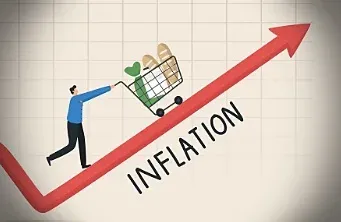
Wholesale Price Index (WPI) inflation climbed to 8.3 per cent in April 2026, its highest reading in 42 months, with the fuel and power segment surging to 24.71 per cent. The Systematix report cautioned that this could be a precursor to a fuller pass-through, as recent retail fuel price hikes have yet to be completely absorbed across the supply chain.
The finance ministry's revised CPI inflation forecast of 5.5–6 per cent for FY27 now materially exceeds the Reserve Bank of India's (RBI) own projection of 4.6 per cent — a divergence that analysts say adds uncertainty to the rate trajectory. The rupee, meanwhile, reportedly risks breaching the ₹100-per-dollar mark, which would amplify import costs and deepen inflationary pressures.
Fuel Hikes: Just the Beginning, Report Warns
The recent ₹3 per litre fuel price increase — which followed Prime Minister Narendra Modi's public austerity appeal — covered only 7–8 per cent of cumulative under-recoveries that had built up during months of unchanged retail prices, the Systematix report noted. 'The latest ₹3 per litre fuel price hike, following the Prime Minister's austerity appeal, is just the beginning of a larger correction,' the report stated, signalling that further increases are likely.
Union Minister Kiren Rijiju pushed back on criticism over rising fuel costs, arguing that India has kept price increases comparatively modest. He noted that while several countries have seen fuel prices rise between 20 per cent and nearly 100 per cent, India's petrol and diesel prices rose by only 3.2 per cent and 3.4 per cent, respectively. Critics, however, argue that the absolute burden on low-income consumers remains significant regardless of the international comparison.
West Asia Tensions and the Strait of Hormuz Factor
The fuel price surge is unfolding against a backdrop of escalating tensions in West Asia and a continuing blockade of the Strait of Hormuz — one of the world's most critical energy trade routes. Nearly one-fifth of global oil and gas trade passes through the narrow passage, and supply disruptions have pushed international crude oil prices sharply higher, compounding India's import bill and currency stress.
Agriculture and Rural Demand Under Strain
The agricultural sector enjoys some near-term support from healthy Rabi output and adequate reservoir levels, but faces mounting headwinds. Higher fertiliser prices, Gulf supply disruptions affecting urea imports, and the threat of a deficient monsoon are all risks flagged in the report. Notably, rural inflation is rising faster than urban inflation, making rural demand increasingly vulnerable — a concern with broad implications for consumption-led growth.
What the Road Ahead Looks Like
The Systematix report concluded that easing growth momentum, widening balance-of-payments stress, and sticky inflation will collectively complicate monetary policy decisions in the months ahead. Rate-sensitive sectors — banking, real estate, and capital-heavy industries — are seen as most exposed to any further tightening. With official CPI forecasts set to touch 6–7 per cent and the rupee under pressure, investors and policymakers alike face a narrowing window for manoeuvre.
Point of View
Which either means one of them is wrong or that a rate response is coming that markets have not fully priced. The ₹3-per-litre fuel hike absorbing only 7–8% of under-recoveries is the real tell — state-owned oil companies cannot sustain losses indefinitely, and the next correction will be larger. Meanwhile, the Strait of Hormuz blockade is not a temporary headline risk; it is a structural supply shock that India, as a major crude importer, is uniquely exposed to. Banking, real estate, and capital-intensive sectors sitting at the intersection of rate risk and currency stress are the most vulnerable — and the market has yet to fully reprice that exposure.
NationPress
20 Sept 2026
Frequently Asked Questions
Why are Indian markets expected to face pressure in 2026?
According to a report by Systematix Institutional Equities, markets face pressure from rising interest rates, a weakening rupee, and surging inflation — with WPI hitting a 42-month high of 8.3% in April 2026. Rate-sensitive sectors such as banking, real estate, and capital-intensive industries are seen as most exposed.
What is the current WPI inflation rate in India?
WPI inflation rose to 8.3 per cent in April 2026, the highest in 42 months. The fuel and power segment was the primary driver, surging to 24.71 per cent.
Will fuel prices rise further in India?
The Systematix report suggests further hikes are likely, as the recent ₹3 per litre increase covered only 7–8 per cent of cumulative under-recoveries built up over months of unchanged retail prices. The report described the latest hike as 'just the beginning of a larger correction.'
How does India's CPI forecast compare to the RBI's projection?
The finance ministry has revised its CPI inflation forecast for FY27 to 5.5–6 per cent, which is materially higher than the RBI's own projection of 4.6 per cent. This divergence adds uncertainty to the outlook for monetary policy and interest rates.
How is the Strait of Hormuz situation affecting India?
The continuing blockade of the Strait of Hormuz — through which nearly one-fifth of global oil and gas trade passes — has pushed international crude prices sharply higher. This worsens India's import bill, adds to rupee depreciation pressure, and feeds directly into domestic fuel and wholesale inflation.