GM and GE crop reforms: India roundtable urges science-based approvals
Synopsis
More than 80 scientists, policymakers, and industry leaders gathered in New Delhi to demand a faster, clearer path for GM and GE crop approvals in India — arguing that outdated regulations are costing farmers climate resilience and global competitiveness at precisely the moment they can least afford it.
Key Takeaways
A roundtable of over 80 experts in New Delhi on 26 July called for science-based, time-bound regulatory reforms for GM and GE crops in India.
The event was jointly organised by TAAS , ICAR , and FSII , with a policy document to be submitted to concerned ministries.
CRISPR-Cas-based genome editing technologies were highlighted as requiring clearer, harmonised regulatory treatment.
India has over three decades of biosafety regulation experience, but experts say the framework has not kept pace with biotechnology advances.
Recommendations aim to improve climate resilience , farmer incomes , nutritional security , and India's global competitiveness in agricultural innovation.
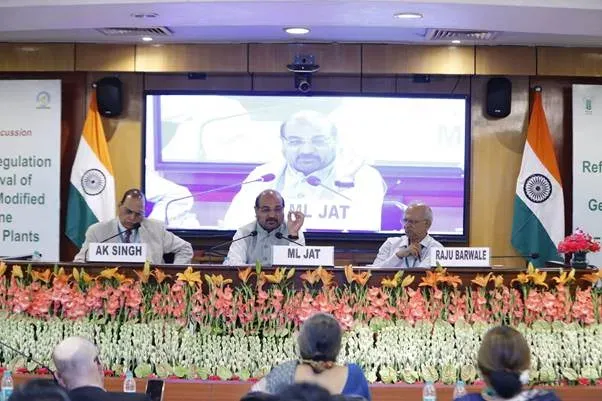
A high-level roundtable of over 80 experts convened in New Delhi on 26 July has called on India to overhaul its regulatory framework for Genetically Modified (GM) and Genome-Edited (GE) crops, pressing for science-based, time-bound, and risk-proportionate approval processes that serve both public and private innovators. The call came through a statement issued by the Agriculture Ministry and marks one of the most concentrated pushes yet for biotechnology regulatory reform in Indian agriculture.
What the Roundtable Recommended
The event — titled 'Reforms in Regulations and Approval of GM and GE Crop Plants' — was organised by the Trust for Advancement of Agricultural Sciences (TAAS) in collaboration with the Indian Council of Agricultural Research (ICAR) and the Federation of Seed Industry of India (FSII). Participants called for a regulatory system that is transparent, efficient, and streamlined, with clear timelines for approvals accessible to innovators across sectors.
The roundtable emphasised that timely adoption of safe GM and GE crops is vital for climate resilience, productivity, nutritional security, farmer incomes, and the global competitiveness of Indian agriculture. Recommendations are to be consolidated into a comprehensive policy document for submission to the concerned ministries and regulatory authorities.
Key Voices at the Event
Dr M.L. Jat, Secretary of the Department of Agricultural Research and Education (DARE) and Director General of ICAR, called for a balanced regulatory system that facilitates the safe deployment of modern biotechnologies to achieve food and nutritional security, climate resilience, and sustainable agricultural growth.
TAAS Chairman R.S. Paroda stressed that roundtable recommendations should form the basis for modernising India's regulatory framework and creating an enabling policy environment that promotes responsible innovation while safeguarding human health, biodiversity, and the environment. He also underlined the need to review existing multiple guidelines to simplify testing procedures.
Dr M. Ramasami, Founder Chairman of Rasi Seeds (P) Ltd, argued that an efficient, transparent, and predictable regulatory system is essential to translate scientific breakthroughs into technologies that benefit farmers and strengthen India's seed sector.
The Case for Genome Editing Reform
The roundtable observed that rapid advances in genome-editing technologies — including CRISPR-Cas-based systems — alongside evolving global regulatory practices and the growing demand for climate-resilient agriculture, necessitate a review of India's existing framework. While India has introduced a differentiated regulatory approach for certain categories of gene-edited products, experts noted that further reforms are required to improve clarity, harmonisation, and predictability across the system.
Participants acknowledged that India has developed robust scientific capabilities and over three decades of experience in biosafety regulation, but argued the framework must now evolve to keep pace with advances in biotechnology while maintaining the highest standards of biosafety and environmental protection.
Global Context and Economic Evidence
The inaugural session featured keynote addresses from Dr C.D. Mayee, President of the South Asia Biotechnology Centre (SABC), on the imperative for regulatory reform; Dr Rhodora Romero-Aldemita, Executive Director of ISAAA Inc., on global developments and harmonisation of regulatory frameworks; and Graham Brookes, Agricultural Economist at PG Economics Ltd, UK, who presented evidence on the economic benefits of GM and genome-edited crops worldwide.
With the policy document set for submission to relevant ministries, the roundtable's outcome could shape the next phase of India's agricultural biotechnology governance — at a moment when climate stress and food security pressures are mounting.
Point of View
And the Genetic Engineering Appraisal Committee has faced persistent criticism for opacity and delays. The roundtable's call for 'time-bound' approvals is a direct indictment of the status quo, where scientific clearance and political hesitancy have moved on entirely different clocks. What is notable this time is the explicit inclusion of genome editing — particularly CRISPR — which many countries now regulate far more lightly than transgenic GM. If India aligns with that global shift, it could unlock a generation of drought- and pest-resistant varieties without the political baggage that 'GMO' carries. The real test will be whether this policy document reaches ministers or collects dust like its predecessors.
NationPress
26 Jul 2026
Frequently Asked Questions
What did the India GM and GE crops roundtable recommend?
The roundtable called for a science-based, transparent, risk-proportionate, and time-bound regulatory framework for GM and GE crop approvals in India, accessible to both public and private innovators. Recommendations will be compiled into a policy document for submission to relevant ministries and regulatory authorities.
Who organised the roundtable on GM and GE crop regulations?
The roundtable was organised by the Trust for Advancement of Agricultural Sciences (TAAS) in collaboration with the Indian Council of Agricultural Research (ICAR) and the Federation of Seed Industry of India (FSII). Over 80 participants attended, including policymakers, scientists, regulators, and international experts.
Why are GM and GE crop regulatory reforms important for India?
Experts argue that modernising the approval framework is essential to enhance climate resilience, boost farmer incomes, improve nutritional security, and strengthen India's global competitiveness in agricultural innovation. Rapid advances in genome-editing technologies like CRISPR-Cas systems have made the existing framework increasingly outdated.
What is the difference between GM and GE crops in the Indian regulatory context?
Genetically Modified (GM) crops involve inserting genes from one organism into another, while Genome-Edited (GE) crops use tools like CRISPR-Cas to make precise changes within an organism's own genome. India has introduced a differentiated regulatory approach for certain gene-edited products, but experts say further clarity and harmonisation are still needed.
What happens next after the roundtable?
The recommendations from the roundtable will be consolidated into a comprehensive policy document and submitted to the concerned ministries and regulatory authorities. The goal is to support evidence-based reforms in the regulation and approval of GM and genome-edited crop plants in India.