South Korea CPI basket to add subscriptions, smartwatch costs in 2025 reshuffle

Synopsis
South Korea is overhauling its inflation yardstick to catch up with digital reality — adding cloud subscriptions, smartwatch costs, and EV charging fees while dropping bracken fern. On the same day, BOK data showed corporate cash reserves hit a 15-year high of 20.8 trillion won, powered by a semiconductor export boom. Two data points, one story: South Korea's economy is structurally shifting.
Key Takeaways
South Korea will revise its CPI basket to include software and cloud subscription fees , smartwatch costs , meal kits , EV charging fees , and malatang .
Bracken fern and other low-demand items will be removed from the basket in the reshuffle.
Full details of the CPI revision will be announced in December ; public consultation runs through mid-July .
South Korean corporate net financial funds hit a record 20.8 trillion won (US$13.6 billion) in Q1 2025 , the highest since BOK began tracking in 2009 .
Household net financial funds rose to 79.2 trillion won , though household debt also climbed by 26 trillion won to 2,466.8 trillion won .
South Korea will revise its consumer price index (CPI) basket in a scheduled reshuffle, adding digital-era expenditures such as software and cloud subscription fees, smartwatch-related costs, and electric vehicle charging fees, the Ministry of Data and Statistics announced on Tuesday, 7 July. Full details of the restructuring are set to be disclosed in December.
What Is Changing in the CPI Basket
The overhaul targets a sharper reflection of how South Korean consumers actually spend in the digital economy. New additions include meal kit costs, online shopping subscription fees, and malatang — a Chinese hot-pot dish that has surged in popularity across the country in recent years.
At the same time, items that have fallen out of everyday consumption will be dropped. Among those being removed is bracken fern, a traditional ingredient used in Korean side dishes, which has seen a significant decline in consumer demand.
Public Consultation Before Finalisation
South Korea's statistics agency plans to gather public opinion through mid-July before finalising the basket changes. This consultative step is part of the standard process for CPI revisions, ensuring the updated index reflects a broad cross-section of consumer behaviour rather than narrow sectoral trends.
Notably, this reshuffle is part of a regular cycle of adjustments — not an emergency revision — but its emphasis on digital subscriptions and smart-device costs signals a structural acknowledgement that consumption patterns have shifted decisively toward the digital sector.
Corporate Surplus Hits Record High on Semiconductor Boom
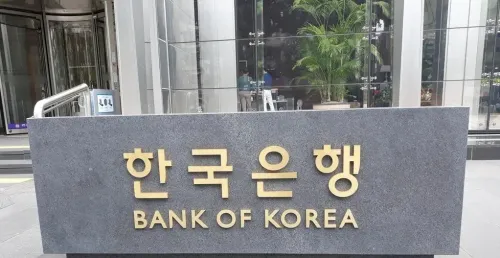
Separately, data released by the Bank of Korea (BOK) on the same day showed that excess funds held by South Korean businesses reached an all-time high in the first quarter of 2025. Net financial funds held by non-financial corporations — calculated as financial assets minus financial liabilities — totalled 20.8 trillion won (approximately US$13.6 billion) at the end of March, up sharply from 100 billion won three months earlier.
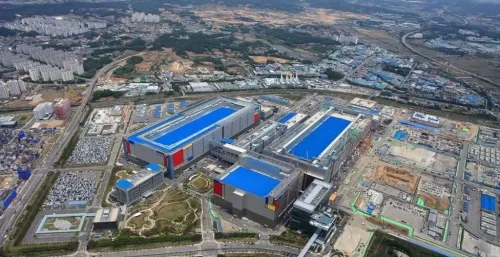
This is the highest quarterly figure since the BOK began compiling the data in 2009. A BOK official attributed the surge directly to semiconductor exports: 'Companies are mainly debtors as they usually borrow more money for investment and other business purposes than they earn. In the first quarter, however, their net profits surged due to semiconductor exports, resulting in excess funds.'
Household Finances Also Strengthen
Household net financial funds rose to 79.2 trillion won in the first quarter, up from 67 trillion won in the preceding quarter, partly driven by year-end bonuses and a reduced supply of new apartments. Total financial assets held by households and non-profit organisations reached 6,417.1 trillion won at end-March — an increase of 209.4 trillion won from three months earlier.
Household debt, however, also climbed, rising by 26 trillion won to 2,466.8 trillion won. The ratio of financial assets to liabilities for households stood at 2.6, suggesting that asset growth continues to outpace debt accumulation for now.
What to Watch Next
The finalised CPI basket changes will be announced in December, with the updated index expected to offer a more accurate read of inflation in a consumption landscape increasingly shaped by digital services. On the corporate side, analysts will be watching whether semiconductor-driven surpluses translate into fresh capital investment or remain parked as financial assets.
Point of View
However, is the corporate cash surplus: 20.8 trillion won sitting idle is a signal that semiconductor profits are not yet flowing into fresh investment cycles. If that surplus stays parked rather than deployed, it raises questions about whether the export boom is actually lifting the broader economy or simply fattening balance sheets.
NationPress
5 Oct 2026
Frequently Asked Questions
Why is South Korea revising its consumer price index basket?
South Korea is updating its CPI basket to better reflect current consumer spending patterns, particularly in the digital sector. The revision adds items like software subscriptions, smartwatch costs, EV charging fees, and meal kits, while removing low-demand products such as bracken fern.
When will the new CPI basket take effect?
The finalised details of the CPI basket reshuffle are scheduled to be announced in December. Public consultation on the changes is being conducted through mid-July before the basket is formally revised.
What new items are being added to South Korea's CPI basket?
New additions include software and cloud service subscription fees, smartwatch-related costs, meal kit prices, electric vehicle charging fees, online shopping subscription fees, and malatang — a Chinese dish that has grown popular in South Korea.
Why did South Korean corporate cash reserves hit a record high in Q1 2025?
According to Bank of Korea data, net financial funds held by non-financial corporations surged to 20.8 trillion won at end-March 2025 — the highest since 2009 — primarily because strong semiconductor exports drove a sharp rise in corporate net profits during the quarter.
How did South Korean household finances change in Q1 2025?
Household net financial funds rose to 79.2 trillion won in Q1 2025, up from 67 trillion won the previous quarter, aided by year-end bonuses and lower new apartment supply. However, household debt also increased by 26 trillion won to 2,466.8 trillion won over the same period.