KOSPI plunges 492 points, 6% as US chip rout and Fed rate fears grip Seoul
Synopsis
Seoul's KOSPI shed nearly 6% on Monday, triggering circuit breakers and a currency rout, as the US semiconductor meltdown — Micron down 13%, Nvidia down 6% — washed ashore in Asia. With the Fed potentially eyeing a rate hike and US CPI data due this week, South Korean markets are caught in the crossfire of America's inflation battle and the AI investment reality check.
Key Takeaways
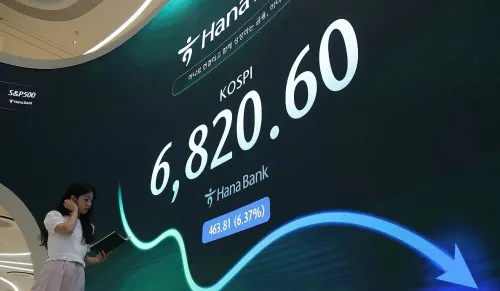
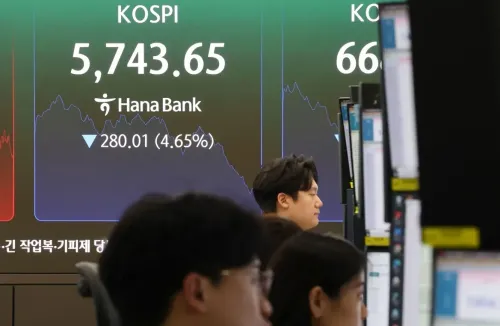
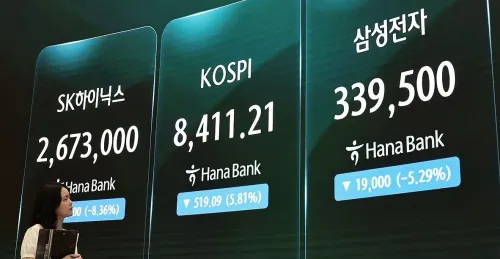
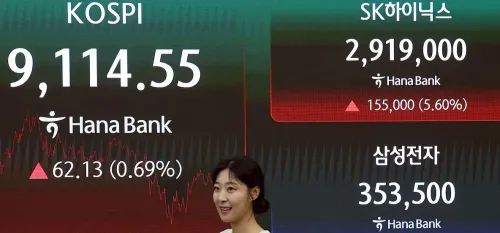
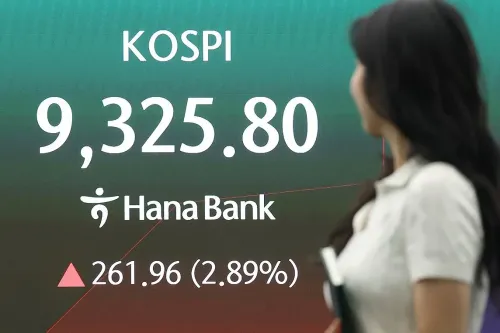
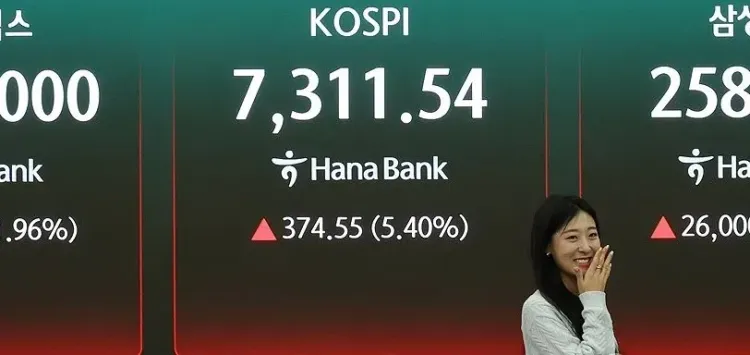
The KOSPI fell 492.8 points (6.04%) to 7,667.79 as of 11:20 am on 8 June , having dropped nearly 9% at its intraday low.
The Korea Exchange activated a circuit breaker on the KOSPI and a sell-side sidecar on the KOSDAQ within minutes of the open.
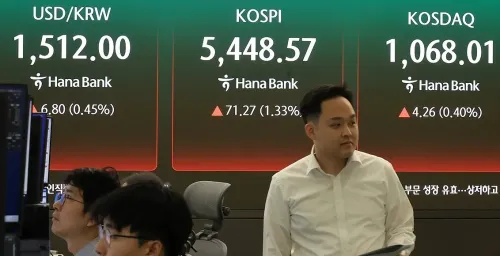
The South Korean won opened at a 17-year low against the US dollar.
Samsung Electronics fell 6.69% ; LG Electronics dropped 9.24% ; Samsung SDI slid 10.74% .
US chip stocks were the trigger: Micron fell 13.25% , Broadcom dropped 7.92% , and Nvidia slumped 6.2% on Friday.
Analysts at Mirae Asset Securities and Kiwoom Securities flagged US CPI data, the SpaceX listing, and Oracle earnings as key risks for the week.
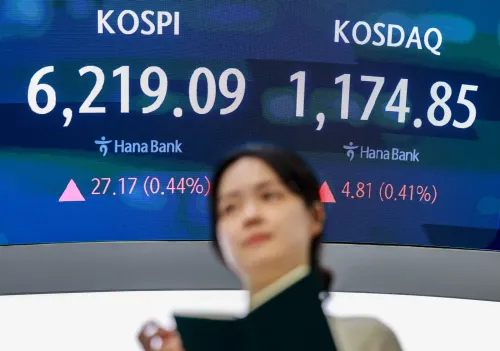
South Korea's benchmark Korea Composite Stock Price Index (KOSPI) plummeted 492.8 points, or 6.04 percent, to 7,667.79 as of 11:20 am local time on Monday, 8 June, as investors offloaded market heavyweights amid a tech-driven selloff sparked by a sharp US semiconductor slide and mounting fears of a hawkish pivot by the US Federal Reserve. The South Korean won opened at a 17-year low against the US dollar, compounding the market stress.
Circuit Breakers Triggered Across Markets
The scale of the selloff was severe enough to activate emergency trading halts. The Korea Exchange (KRX) triggered a circuit breaker on the KOSPI approximately three minutes after the open, suspending trading for 20 minutes, and implemented a consecutive sell-side sidecar at around 9:34 am. A separate sell-side sidecar was also activated on the secondary KOSDAQ market roughly six minutes after opening, halting trading for five minutes. At its intraday low, the KOSPI had shed nearly 9 percent before partially recovering.
What Drove the Selloff
The immediate trigger was a bruising week on Wall Street, where semiconductor stocks posted their steepest single-day percentage decline since March 2020. A hotter-than-expected US jobs report for May reinforced fears that the Federal Reserve could opt for a rate hike later this year, sending risk appetite sharply lower. The Dow Jones Industrial Average closed 1.35 percent lower on Friday, the S&P 500 fell 2.64 percent, and the tech-heavy Nasdaq Composite slid 4.18 percent.
Among US chip stocks, Nvidia slumped 6.2 percent, Broadcom contracted 7.92 percent, and Micron plunged 13.25 percent — losses that reverberated directly into Seoul's tech-heavy index.
Korean Blue Chips Bear the Brunt
Samsung Electronics, the world's largest memory chipmaker and the KOSPI's top constituent by market capitalisation, fell 6.69 percent. Chipmaking rival SK hynix dropped 3.24 percent, while AI investment firm SK Square plunged 7.87 percent. Home appliances maker LG Electronics nose-dived 9.24 percent, top automaker Hyundai Motor pulled back 9.14 percent, and SK Group lost 7.68 percent. Battery major LG Energy Solution fell 5.68 percent, while smaller rival Samsung SDI slid 10.74 percent.
Analyst Outlook: A Challenging Week Ahead
Seo Sang-young, an analyst at Mirae Asset Securities, cautioned that 'there is a lot at stake in this week's financial market, with US inflation data, treasury yields and the ongoing debate over the sustainability of artificial intelligence-related investment all unfolding simultaneously.' Han Ji-young, a researcher at Kiwoom Securities, also anticipated a 'challenging' week for the KOSPI, flagging the release of the US Consumer Price Index for May, the SpaceX listing, and Oracle's earnings results as potential market overhangs. How the Fed responds to persistent inflation data will likely set the tone for global risk assets through the remainder of the week.
Point of View
Samsung follows. The simultaneous currency rout, with the won at a 17-year low, adds a second layer of stress: imported inflation and capital outflow pressure arriving together. More worrying is the structural question the selloff surfaces — South Korea's index is dangerously concentrated in semiconductors and tech conglomerates, leaving it with almost no defensive buffer when US risk appetite turns. The real test this week is the US CPI print: a hot number could cement rate-hike expectations and extend the pain well beyond Monday's session.
NationPress
24 Sept 2026
Frequently Asked Questions
Why did the KOSPI fall sharply on 8 June?
The KOSPI fell 492.8 points, or 6.04%, on 8 June primarily because of a major US semiconductor selloff and a hotter-than-expected US jobs report for May, which raised fears of a Federal Reserve rate hike. The losses on Wall Street — particularly in chip stocks like Micron, Nvidia, and Broadcom — transmitted directly to South Korea's tech-heavy index.
What is a circuit breaker and why was it triggered on the KOSPI?
A circuit breaker is an automatic mechanism that halts trading temporarily when an index falls too sharply, designed to prevent panic-driven freefall. The Korea Exchange activated one on the KOSPI roughly three minutes after Monday's open, suspending trading for 20 minutes, as the index had already dropped precipitously at the bell.
Which South Korean stocks fell the most?
Samsung SDI was among the hardest hit, sliding 10.74%, followed by LG Electronics at 9.24% and Hyundai Motor at 9.14%. Samsung Electronics, the KOSPI's largest constituent, fell 6.69%, while SK Square dropped 7.87%.
Why is the South Korean won at a 17-year low?
The won weakened sharply against the US dollar amid broad risk-off sentiment, capital outflows from emerging markets, and expectations that the Federal Reserve may raise interest rates further. A stronger dollar environment typically pressures Asian currencies, and the won's 17-year low reflects the severity of the current market anxiety.
What should investors watch for the rest of the week?
Analysts are closely watching the US Consumer Price Index release for May, Federal Reserve commentary, the SpaceX listing, and Oracle's earnings results. A hotter-than-expected CPI print could reinforce rate-hike fears and extend the selloff in both US and South Korean markets.