South Korea economy grows at 'solid pace' on AI investment surge
Synopsis
South Korea's October exports hit a record $115.3 billion — up 93.7% — as AI infrastructure spending powered semiconductor and steel demand. But the KDI warns the gains haven't reached ordinary households, with consumption modest, inflation at 2.8%, and Middle East risks looming. The AI boom is real; whether it becomes a broad recovery is the open question.
Key Takeaways
The Korea Development Institute (KDI) described South Korea's economy as growing at a 'solid pace' in its 9 November monthly assessment.
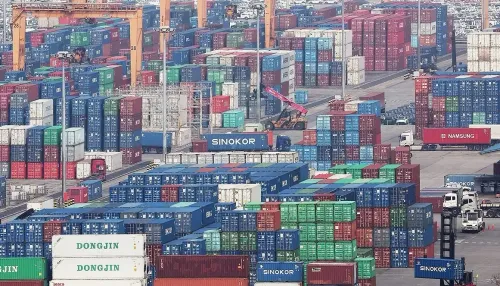
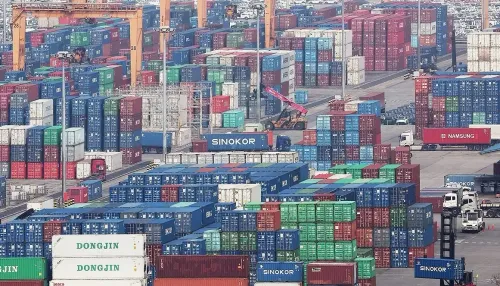
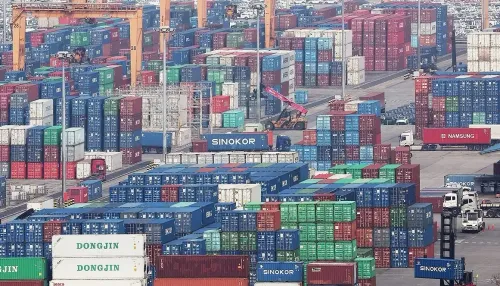
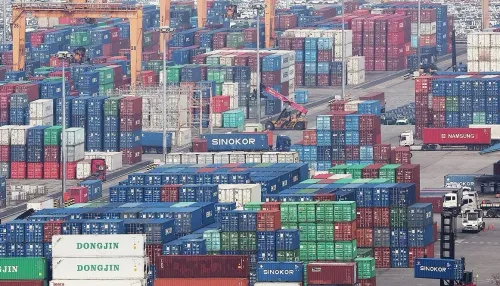
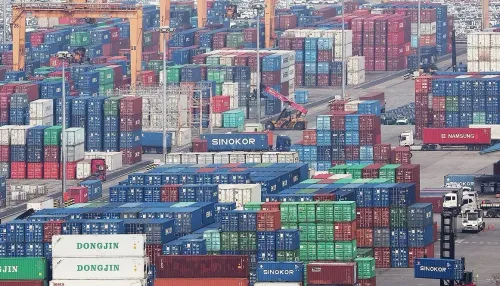
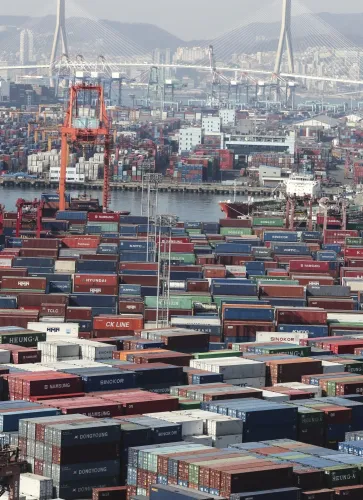
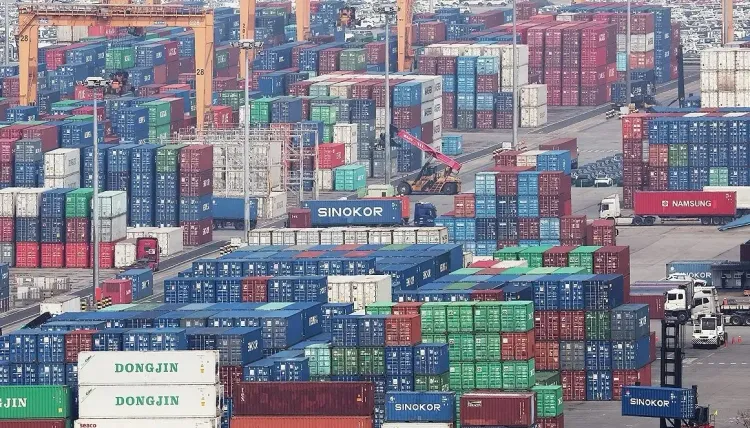
South Korea's exports surged 93.7 percent to a record US$115.3 billion in October , driven by global AI infrastructure investment.
Exports of steel products , nonferrous metals , and electronic devices linked to AI data centre construction rose sharply.
Private consumption grew at only a 'modest pace' , with the semiconductor income boom yet to spread broadly across households.
Consumer price inflation stood at 2.8 percent year-on-year in October, down from 2.9% in September and 3.1% in August.
The KDI flagged Middle East conflict and major-economy policy uncertainties as key downside risks.
The South Korean economy is continuing to expand at a 'solid pace', driven by sustained global investment in artificial intelligence (AI) infrastructure, according to a monthly assessment released on Monday, 9 November by the state-run Korea Development Institute (KDI). The findings underscore how South Korea's semiconductor-led export engine is benefiting directly from the global AI build-out, even as the gains remain unevenly distributed at home.
Semiconductor and AI Sectors Drive Growth
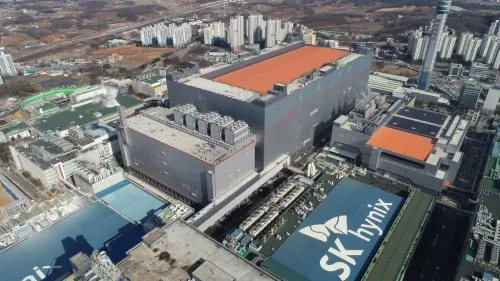
The KDI noted that semiconductor production and investment continue to grow strongly, 'supported by robust external demand.' The think tank also said that 'other sectors related to AI infrastructure investment also appear to be improving.' In October, South Korea's outbound shipments surged 93.7 percent to a record US$115.3 billion, buoyed by strong global appetite for semiconductors and continued capital spending by major technology companies on AI infrastructure.
AI Data Centre Construction Lifts Exports Broadly
The KDI report highlighted that exports of goods closely tied to AI data centre construction — including steel products, nonferrous metals, and electronic devices — rose sharply during the period. Equipment investment in machinery also grew at a solid pace overall, the institute said. This breadth suggests the AI demand wave is rippling beyond chips alone, drawing in heavy industry and industrial components as well.
Household Consumption Lags Behind Export Boom
Despite the strong headline performance, the KDI cautioned that economic growth appears to be 'spreading only gradually across households,' with private consumption improving at a 'modest pace.' The institute explained that income gains from the semiconductor boom 'still showed no clear signs of spreading broadly across households' in the third quarter, while persistently high oil prices continued to weigh on household finances. South Korea's consumer prices rose 2.8 percent year-on-year in October, easing slightly from 2.9 percent in September and 3.1 percent in August, though inflation remains elevated. Higher market interest rates have further constrained household spending capacity, the KDI noted.
External Risks on the Radar
The think tank flagged ongoing risks to the outlook, specifically warning against the continued conflict in the Middle East and escalating policy uncertainties in major economies. These dual headwinds — geopolitical and monetary — could disrupt the trade flows and investor confidence that underpin South Korea's AI-driven growth momentum. This comes amid a broader global debate about whether AI infrastructure spending by big tech will sustain its current pace or face a cyclical correction.
What to Watch Next
Analysts and policymakers will be closely tracking whether the semiconductor-led export surge begins to translate into broader wage and income gains domestically. The KDI's cautious framing on household consumption signals that for now, the benefits of South Korea's AI moment remain concentrated in the export and industrial sectors. Future monthly assessments will be a key barometer for whether that dynamic shifts.
Point of View
Sluggish where it matters most for social stability — household incomes and consumption. The AI infrastructure wave is structurally lifting Korea's industrial base, yet inflation at 2.8% and high market interest rates are quietly eroding the purchasing power of the workers who don't sit inside a chip fab. The bigger question mainstream coverage is missing: how long can a democracy sustain an export boom that doesn't reach dinner tables?
NationPress
9 Nov 2026
Frequently Asked Questions
Why is South Korea's economy growing solidly despite global uncertainty?
The Korea Development Institute (KDI) attributed the growth to sustained global investment in AI infrastructure, which has sharply lifted demand for South Korean semiconductors and related industrial products. October exports hit a record US$115.3 billion, up 93.7% year-on-year.
What did South Korea's October export data show?
South Korea's outbound shipments surged 93.7 percent to a record US$115.3 billion in October, driven by strong global semiconductor demand and continued capital spending by major technology companies on AI data centres. Exports of steel products, nonferrous metals, and electronic devices also rose sharply.
Why is household consumption still weak despite the export boom?
The KDI noted that income gains from the semiconductor boom had not yet spread broadly across households as of the third quarter. High oil prices and elevated market interest rates have further constrained household spending capacity, keeping private consumption growth at a modest pace.
What is South Korea's current inflation rate?
South Korea's consumer prices rose 2.8 percent year-on-year in October 2026, easing slightly from 2.9 percent in September and 3.1 percent in August. The KDI noted inflation remains elevated amid volatility in global oil prices.
What risks did the KDI flag to South Korea's growth outlook?
The KDI specifically warned against the continued conflict in the Middle East and escalating policy uncertainties in major economies. These factors could disrupt the trade flows and investor confidence that are currently underpinning South Korea's AI-driven growth momentum.