South Korea FDI notifications rise 10.8% in Q3, led by semiconductor and AI demand

Synopsis
South Korea pulled in US$22.9 billion in FDI notifications in Q3 2026 — up 10.8% — as global investors poured money into semiconductor and AI infrastructure plays. American capital surged 35.1%, even as Japanese and Chinese inflows collapsed. The data reveal a country riding a tech-driven investment wave while grappling with a shrinking workforce and sluggish productivity.
Key Takeaways
South Korea FDI notifications rose 10.8 per cent year-on-year to US$22.9 billion in July–September 2026 .
Actual FDI arrivals jumped 30.6 per cent to $14.87 billion in the same period.
Manufacturing accounted for 80 per cent of notifications, or $18.52 billion .
US -origin FDI notifications surged 35.1 per cent to $6.69 billion ; Japan and China inflows fell 47.9 per cent and 39.7 per cent respectively.
The government has identified semiconductors , physical AI , and AI data centres as priority sectors for future FDI attraction.
Finance Minister Lee Hyoung-il flagged a shrinking working-age population and stagnant productivity as key structural risks.
South Korea's foreign direct investment (FDI) notifications climbed 10.8 per cent in the July–September 2026 quarter compared to a year earlier, propelled by robust global appetite for Korean semiconductors and equipment destined for artificial intelligence (AI) infrastructure, according to government data released on Wednesday, 7 October.
Key Numbers
FDI notifications reached US$22.9 billion in the third quarter, while actual FDI arrivals — a measure of funds that physically landed in the country — surged 30.6 per cent year-on-year to $14.87 billion, the Ministry of Trade, Industry and Resources said in an official press release. The gap between notifications and arrivals reflects the typical pipeline lag between investment intent and disbursement.
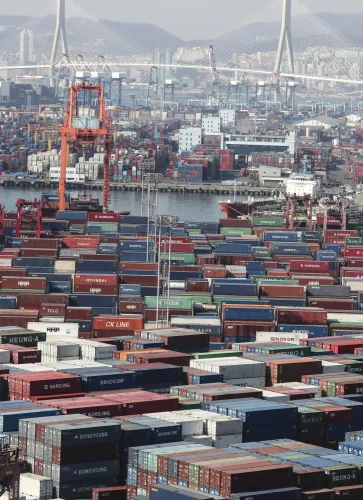
Manufacturing-linked FDI dominated the quarter: notifications for building or expanding manufacturing facilities accounted for 80 per cent of the total, or $18.52 billion, with the remainder directed at mergers and acquisitions (M&As).
Country-wise Breakdown
The United States was the standout source of fresh capital, with FDI notifications from American investors jumping 35.1 per cent to $6.69 billion — a signal of deepening technology ties between Washington and Seoul in the semiconductor and AI space.
In contrast, inflows from key traditional partners fell sharply. Notifications from the European Union declined 3.9 per cent to $2.41 billion, those from Japan dropped 47.9 per cent to $1.88 billion, and China-origin FDI fell 39.7 per cent to $1.74 billion during the same period. The steep Japanese and Chinese declines point to ongoing trade and geopolitical frictions in the region that have reshaped investment flows.
Government's Strategic Priorities
The ministry said South Korea would focus on attracting foreign investment across three areas it has identified as growth engines: semiconductors, physical AI, and AI data centres. The government framed the quarterly performance as evidence of the country's resilience. 'South Korea's strong economic fundamentals appear to have helped attract foreign direct investment despite uncertainties stemming from prolonged tensions in the Middle East,' the ministry said.
Finance Minister Flags Structural Risks
Finance Minister Lee Hyoung-il struck a cautiously optimistic tone during a Wednesday meeting with representatives of South Korea's six major business lobbies, including SK Group Chairman Chey Tae-won, who heads the Korea Chamber of Commerce and Industry (KCCI).
'Recently, the South Korean economy has gained growth momentum despite a challenging economic environment, driven by the global semiconductor upcycle,' Lee said in his opening remarks. He also warned, however, that 'structural challenges, such as a shrinking working-age population and stagnant productivity, have weakened growth potential, while disparities across various areas persist amid growing pressures on people's livelihoods, including rising consumer prices.'
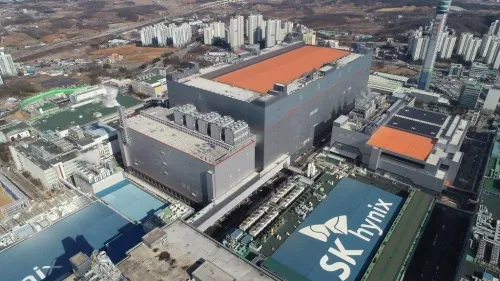
This comes amid a wider global recalibration of semiconductor supply chains, with South Korea — home to Samsung Electronics and SK Hynix — positioned as a critical node. The Q3 data suggests that positioning is translating into tangible capital commitments, even as structural headwinds cloud the long-term outlook. Upcoming Q4 data will indicate whether the US-led surge in FDI is a durable trend or a one-quarter anomaly tied to AI infrastructure spending cycles.
Point of View
While Japanese and Chinese inflows are collapsing — a shift driven as much by geopolitical realignment as by commercial logic. The 80 per cent manufacturing share of notifications is structurally significant: this is not portfolio money chasing yield but long-horizon bets on South Korean industrial capacity. The harder question is whether Seoul can convert this AI-era investment boom into sustainable productivity gains — Finance Minister Lee's own remarks suggest the government knows the answer is not guaranteed, given demographic headwinds that no FDI surge can easily offset.
NationPress
7 Oct 2026
Frequently Asked Questions
How much did South Korea's FDI notifications grow in Q3 2026?
South Korea's FDI notifications rose 10.8 per cent year-on-year to US$22.9 billion in the July–September 2026 quarter, according to the Ministry of Trade, Industry and Resources. Actual FDI arrivals grew even faster, jumping 30.6 per cent to $14.87 billion.
What sectors are driving foreign investment into South Korea?
Semiconductors and AI infrastructure — including equipment and data centres — are the primary drivers of fresh FDI into South Korea. The government has also identified physical AI as a third priority growth engine it intends to promote actively to foreign investors.
Which countries increased investment in South Korea in Q3 2026?
The United States posted the sharpest rise, with FDI notifications jumping 35.1 per cent to $6.69 billion. Meanwhile, FDI from the European Union, Japan, and China fell by 3.9 per cent, 47.9 per cent, and 39.7 per cent respectively.
What structural challenges did South Korea's finance minister highlight?
Finance Minister Lee Hyoung-il flagged a shrinking working-age population, stagnant productivity, and widening economic disparities as key structural risks. He made the remarks at a meeting with heads of South Korea's six major business lobbies on 7 October 2026.
Why did FDI notifications from Japan and China fall so sharply?
The data shows Japan-origin notifications dropped 47.9 per cent and China-origin notifications fell 39.7 per cent in Q3 2026, though the ministry did not provide explicit reasons for the declines. Analysts broadly attribute such trends to ongoing regional geopolitical tensions and a restructuring of trade relationships in the Asia-Pacific.