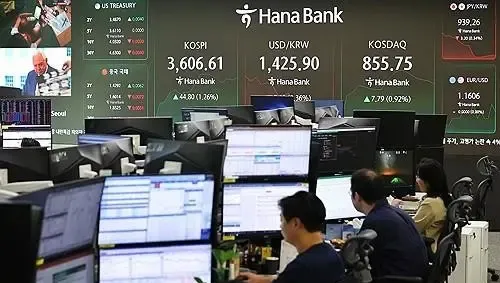
South Korea overseas direct investment jumps 32% in Q2 2026
Synopsis
South Korea's outbound investment hit $20.52 billion in Q2 2026 — up 32.3% — with the information and communication sector more than tripling and Japan jumping from $300 million to $2.46 billion in a single year. Yet corporate confidence slipped in September, with manufacturers turning pessimistic just as the country's global capital push accelerates.
Key Takeaways
South Korea's overseas direct investment reached $20.52 billion in Q2 2026 , up 32.3% year-on-year.
The financial and insurance sector led with $10.48 billion in outbound investment, a 33.4% rise.
The information and communication sector more than tripled to $2.73 billion .
The United States was the top destination at $8.86 billion ; Japan surged from $300 million to $2.46 billion .
The Composite Business Sentiment Index (CBSI) fell to 99.1 in September, down from a near four-year high of 102 in August.
Manufacturing sentiment dropped to 99.5 from 103.8 , while non-manufacturing improved to 98.9 from 96.7 .
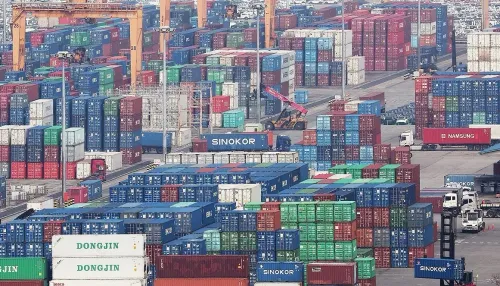
South Korea's overseas direct investment surged 32.3% year-on-year in the second quarter of 2026, reaching US$20.52 billion in the April–June period, up from $15.5 billion in the same quarter of 2025, according to data released on Tuesday, 29 September by the Ministry of Finance and Economy. The growth was driven primarily by the financial, insurance, and information and communication sectors, marking the fourth consecutive quarter of on-year expansion since Q3 2025.
Sector-wise Breakdown
The financial and insurance industry led the surge, with overseas investment climbing 33.4% to $10.48 billion. The finance ministry attributed the increase to South Korean businesses actively diversifying their global portfolios in response to shifting international market dynamics.
The information and communication sector posted the most dramatic growth, with investment more than tripling to $2.73 billion. Meanwhile, overseas investment in manufacturing rose a more modest 3.2% on-year to $3.57 billion, reflecting cautious expansion in goods-producing industries.
Top Destination Markets
The United States remained the single largest destination for South Korean outbound capital, attracting $8.86 billion — a 53.6% jump year-on-year. Japan emerged as a standout gainer, receiving $2.46 billion, sharply up from just $300 million a year earlier, signalling a notable warming in bilateral investment ties. Luxembourg also drew increased interest, with investment rising 14.2% to $1.59 billion.
Business Sentiment Cools in September
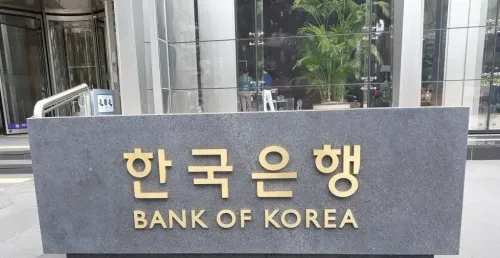
Separately, South Korea's corporate confidence retreated in September 2026, even as the country's outbound investment remained robust. The Composite Business Sentiment Index (CBSI) for all industries fell 0.5 points to 99.1, according to a survey by the Bank of Korea (BOK). A reading below 100 indicates that pessimists outnumber optimists.
The September dip follows a near four-year high of 102 recorded in August 2026 — the strongest reading since September 2022, when the economy was still recovering from the COVID-19 pandemic. The BOK attributed the pullback largely to increased input costs weighing on corporate outlooks.
Manufacturing vs Non-Manufacturing Divergence
Within the CBSI data, a clear divergence emerged. The sentiment index among manufacturers dropped sharply to 99.5 in September from 103.8 in August, while the non-manufacturing index — covering sectors such as transportation and leisure — improved to 98.9 from 96.7 over the same period. This split suggests that services-oriented businesses are holding up better than goods producers amid rising costs.
With outbound investment on a sustained upward trajectory and business sentiment still broadly near neutral territory, South Korea's economic posture heading into the final quarter of 2026 will depend heavily on how global demand conditions and input cost pressures evolve in the months ahead.
Point of View
But the Japan story within it is the real signal — a near eightfold surge in a single year suggests a structural shift in South Korean capital allocation toward its neighbour, likely tied to normalising bilateral relations and supply-chain diversification away from China. The simultaneous cooling in manufacturing business sentiment, however, is a cautionary counterpoint: South Korean firms are investing abroad even as domestic producers grow more pessimistic, which could reflect a hollowing-out concern that policymakers in Seoul cannot ignore. The CBSI's dip from a post-pandemic high also raises the question of whether August's optimism was an outlier or a genuine turning point. Sustained outbound investment without a parallel improvement in domestic manufacturing confidence is a tension that warrants watching through Q4 2026.
NationPress
29 Sept 2026
Frequently Asked Questions
How much did South Korea's overseas direct investment grow in Q2 2026?
South Korea's overseas direct investment rose 32.3% year-on-year to $20.52 billion in the April–June quarter of 2026, up from $15.5 billion in the same period of 2025, according to the Ministry of Finance and Economy. This marked the fourth straight quarter of on-year growth since Q3 2025.
Which sectors drove the growth in South Korea's outbound investment?
The financial and insurance sector was the largest contributor, rising 33.4% to $10.48 billion. The information and communication sector posted the sharpest growth, more than tripling to $2.73 billion, while manufacturing rose a modest 3.2% to $3.57 billion.
Which countries received the most South Korean investment in Q2 2026?
The United States was the top destination, attracting $8.86 billion — up 53.6% year-on-year. Japan was the biggest surprise, receiving $2.46 billion compared to just $300 million a year earlier. Luxembourg drew $1.59 billion, up 14.2%.
What happened to South Korea's business sentiment in September 2026?
The Composite Business Sentiment Index fell 0.5 points to 99.1 in September, retreating from a near four-year high of 102 in August 2026. The Bank of Korea attributed the decline largely to increased costs, particularly in the manufacturing sector.
What is the Composite Business Sentiment Index and what does a reading below 100 mean?
The Composite Business Sentiment Index (CBSI), published by the Bank of Korea, measures corporate outlooks on overall business conditions across all industries. A reading below 100 means pessimists outnumber optimists; September's reading of 99.1 indicates a slight majority of businesses held a negative near-term outlook.