CM Dhami: Tourist Safety Is Uttarakhand's Top Priority
Synopsis
Chief Minister Pushkar Singh Dhami declared on 29 September 2026 that tourist safety is Uttarakhand's top priority, signalling heightened state focus on pilgrimage and leisure travel security ahead of the seasonal transition to winter.
Key Takeaways
CM Pushkar Singh Dhami publicly reaffirmed on 29 September 2026 that tourist safety is the Uttarakhand government's top priority.
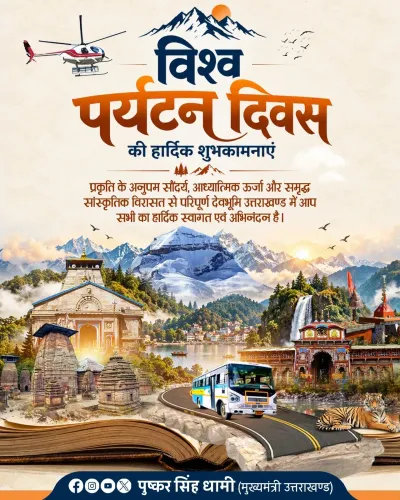
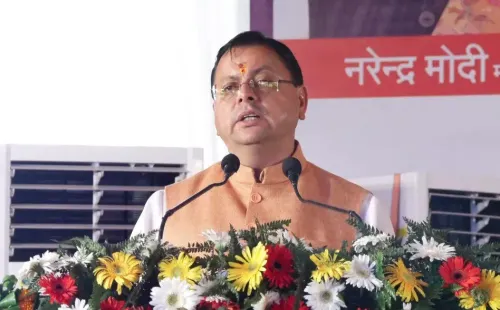
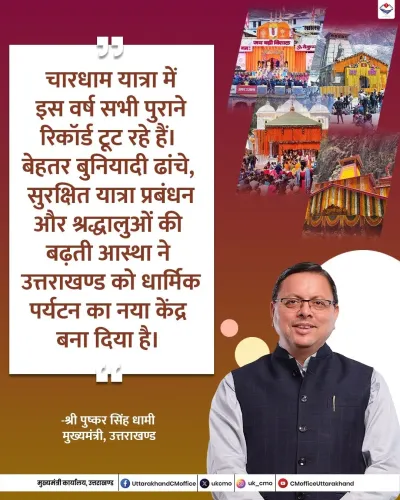
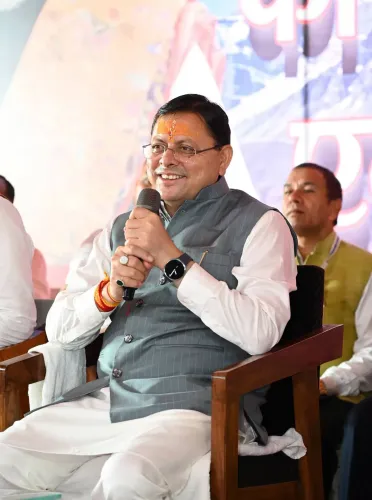
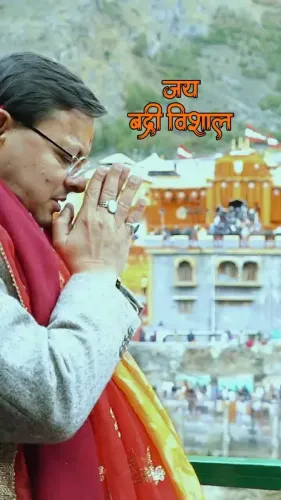
The statement was posted by the official Chief Minister's Office account on X, accompanied by three images .
Uttarakhand 's economy depends substantially on pilgrimage and leisure tourism, particularly along the Char Dham circuit.
The announcement coincides with a critical seasonal window — the tail of monsoon and approach of winter, when tourist traffic surges and high-altitude routes begin closing.
The state has previously deployed dedicated tourist helplines and security coordination along high-risk pilgrimage corridors.
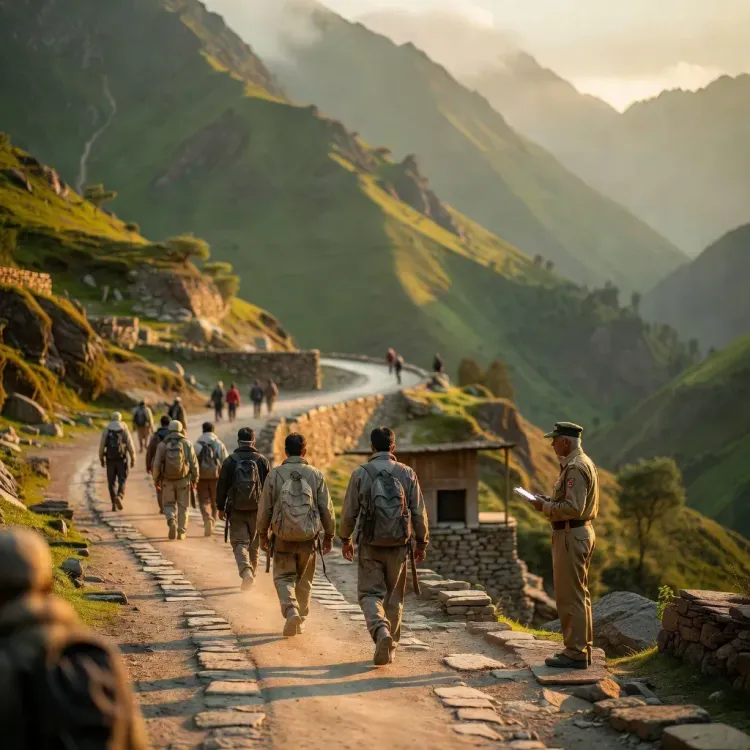
In a state where snowcapped peaks and ancient pilgrimage routes draw millions of visitors every year, Chief Minister Pushkar Singh Dhami has reaffirmed a simple but loaded pledge: every tourist who enters Uttarakhand must return home safe. The Chief Minister's Office posted the statement on Tuesday, 29 September 2026, with three accompanying images underlining the seriousness of the message.
The Hindi declaration — 'हर पर्यटक की सुरक्षा हमारी प्राथमिकता' ('the safety of every tourist is our priority') — is brief, but it lands against a backdrop that gives it real weight. Uttarakhand is one of India's most terrain-challenged states, where narrow mountain roads, flash floods, and sudden weather shifts have repeatedly turned pilgrimage and leisure travel into life-threatening situations.
Why Uttarakhand's Tourism Safety Record Matters
Uttarakhand's economy is deeply tied to the flow of pilgrims and trekkers. The Char Dham circuit — Kedarnath, Badrinath, Gangotri, and Yamunotri — alone pulls hundreds of thousands of devotees each season. State revenues from hospitality, transport, and local trade hinge on that footfall continuing, which means tourist safety is not merely a welfare issue — it is an economic one.
The state government has in previous years established dedicated tourist helplines and coordinated with security and disaster-response forces along high-risk pilgrimage corridors. CM Dhami, who has held office since 2021, has made state development and infrastructure a consistent thread of his tenure, with mountain connectivity and emergency-response capacity forming part of that larger agenda.
Timing: Seasonal Transitions and Visitor Surges
The timing of the statement matters. As September closes, Uttarakhand enters a transitional window — the tail end of the monsoon season and the lead-up to winter, when some high-altitude routes begin to close. Tourism and pilgrimage traffic tends to surge in this period as visitors attempt to complete yatras before access shuts down. It is precisely the moment when coordination between state machinery, local administration, and tourism operators is most critical.
A public commitment at this juncture signals to tourists, their families, and the tourism industry that the state is on alert — and that any new safety protocols or infrastructure moves are, at minimum, on the government's active radar.
In a state where the mountains give generously and take back without warning, the Chief Minister's four-word promise carries more operational urgency than its brevity suggests. The test, as always, will be in the infrastructure and coordination that backs it up.
Point of View
But it arrives at a structurally significant moment — Uttarakhand's revenue cycle is closely tied to pilgrimage footfall, and any high-profile incident on a mountain route can damage the state's tourism brand for an entire season. The statement fits a pattern in which Himalayan state governments issue preventive public commitments before peak-traffic windows, partly to pre-empt accountability questions if incidents occur. The real indicator of policy intent will be whether new protocols, infrastructure investments, or emergency-response deployments follow in the days ahead.
NationPress
29 Sept 2026
Frequently Asked Questions
What did CM Pushkar Singh Dhami say about tourist safety in Uttarakhand?
On 29 September 2026, CM Dhami declared that 'the safety of every tourist is our priority,' reaffirming the state government's commitment to protecting visitors across Uttarakhand.
Why is tourist safety important for Uttarakhand?
Uttarakhand's economy depends heavily on domestic tourism and pilgrimage traffic, particularly along the Char Dham circuit. Tourist safety directly affects state revenues and the broader hospitality and transport sectors.
What safety measures does Uttarakhand have for tourists?
The state has previously established dedicated tourist helplines and coordinated with security and disaster-response forces along pilgrimage corridors such as the Char Dham route.
When does Uttarakhand's peak tourism season occur?
Key peaks occur during the Char Dham yatra season in summer and again in the post-monsoon September-October window before high-altitude routes close for winter.
Who is Pushkar Singh Dhami?
Pushkar Singh Dhami is the Chief Minister of Uttarakhand, serving since 2021, with a focus on state development, infrastructure, and tourism promotion.