SCI at 65: Sonowal calls on shipping giant to anchor India's 2047 maritime vision
Synopsis
At SCI's 65th anniversary, Shipping Minister Sonowal recast the state-owned corporation from a fleet operator into the cornerstone of India's ambition to become a top shipbuilding nation by 2047 — invoking the Strait of Hormuz crisis as proof that a strong national fleet is not a prestige project, but a strategic necessity.
Key Takeaways
Union Minister Sarbananda Sonowal urged Shipping Corporation of India (SCI) to lead India's domestic shipbuilding drive at the company's 65th anniversary event in Mumbai .
SCI has grown from 19 vessels at founding in 1961 to 58 vessels with 5.26 million DWT today.
Sonowal cited SCI's role during the Strait of Hormuz crisis as evidence of its importance to India's energy and trade security.
India targets becoming a top shipbuilding and ship-owning nation under the Maritime Amrit Kaal Vision 2047 , aligned with Viksit Bharat and Atmanirbhar Bharat goals.
Maharashtra Minister Nitesh Narayan Rane highlighted SCI's ties to Mumbai and the shipping ecosystem's role in trade and employment.
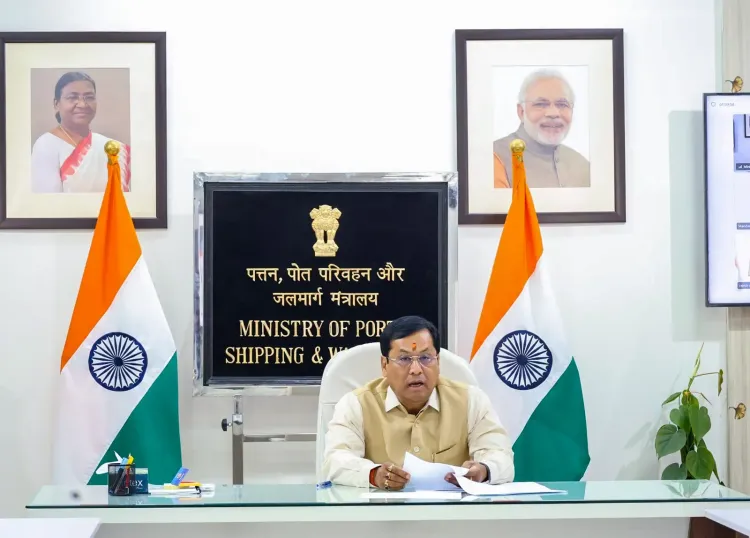
Sarbananda Sonowal, Union Minister of Ports, Shipping and Waterways, on Friday, 3 October 2025, urged the Shipping Corporation of India (SCI) to spearhead India's push for self-reliant, globally competitive shipbuilding capacity as the state-owned maritime enterprise marked 65 years of operations. Speaking at the milestone event in Mumbai, Sonowal framed a stronger national fleet as central to India's goal of becoming a top shipbuilding and ship-owning nation under the Maritime Amrit Kaal Vision 2047.
The Minister's Call to Action
'Under the visionary leadership of Prime Minister Narendra Modi, India is no longer content to simply own ships; we are determined to build them, right here at home,' Sonowal said. He invoked the government's twin frameworks — Viksit Bharat and Atmanirbhar Bharat — placing SCI at the centre of both, and highlighted the corporation's recent performance during the Strait of Hormuz crisis as evidence of its role in safeguarding India's energy and trade security.
SCI's Six Decades of Growth
Founded in 1961 as a liner shipping company with just 19 vessels, SCI has expanded into a diversified maritime enterprise operating 58 vessels with a combined capacity of 5.26 million deadweight tonnage (DWT). Its portfolio now covers crude and product tankers, bulk and container shipping, LPG and LNG carriers, offshore services, passenger and coastal transport, project cargo, ship management, and shipbuilding consultancy — a breadth that reflects India's widening maritime ambitions.
What SCI's Future Role Looks Like
'SCI is one of the clearest examples of India building its own strength at sea. As India works to become a top shipbuilding nation under Maritime Amrit Kaal Vision 2047, SCI's fleet, its people and its partnerships will be central to that mission,' Sonowal noted. He added that SCI's fleet expansion and deepening of partnerships would strengthen not just one company, but India's entire shipbuilding ecosystem, advancing the country 'mile by mile' toward a Viksit Bharat.
Maharashtra's Stake in the Maritime Economy
Nitesh Narayan Rane, Maharashtra's Minister for Fisheries and Ports, credited SCI's enduring ties to Maharashtra and Mumbai, noting that a robust shipping ecosystem remained essential to trade, employment, and the broader growth of India's maritime economy. The remarks underscored the strategic importance of Mumbai as the country's dominant maritime hub.
What's Next for India's Shipbuilding Drive
The event signals a deliberate effort to reposition SCI not merely as a fleet operator but as a flagship institution for domestic shipbuilding capacity. With the 2047 deadline anchoring government strategy, policy watchers will track whether SCI receives fresh capital allocation and expanded shipyard mandates to back the ambition with tangible investment.
Point of View
But the gap between aspiration and execution remains wide — India currently accounts for a fraction of global shipbuilding output, with South Korea, China, and Japan dominating the order books. Sonowal's invocation of the Strait of Hormuz crisis is pointed: it positions fleet self-sufficiency as a national security argument, which could unlock defence-linked budget support that commercial logic alone would not justify. The real question is whether SCI will receive the capital expenditure and shipyard infrastructure needed to move from consultancy and management to actual vessel construction at scale. Without that, the 2047 target risks becoming another vision document rather than a delivery mandate.
NationPress
2 Oct 2026
Frequently Asked Questions
What is the Shipping Corporation of India (SCI)?
The Shipping Corporation of India is a state-owned maritime enterprise founded in 1961 with 19 vessels that has grown to operate 58 vessels with a combined capacity of 5.26 million deadweight tonnage (DWT). Its operations span tankers, bulk and container shipping, LPG and LNG carriers, offshore services, and shipbuilding consultancy.
What did Minister Sarbananda Sonowal say at SCI's 65th anniversary?
Sonowal called on SCI to lead India's drive toward self-reliant, globally competitive shipbuilding and maritime capacity. He said India was 'determined to build ships right here at home' and framed SCI's fleet, people, and partnerships as central to the Maritime Amrit Kaal Vision 2047.
What is India's Maritime Amrit Kaal Vision 2047?
It is the government's long-term maritime strategy targeting India's emergence as a top shipbuilding and ship-owning nation by the centenary of Independence in 2047. The vision aligns with the broader Viksit Bharat and Atmanirbhar Bharat policy frameworks.
Why was the Strait of Hormuz crisis mentioned at the event?
Minister Sonowal cited SCI's operational performance during the Strait of Hormuz crisis to illustrate the corporation's strategic role in protecting India's energy and trade security. The reference was used to argue that a strong national fleet is a geopolitical necessity, not just a commercial asset.
What is SCI's current fleet size and operational scope?
SCI currently operates 58 vessels totalling 5.26 million deadweight tonnage (DWT). Its services span crude and product tankers, bulk and container shipping, LPG and LNG carriers, offshore services, passenger and coastal transport, project cargo, ship management, and shipbuilding consultancy.