SEBI mulls Capacity Building Network for independent directors: Tuhin Kanta Pandey

Synopsis
SEBI Chairman Tuhin Kanta Pandey has proposed a first-of-its-kind Capacity Building Network for independent directors, backed by NISM and industry bodies, to address AI, cybersecurity and data governance risks in boardrooms. The move signals a shift from rule-based compliance toward continuous capability-building — and comes alongside reforms on fund monitoring, exchange penalties, and sustainability reporting.
Key Takeaways
SEBI Chairman Tuhin Kanta Pandey announced plans for a Capacity Building Network (CBN) for independent directors on 19 November 2026 .
The CBN will be developed with NISM , industry associations, academic institutions, and technology organisations; preliminary consultations have begun.
The network will focus on cybersecurity , data governance , AI , peer learning, and dissemination of governance best practices.
SEBI proposed allowing monitoring agencies to submit fund-utilisation reports directly to stock exchanges and extending monitoring to most issuances regardless of size.
Reforms to eliminate duplication of exchange penalties for multi-listed companies are also under consideration.
The BRSR framework currently covers the top 1,000 listed companies by market capitalisation.
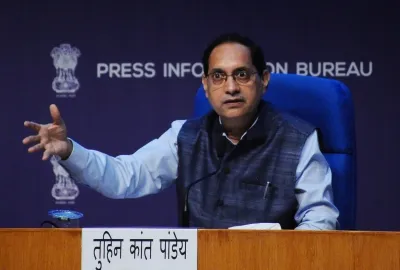
Securities and Exchange Board of India (SEBI) Chairman Tuhin Kanta Pandey on Thursday, 19 November 2026, said the market regulator is exploring the creation of a Capacity Building Network (CBN) for independent directors, aimed at strengthening board oversight and equipping directors to handle emerging challenges including cybersecurity, data governance, and artificial intelligence (AI). Pandey made the announcement while speaking at a Corporate Governance Summit in New Delhi.
What the Proposed Network Entails
According to Pandey, SEBI, in collaboration with the National Institute of Securities Markets (NISM), industry associations, professional bodies, academic institutions, technology organisations, and domain experts, has already begun preliminary consultations on the initiative. The proposed CBN is envisioned as a platform for peer learning, boardroom challenge discussions, development of governance case studies, and dissemination of best practices.
Pandey underlined that effective corporate governance depends not only on having diverse expertise in the boardroom but also on a director's capacity to continuously learn, challenge assumptions, and exercise sound judgment. He noted that one-time induction programmes and occasional training sessions are no longer adequate given the rapidly evolving regulatory and technological landscape that board members must navigate.
Regulation Alone Cannot Guarantee Good Governance
Emphasising the limits of regulatory intervention, Pandey said that while frameworks provide guardrails, the responsibility for ethical decision-making and accountability ultimately rests with boards, management, and other governance gatekeepers. This framing signals SEBI's intent to shift from purely rule-based oversight toward capability-led governance reform — a notable change in regulatory philosophy.
Key Regulatory Reforms on the Agenda
Pandey also outlined a clutch of regulatory measures under consideration to improve corporate governance while easing compliance for listed companies. On fund-utilisation monitoring, SEBI has proposed allowing monitoring agencies to submit reports directly to stock exchanges and extending monitoring requirements to most issuances regardless of issue size, with the exception of offers for sale.
On penalties, the regulator is working to eliminate duplication of monetary fines for companies listed on multiple exchanges, ensuring that only one exchange imposes a penalty for a specific instance of non-compliance — a reform that companies and legal experts have long sought.
Sustainability Reporting and the BRSR Framework
SEBI's Business Responsibility and Sustainability Reporting (BRSR) framework currently applies to the top 1,000 listed companies by market capitalisation. Pandey's remarks at the summit suggest the regulator is reviewing both the scope and depth of this framework as part of its broader governance modernisation drive.
What This Means for Boardrooms
The proposed CBN would mark a structural shift in how listed-company boards prepare for oversight responsibilities, moving beyond compliance checklists toward continuous professional development. With technology risk and ESG accountability reshaping global boardroom standards, the initiative places India's corporate governance framework more in line with international best practices. The regulator is expected to issue formal consultation papers on these proposals in the coming months.
Point of View
But the regulator must guard against initiative overload. The real test will be whether the CBN is mandatory in any meaningful form or remains a voluntary framework that well-governed companies join and poorly governed ones ignore.
NationPress
19 Nov 2026
Frequently Asked Questions
What is SEBI's proposed Capacity Building Network for independent directors?
The Capacity Building Network (CBN) is an initiative proposed by SEBI to provide structured, continuous learning for independent directors of listed companies, covering areas such as cybersecurity, data governance, and AI. It is being developed in collaboration with NISM, industry associations, academic institutions, and technology organisations, with preliminary consultations already under way.
Why is SEBI creating this network now?
SEBI Chairman Tuhin Kanta Pandey said that one-time induction programmes and occasional training are no longer sufficient as board members face increasingly complex financial structures, evolving regulations, and technology-related risks. The regulator believes continuous capability-building is essential for effective board oversight in the current environment.
What other regulatory reforms did Pandey announce?
Pandey outlined proposals to allow fund-monitoring agencies to submit reports directly to stock exchanges and to extend monitoring requirements to most issuances regardless of size, excluding offers for sale. He also flagged plans to eliminate duplicate monetary penalties for companies listed on multiple exchanges.
Which companies does SEBI's BRSR sustainability framework currently cover?
The Business Responsibility and Sustainability Reporting (BRSR) framework currently applies to the top 1,000 listed companies in India by market capitalisation. SEBI is reviewing the framework's scope as part of its broader corporate governance modernisation effort.
When will SEBI formally roll out these proposals?
SEBI has begun preliminary consultations on the Capacity Building Network and the other regulatory reforms. Formal consultation papers and detailed guidelines are expected to be issued in the coming months, though no specific deadline has been announced.