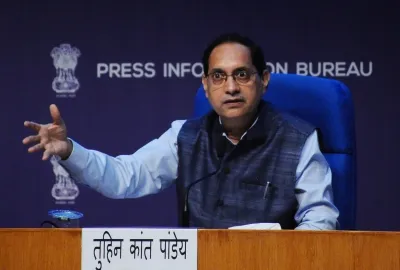
SEBI chief rules out NSE, BSE own-share trading proposal for now
Synopsis
SEBI Chairman Tuhin Kanta Pandey shut down speculation that exchanges like NSE and BSE could soon trade their own shares — a move that would raise serious conflict-of-interest questions. At the same event, he confirmed SEBI-RBI talks on bond derivatives are progressing, and outlined a digital push to ease FPI onboarding into Indian markets.
Key Takeaways
SEBI Chairman Tuhin Kanta Pandey on 30 September 2026 denied any proposal to allow NSE or BSE to trade in their own shares.
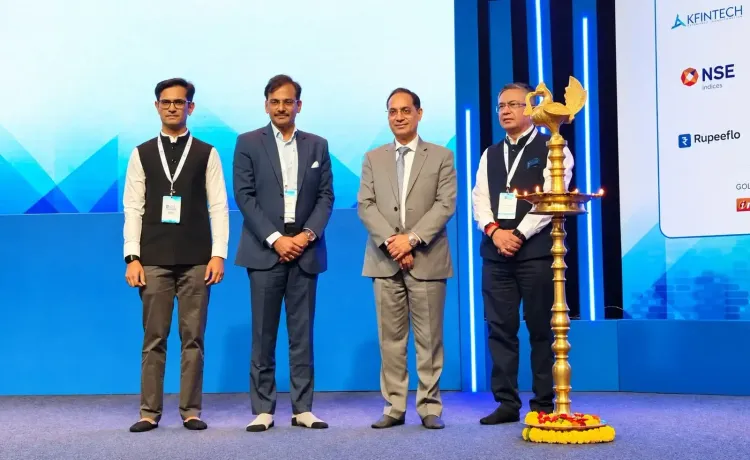
Pandey was speaking at the APMI annual conference 2026 in Mumbai .
SEBI and the RBI are jointly finalising draft guidelines on bond indices and derivatives ; no timeline has been provided.
The NSDL portal has been revamped and an India Market Access portal launched to streamline FPI registration.
Pandey stressed that stock exchanges must actively enforce continuous listing compliance to maintain investor confidence.
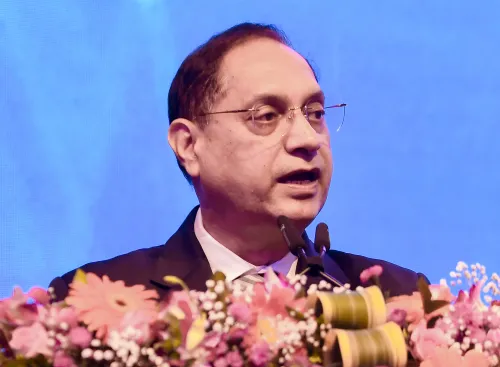
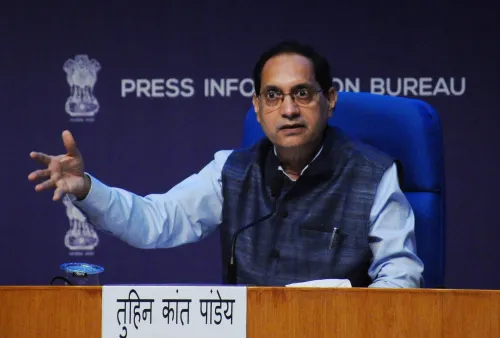
Securities and Exchange Board of India (SEBI) Chairman Tuhin Kanta Pandey on Wednesday, 30 September 2026, categorically dismissed speculation that the market regulator was considering a proposal to allow stock exchanges such as the BSE and NSE to trade in their own shares. Speaking at the sidelines of the Association of Portfolio Managers in India (APMI) annual conference in Mumbai, Pandey said no such proposal was under consideration at present.
What the SEBI Chairman Said
Pandey's remarks were a direct response to reports suggesting SEBI was exploring the possibility of setting up a panel to examine whether stock exchanges could eventually be permitted to trade in their own shares. He was unambiguous in his denial. 'There is no such thing going on. It will be, if it happens or when it happens, you will come to know. So, there is no such thing at the moment,' he said.
The clarification puts to rest, at least for now, a debate that had gained traction in market circles — given that allowing exchanges to trade their own scrips would raise significant questions around conflict of interest, regulatory oversight, and market integrity.
Bond Indices and Derivatives: SEBI-RBI Talks Ongoing
On the development of bond indices and derivatives, Pandey said SEBI is actively working with the Reserve Bank of India (RBI) to finalise draft guidelines. He noted that draft norms have already been prepared and stakeholder comments have been sought, with discussions between the two regulators continuing to move the framework forward. He declined, however, to offer a timeline for when the final framework would be in place.
This collaboration signals a broader push to deepen India's fixed-income market infrastructure — a space that has historically lagged equity markets in terms of retail participation and derivative sophistication.
Easing Access for Foreign Portfolio Investors
Pandey also outlined a series of steps SEBI and the RBI are taking jointly to make India a more attractive destination for foreign portfolio investors (FPIs). These include streamlining registration and onboarding procedures, revamping the NSDL portal, and launching the India Market Access portal, which features a common application system allowing investors to track their application status in real time.
SEBI is also promoting digital onboarding, including the use of digital signatures, and simplifying know-your-customer (KYC) requirements. The regulator's intent, according to Pandey, is to reduce friction for foreign capital entering Indian markets — a priority that aligns with the government's broader ambition to position India as a global investment hub.
Continuous Listing Compliance in Focus
Pandey stressed the importance of robust continuous listing compliance, urging stock exchanges to actively monitor whether listed companies are adhering to regulatory norms. He said investor confidence depends on assurance that listed entities are genuine, compliant companies — and that the onus of that assurance rests with the exchanges themselves.
This emphasis on compliance monitoring comes amid a period of heightened regulatory scrutiny across several listed entities, and signals that SEBI intends to hold exchanges more accountable as frontline regulators. Further regulatory communications on both bond derivatives and FPI onboarding are expected in the months ahead.
Point of View
Buried in the margins, is the SEBI-RBI collaboration on bond derivatives — a long-overdue deepening of India's fixed-income architecture that could eventually matter far more to market development than exchange share-trading ever would. The FPI onboarding push, meanwhile, reflects a quiet acknowledgement that India's regulatory friction has cost it capital in a competitive global landscape.
NationPress
30 Sept 2026
Frequently Asked Questions
Is SEBI planning to allow NSE or BSE to trade their own shares?
No. SEBI Chairman Tuhin Kanta Pandey stated on 30 September 2026 that there is no such proposal under consideration at present, directly dismissing reports that the regulator was forming a panel to examine the matter.
What did SEBI's chairman say about bond indices and derivatives?
Pandey confirmed that SEBI is working with the RBI to finalise draft guidelines on bond indices and derivatives. Draft norms have been prepared and stakeholder comments sought, but he declined to give a timeline for finalisation.
How is SEBI making it easier for foreign portfolio investors to enter India?
SEBI and the RBI have jointly revamped the NSDL portal, launched the India Market Access portal with a common application system, promoted digital onboarding including digital signatures, and simplified KYC requirements to reduce friction for FPIs.
What did SEBI say about continuous listing compliance?
Pandey urged stock exchanges to actively monitor compliance with listing norms, saying investor confidence depends on assurance that listed entities are genuine and regulatory-compliant companies. Exchanges, he indicated, bear primary responsibility as frontline regulators.
Where and when did SEBI's chairman make these remarks?
Tuhin Kanta Pandey made these remarks on 30 September 2026 on the sidelines of the Association of Portfolio Managers in India (APMI) annual conference 2026, held in Mumbai.