CM Mohan Yadav Welcomes Cabinet MSP Hike for Rabi 2027-28
Synopsis
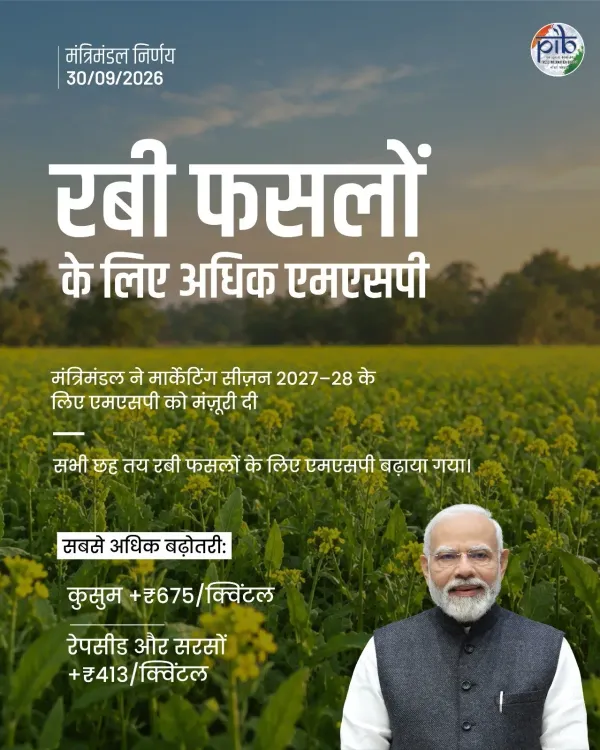
The Union Cabinet, chaired by PM Narendra Modi, approved higher MSP for six rabi crops — wheat, barley, gram, lentil, mustard and safflower — for the 2027-28 marketing season. MP Chief Minister Dr. Mohan Yadav welcomed the move as a boost to farmer income and agricultural resilience.
Key Takeaways
Union Cabinet approved MSP hike for six rabi crops for marketing season 2027-28 on 30 September 2026 .
Crops covered: wheat, barley, gram, lentil, mustard, and safflower .
MSP is a price floor mechanism covering 23 crops, designed to protect farmers from market price crashes.
Since 2018 , the government has committed to fixing MSP at at least 1.5 times the cost of production for notified crops.
MP Chief Minister Dr.
Mohan Yadav welcomed the decision and credited PM Modi's continuous efforts for farmer welfare.
Procurement by FCI and state agencies will be the key operational test once the 2027-28 season begins.
A price floor that shapes what millions of Indian farmers plant, harvest, and earn just got a government-backed revision upward. Madhya Pradesh Chief Minister Dr. Mohan Yadav on Wednesday, 30 September 2026 welcomed the Union Cabinet's decision, chaired by Prime Minister Narendra Modi, to raise the Minimum Support Price (MSP) for key rabi crops for the marketing season 2027-28.
Six rabi crops, one cabinet call
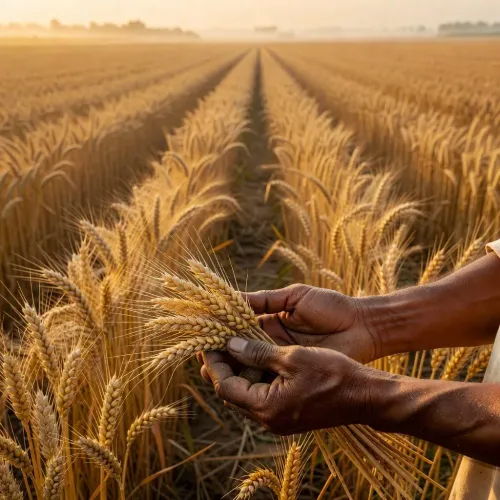
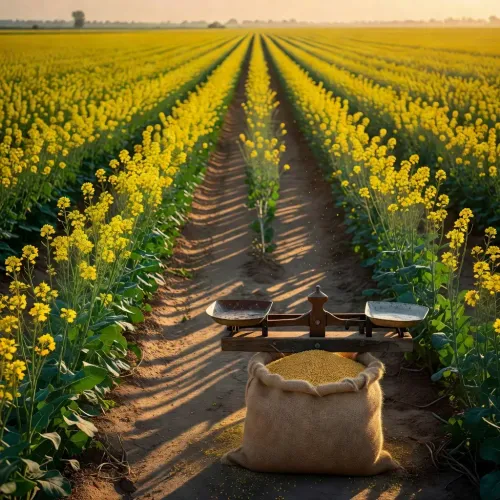
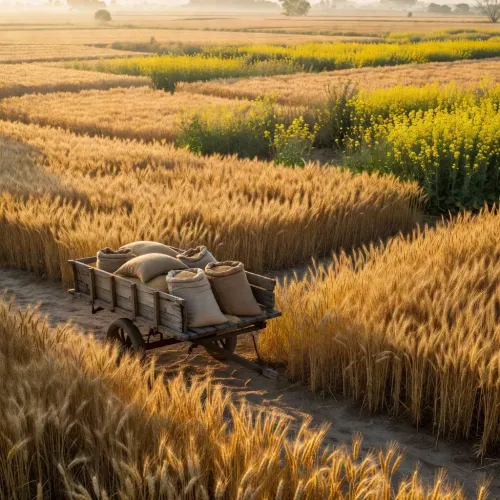
The revised MSP covers six rabi crops: wheat, barley (jau), gram (chana), lentil (masoor), mustard (sarson), and safflower (kusum). Together, these crops anchor the winter-sowing season across north and central India and are the primary income source for tens of millions of farm households. The Cabinet approval comes ahead of the rabi sowing window, giving farmers a price signal before seeds go into the ground.
Dr. Yadav, posting in Hindi, described the decision as part of 'kishano ke hit mein nirantar karya' — continuous work in farmers' interest — and expressed gratitude to the Prime Minister for what he called a landmark step for the 'annadata' (food-giver, the traditional honorific for farmers). He added that the hike will help farmers 'obtain remunerative prices for their produce, increase their income, and further strengthen the agriculture sector.'
The 1.5x cost pledge and its long arc
The MSP mechanism is not new — it has operated for 23 notified crops as a price floor, shielding farmers from market crashes. What changed in 2018 was a formal government commitment to fix MSP at at least 1.5 times the cost of production for notified crops, a promise that successive annual revisions have been measured against. The Commission for Agricultural Costs and Prices (CACP) recommends the numbers; the Union Cabinet formally approves them each season.
This annual rhythm — a cabinet approval before sowing, procurement by the Food Corporation of India (FCI) and state agencies after harvest — is the backbone of India's agricultural price-support architecture. For a state like Madhya Pradesh, which ranks among the country's top producers of wheat and gram, each revision carries direct fiscal weight for the farm economy.
What the approval means for MP's farmers
Madhya Pradesh has emerged as a major rabi-crop belt over the past decade, with wheat and gram cultivation expanding significantly. A higher MSP translates into better procurement price benchmarks for the state's mandis and anchors the floor at which private traders must compete. State governments, including Madhya Pradesh, have in past seasons announced additional bonuses on top of the central MSP — any such announcement for 2027-28 will be the next signal to watch.
Procurement operations by FCI and state agencies will begin once the marketing season opens, and the degree to which actual procurement reaches farmers — rather than just setting a notional floor — will determine how much the revision translates into real income gains on the ground.
Point of View
Which has staked part of its rural support base on consistent upward price revisions since 2018. For CM Mohan Yadav, amplifying this decision serves a dual purpose: it reinforces the central government's farmer-welfare credentials in a state where agriculture remains economically dominant, and it positions state leadership as an active stakeholder in federal policy wins. The real policy test, however, lies downstream — in how effectively FCI and state procurement agencies convert a higher notional floor into actual cash reaching farmers, a gap that has historically been the sharpest critique of the MSP architecture.
NationPress
30 Sept 2026
Frequently Asked Questions
What is the MSP for rabi crops 2027-28?
The Union Cabinet approved an increase in the Minimum Support Price for six rabi crops — wheat, barley, gram, lentil, mustard, and safflower — for the 2027-28 marketing season on 30 September 2026. Exact revised figures were not disclosed in the announcement covered here.
Which rabi crops are covered under the MSP hike?
The six crops covered are wheat (gehu), barley (jau), chickpea/gram (chana), lentil (masoor), mustard (sarson), and safflower (kusum).
What is the 1.5 times MSP rule for farmers in India?
Since 2018, the Indian government committed to fixing MSP at a minimum of 1.5 times the cost of production for notified crops, aiming to ensure a remunerative margin for farmers above their input costs.
Who approves MSP in India?
The Commission for Agricultural Costs and Prices (CACP) recommends MSP rates; the Union Cabinet, chaired by the Prime Minister, formally approves them ahead of each sowing season.
How does MSP affect farmers in Madhya Pradesh?
Madhya Pradesh is a major producer of wheat and gram. A higher MSP sets the benchmark price at which state and central procurement agencies and private traders must buy produce, helping anchor farm incomes against market price volatility.