Sensex, Nifty open lower on crude surge and Middle East tensions
Synopsis
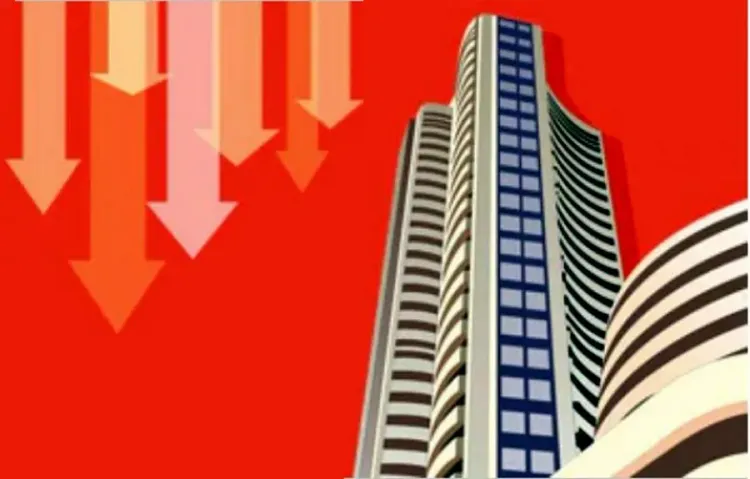
A double-hit of Fed rate-hike signals and a crude surge past $90 sent Sensex and Nifty lower at Monday's open, with Metal and IT stocks bearing the brunt. HDFC Bank succession speculation adds a stock-specific wildcard to an already nervous session.
Key Takeaways
Sensex opened at 77,130.73 , down 133.78 points (0.17%) , on 31 August .
Nifty fell 58.10 points (0.24%) to 24,117.55 in early trade.
Nifty Metal led sectoral losses at -1.70% ; Nifty IT fell 1.32% .
Brent crude rose more than 2% to $90.67 a barrel on renewed US-Iran tensions .
Fed chief Kevin Warsh's hawkish remarks raised odds of a rate hike at the September 15-16 FOMC meeting .
Key technical levels: support at 24,060 ; resistance at 24,215 ; downside risk at 23,575 .
Indian equity benchmarks Sensex and Nifty opened in the red on Monday, 31 August, dragged by a sharp spike in global crude oil prices and renewed geopolitical tensions in the Middle East, even as broader Asian markets weakened in early trade.
Sensex opened at 77,130.73, down 133.78 points or 0.17%, while Nifty slipped 58.10 points or 0.24% to 24,117.55.
Sector-wise Damage
Nifty Metal was the top sectoral loser, falling 1.70%, followed by Nifty IT which declined 1.32%. Nifty Media and Nifty PSU Bank also fell up to 1%. Realty, cement, chemicals, and FMCG indices declined between 0.73% and 1%. In contrast, Nifty Private Bank edged marginally higher by 0.06% in early trade.
Global Headwinds: Fed Signals and Crude Surge
Market analysts cited two primary headwinds. First, comments from Fed chief Kevin Warsh — that 'we have work to do' if inflation persists above the Fed's long-term target — have been interpreted as signalling a possible rate hike at the FOMC meeting scheduled for September 15-16. The resulting rise in bond yields is broadly negative for equities, analysts noted.
Second, a fresh escalation in US-Iran tensions pushed Brent crude above $90 a barrel. International benchmark Brent crude rose more than 2% to $90.67 a barrel, while US West Texas Intermediate (WTI) gained 2.06% to $85.09 a barrel. This comes amid a broader trend of energy-price volatility that has repeatedly unsettled emerging-market equities in recent months.
HDFC Bank in Focus
HDFC Bank shares were also flagged as likely to remain volatile, with market observers pointing to ongoing speculation over the successor to CEO Sasidhar Jagadishan. The stock's direction could add a stock-specific layer of uncertainty to an already cautious session.
Technical Levels and Broader Market Outlook
On the technical front, Friday's inside bar pattern has kept alive the possibility of an upswing from around 24,060, consistent with a consolidation band in play for the preceding eight days. Analysts noted that a decisive move above 24,215 would signal renewed strength, while failure to hold 24,060 could expose the index to 23,575.
Despite index-level pressure, analysts observed that the broader market has been attracting significant buying interest, with the market 'giving more preference to growth than value,' according to market experts. Additionally, traders are bracing for heightened volatility from MSCI's index rejig under its new closing auction system.
Asian Markets
Asian peers also traded weak. Japan's Nikkei fell more than 1%, Hong Kong's Hang Seng declined 0.7%, and South Korea's KOSPI slipped more than 1%. The broad-based regional weakness underscored the risk-off mood driven by geopolitical and monetary policy concerns.
With the FOMC meeting, crude trajectory, and HDFC Bank succession all live variables, markets are likely to remain on edge through the week.
Point of View
Brent above $90 is a direct tax on India's import bill and corporate margins, particularly in energy-intensive sectors like metals. The HDFC Bank succession overhang adds domestic noise to an already difficult external environment. Broader market resilience is real, but it has been funded by retail momentum; a sustained risk-off episode could test how deep that buying actually goes.
NationPress
15 Oct 2026
Frequently Asked Questions
Why did Sensex and Nifty fall on 31 August?
Sensex and Nifty opened lower on 31 August due to a combination of rising crude oil prices — Brent crossed $90 a barrel — and hawkish signals from Fed chief Kevin Warsh that raised expectations of a rate hike at the September FOMC meeting. Weakness across Asian markets compounded the pressure.
Which sectors fell the most on Monday?
Nifty Metal was the top loser, falling 1.70%, followed by Nifty IT which declined 1.32%. Nifty Media, Nifty PSU Bank, realty, cement, chemicals, and FMCG also fell between 0.73% and 1%.
What is the significance of the Fed chief's remarks?
Fed chief Kevin Warsh stated that 'we have work to do' if inflation stays above the Fed's long-term target, which markets interpreted as a signal of a possible rate hike at the FOMC meeting on September 15-16. Rising bond yields that typically follow such signals weigh on equity valuations globally.
Why is HDFC Bank in focus?
HDFC Bank shares are expected to remain volatile amid market speculation over who will succeed CEO Sasidhar Jagadishan. Leadership transitions at major banks historically trigger short-term stock uncertainty.
What are the key technical levels for Nifty?
Analysts are watching 24,060 as a critical support level, consistent with an eight-day consolidation band. A break above 24,215 would signal upside strength, while a fall below 24,060 could expose the index to 23,575.