KOSPI plunges 389 points as Samsung, SK Hynix lead tech rout
Synopsis
South Korea's KOSPI shed over 4 percent in a single morning session on 23 June, with Samsung Electronics, SK Hynix, and Hyundai Motor among the biggest casualties. The rout — triggered by a Nasdaq tech slide overnight — was one of the sharpest single-session falls for the index in recent memory, and came on the same day Seoul announced a landmark shift to T+1 stock settlement.
Key Takeaways
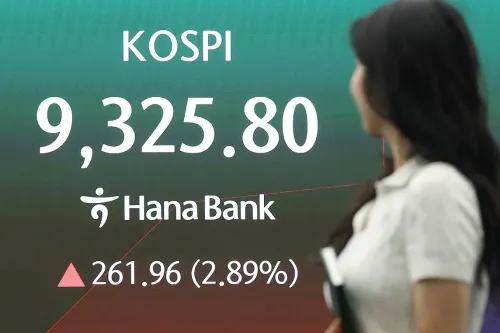
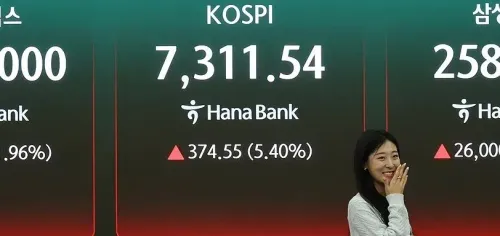
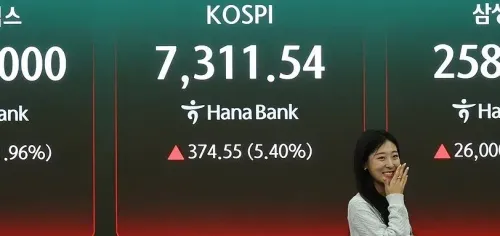
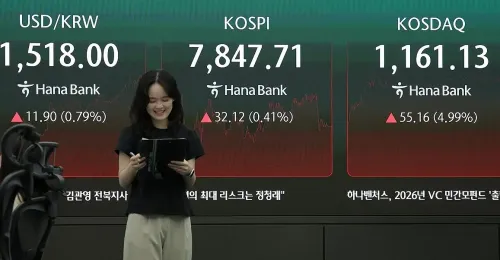
The KOSPI fell 389.16 points (4.27%) to 8,725.39 as of 11:20 am on 23 June .
SK Hynix dropped 5.34% and Samsung Electronics fell 4.95% ; Samsung Electro-Mechanics shed 8.57% .
Hyundai Motor declined 8.43% and affiliate Kia fell 6.41% .
The sell-off tracked a 1.3% Nasdaq decline overnight on US tech concerns.
The Financial Services Commission (FSC) announced a roadmap for T+1 settlement by October and an after-hours trading system via KRX in September .
South Korea's benchmark Korea Composite Stock Price Index (KOSPI) plummeted 389.16 points, or 4.27 percent, to 8,725.39 as of 11:20 am local time on Tuesday, 23 June, as a sharp sell-off in semiconductor and automobile stocks dragged the index deep into the red. The decline extended an earlier opening loss of 0.34 percent, accelerating through the morning session as global risk sentiment soured.
Tech Heavyweights Bear the Brunt
Chip giants led the carnage. SK Hynix tumbled 5.34 percent while Samsung Electronics shed 4.95 percent, reflecting the ripple effect of an overnight slump in US technology stocks. Samsung Electro-Mechanics, the electronic components manufacturing affiliate of Samsung Electronics, posted the steepest decline among the group, falling 8.57 percent.
Automobiles Also Under Pressure
The sell-off was not confined to chips. Automobile shares came under heavy selling pressure as well. Hyundai Motor, South Korea's top automaker, dropped 8.43 percent, while its smaller affiliate Kia declined 6.41 percent. The broad-based nature of the losses underscored the severity of investor risk aversion on the day.
What Triggered the Slide
The immediate catalyst was a 1.3 percent decline in the tech-heavy Nasdaq overnight, driven by concerns surrounding major US technology companies. US stocks closed mixed overall. Separately, US Vice President JD Vance stated that a 'very good foundation' had been established for negotiations toward a final agreement with Iran, while mediators also reported progress in those talks — though the geopolitical development did little to lift sentiment in Asian markets.
Won Holds Steady; Settlement Reform on the Horizon
The Korean won was trading at 1,533.7 won against the US dollar at 11:20 am, up 3.3 won from the previous session, offering a modest buffer against the equity rout. Meanwhile, South Korea's financial regulator, the Financial Services Commission (FSC), announced on Tuesday that it will draw up a roadmap by October for the introduction of a 'T+1' stock settlement system, shortening the current 'T+2' two-business-day settlement cycle. The FSC said the change would improve market efficiency. The move follows a proposal earlier this year by President Lee Jae Myung to shorten the settlement period. Additionally, the Korea Exchange (KRX), the operator of the country's stock market, is set to introduce an after-hours trading system in September as part of measures to extend trading hours.
Point of View
With Samsung and SK Hynix effectively acting as proxies for Nasdaq risk. The simultaneous collapse in Hyundai Motor and Kia suggests the sell-off went beyond sector-specific concerns into broader growth anxiety. Notably, Seoul chose this turbulent session to announce its T+1 settlement reform — a structural upgrade that could improve market efficiency long-term, but whose timing against a backdrop of acute volatility raises questions about investor readiness and operational capacity at the KRX.
NationPress
23 Jun 2026
Frequently Asked Questions
Why did South Korean stocks fall sharply on 23 June?
The KOSPI fell 4.27 percent on 23 June, tracking an overnight 1.3 percent decline in the US Nasdaq driven by concerns about major technology companies. Semiconductor and automobile stocks bore the heaviest losses, with SK Hynix, Samsung Electronics, and Hyundai Motor all posting steep declines.
How much did Samsung Electronics and SK Hynix fall?
Samsung Electronics declined 4.95 percent and SK Hynix dropped 5.34 percent during the morning session. Samsung Electro-Mechanics, an affiliate of Samsung Electronics, fell even further at 8.57 percent.
What is the T+1 settlement system South Korea announced?
T+1 settlement means stock trades are settled one business day after the trade date, compared to the current T+2 system of two business days. South Korea's Financial Services Commission said it will publish a roadmap for the transition by October, following a proposal by President Lee Jae Myung to improve market efficiency.
How did the Korean won perform during the sell-off?
The Korean won held relatively steady, trading at 1,533.7 won against the US dollar as of 11:20 am on 23 June — up 3.3 won from the previous session, providing a modest counterpoint to the equity decline.
What changes are coming to South Korea's stock trading hours?
The Korea Exchange (KRX) is set to introduce an after-hours trading system in September as part of broader measures to extend stock trading hours, as announced by the Financial Services Commission on Tuesday.