India's SHANTI Act and nuclear expansion open doors for US industry tie-ups
Synopsis
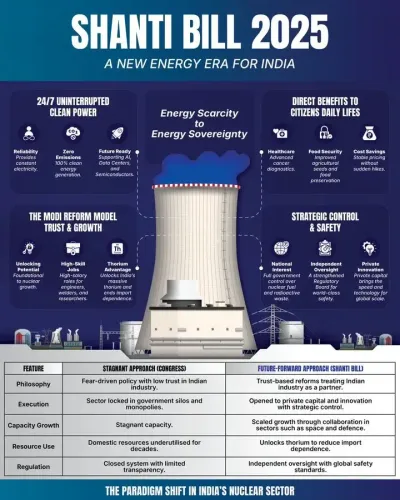
India's SHANTI Act, 2025 has cracked open a sector that was closed to private and foreign players for decades. With ₹20,000 crore committed to Small Modular Reactors and a 100 GW nuclear target by 2047, a US industry delegation's meeting with Dr. Jitendra Singh signals that global capital is now actively sizing up India's nuclear opportunity — and the policy architecture to receive it is finally in place.
Key Takeaways
India enacted the SHANTI Act, 2025 to allow private and foreign participation in the nuclear energy sector for the first time at scale.
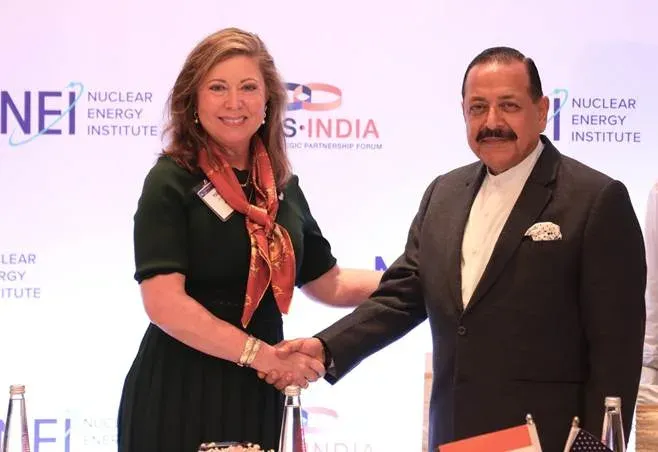
Jitendra Singh met a high-level US industry delegation in New Delhi on 18 May to discuss investment and collaboration in nuclear energy.
India has allocated nearly ₹20,000 crore for the development of Small Modular Reactors (SMRs) .
India aims to grow nuclear power capacity from 8.8 GW to 100 GW by 2047 — an approximately 11-fold increase .
Active bilateral projects discussed include the Westinghouse AP1000 at Kovvada , LIGO-India , and Fermilab superconducting accelerator collaboration.
Areas of new cooperation flagged include AI-enabled nuclear safety , hydrogen production , rare earth collaboration , and machine learning applications .
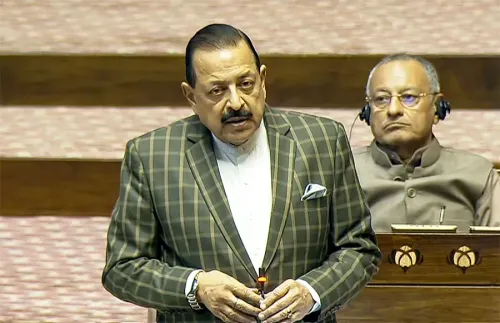
A high-level US industry delegation met Union Minister of State for Science and Technology Dr. Jitendra Singh in New Delhi on Monday, 18 May to explore private investment and industrial collaboration in India's nuclear energy sector. The meeting underscored the accelerating momentum behind India–US clean energy partnerships as New Delhi pushes to scale nuclear power capacity to 100 GW by 2047.
SHANTI Act: The Policy Shift Enabling Private Participation
Dr. Singh informed the delegation that India has enacted the SHANTI Act, 2025, a landmark legislative reform designed to facilitate greater participation of the private sector — including foreign entities — in the country's nuclear energy ecosystem. The Act is expected to create a more enabling environment for investment, manufacturing partnerships, industrial collaboration, and technology cooperation aligned with India's Nuclear Energy Mission.
This marks a significant departure from India's historically state-dominated nuclear sector, where private and foreign participation was tightly restricted. The SHANTI Act is widely seen as the legal foundation needed to attract global capital and technology into what was previously a closed domain.
Small Modular Reactors and the ₹20,000 Crore Push
India is advancing plans for the development of Small Modular Reactors (SMRs), backed by an allocation of nearly ₹20,000 crore. Dr. Singh highlighted significant scope for India–US collaboration in advanced areas such as micro-reactors, AI-enabled nuclear safety systems, scientific computing, nuclear energy modelling, and institutional capacity building.
SMRs have emerged as a global priority in clean energy planning, offering lower upfront capital costs and greater deployment flexibility than conventional large-scale reactors. India's commitment of ₹20,000 crore signals that SMR development is no longer aspirational — it is now a funded national programme.
Westinghouse, LIGO-India and Ongoing Bilateral Initiatives
The meeting reviewed progress on several active India–US collaborative initiatives, including the proposed Westinghouse AP1000 project at Kovvada and cooperation under the Indo-US Civil Nuclear Energy Working Group (CNEWG). Both projects have faced prolonged gestation periods, and the renewed high-level engagement signals intent to push them toward execution.
The discussions also covered the LIGO-India project, being jointly implemented by the Department of Atomic Energy and the Department of Science and Technology in collaboration with the US-based LIGO Laboratory and the National Science Foundation. Further areas of cooperation discussed included hydrogen production, integrated energy systems, machine learning and AI applications, rare earth collaboration, and high-intensity superconducting proton accelerator technologies through Fermilab partnerships.
India's Nuclear Capacity Target: 8.8 GW to 100 GW by 2047
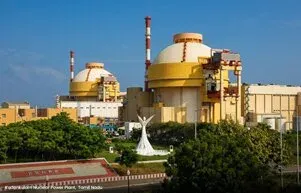
India currently operates a nuclear power capacity of 8.8 GW and aims to scale this to 100 GW by 2047 through a phased expansion strategy. Achieving that target would require an unprecedented acceleration — roughly an 11-fold increase — over the next two decades. This is the context in which the SHANTI Act's liberalisation and the SMR push acquire their strategic significance.
With the legislative framework now in place and bilateral discussions gaining pace, the next critical phase will be translating policy intent into signed agreements, funded projects, and operational reactors.
Point of View
2025 removes that wall, but legislation alone does not build reactors. The Westinghouse AP1000 at Kovvada has been discussed for well over a decade without breaking ground; the real test of this new openness is whether it can move that project — and others like it — from dialogue to construction. The SMR push is credible on paper, but ₹20,000 crore is a starting point, not a finish line, for an 11-fold capacity expansion. What India needs next is not more delegation meetings but bankable project structures, liability clarity, and a regulator equipped to handle private operators at scale.
NationPress
6 Oct 2026
Frequently Asked Questions
What is the SHANTI Act, 2025?
The SHANTI Act, 2025 is an Indian legislation enacted to enable greater private sector and foreign participation in the country's nuclear energy sector. It is designed to create an enabling ecosystem for investment, manufacturing partnerships, and technology cooperation aligned with India's Nuclear Energy Mission.
What is India's nuclear power capacity target by 2047?
India aims to increase its nuclear power capacity from the current 8.8 GW to 100 GW by 2047 through a phased expansion strategy. This represents approximately an 11-fold increase over two decades.
How much has India allocated for Small Modular Reactors?
India has allocated nearly ₹20,000 crore for the development of Small Modular Reactors (SMRs). The programme is part of India's broader Nuclear Energy Mission and is expected to attract international collaboration, particularly with the United States.
What is the Westinghouse AP1000 project at Kovvada?
The Westinghouse AP1000 project at Kovvada is a proposed India–US nuclear power plant collaboration that was reviewed during the meeting with the US industry delegation. It is one of several ongoing bilateral initiatives under the Indo-US Civil Nuclear Energy Working Group (CNEWG).
What other areas of India–US cooperation were discussed at the meeting?
Beyond nuclear power, the discussions covered hydrogen production, integrated energy systems, AI and machine learning applications, rare earth collaboration, high-intensity superconducting proton accelerator technologies through Fermilab, and the LIGO-India project implemented jointly by India's Department of Atomic Energy and the US-based LIGO Laboratory.