FM Sitharaman pitches India's nuclear sector to US firms, cites 49% FDI opening

Synopsis
India has opened its nuclear sector to up to 49% foreign investment and enacted the SHANTI Act — and Finance Minister Sitharaman is now personally pitching US firms to come in. With the Kalpakkam fast breeder reactor achieving first criticality and five SMRs planned by 2033, India is making its most serious bid yet to become a global nuclear energy player.
Key Takeaways
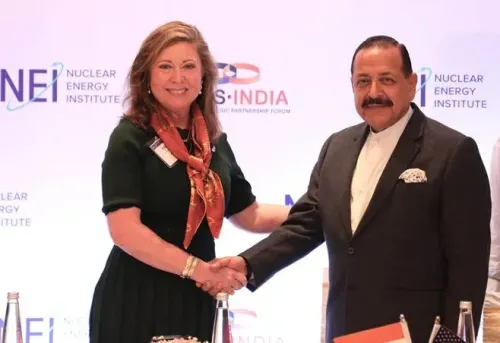
Finance Minister Nirmala Sitharaman met a US nuclear industry delegation — including the Nuclear Energy Institute (NEI) — in New Delhi on 19 May .
India now permits FDI of up to 49 per cent in nuclear power projects, a major policy opening.
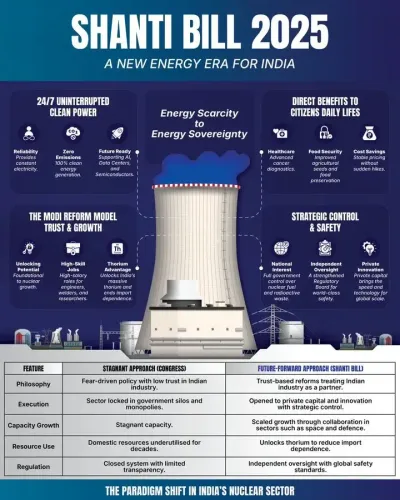
The SHANTI Act enables private sector participation and is designed to accelerate India's nuclear energy expansion.
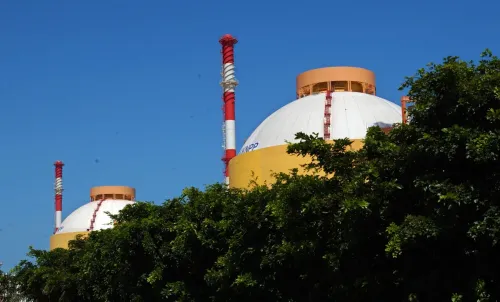
India's 500 MWe Prototype Fast Breeder Reactor (PFBR) at Kalpakkam, Tamil Nadu achieved first criticality on 6 April , making India set to be only the second country after Russia to operate a commercial-level fast breeder reactor.
Under the Nuclear Mission , ₹20,000 crore has been allocated and five SMRs are planned by 2033 .
India targets 100 GW of nuclear power capacity by 2047 .
Finance Minister Nirmala Sitharaman on Tuesday, 19 May met a high-level delegation of the US nuclear industry in New Delhi, urging leading American companies to explore long-term investment and technology partnerships in India's rapidly opening nuclear energy sector. The delegation included representatives of the Nuclear Energy Institute (NEI) and the US-India Strategic Partnership Forum.
Key Developments from the Meeting
At the meeting, Sitharaman underscored that technology collaborations and strategic partnerships can serve as critical drivers of innovation and resilience in India's nuclear ecosystem. She encouraged participants to actively pursue engagement opportunities and long-term collaboration in the domain.
Crucially, the Finance Minister informed the delegation that Foreign Direct Investment (FDI) of up to 49 per cent is now permitted in nuclear power projects — a significant policy shift aimed at drawing global capital into a sector that was historically closed to private and foreign participation.
The SHANTI Act and Reform Framework
Sitharaman highlighted India's landmark Sustainable Harnessing and Advancement of Nuclear Energy for Transforming India (SHANTI) Act, outlining the structural reforms introduced under this framework. The SHANTI Act is designed to accelerate India's clean energy transition, deepen technology partnerships, and enhance investment inflows into the country's nuclear ecosystem. It also enables greater private sector participation in scaling up nuclear power generation capacity.
India's Fast Breeder Reactor Milestone
The meeting came against the backdrop of a landmark achievement: India's indigenously designed 500 MWe Prototype Fast Breeder Reactor (PFBR) at Kalpakkam in Tamil Nadu achieved first criticality on 6 April, positioning India to become only the second country in the world — after Russia — to operate a commercial-level fast breeder reactor. This milestone moves India closer to leveraging its vast thorium reserves in the third stage of its national nuclear strategy.
Notably, while several nations — including the USA, the UK, France, Japan, Germany, and China — have historically developed or operated experimental fast reactors, most of those programmes are currently shut down. Russia remains the only country with operational commercial fast breeder reactors.
Nuclear Mission and Small Modular Reactors
India's broader nuclear ambitions are anchored in a target of 100 GW nuclear power capacity by 2047. Under the recently launched Nuclear Mission, an allocation of ₹20,000 crore has been earmarked, with five Small Modular Reactors (SMRs) planned for commissioning by 2033. SMRs are seen as particularly suited for captive power generation in industries, dense urban zones, remote areas without grid connectivity, and for repurposing retiring thermal plants.
With the SHANTI Act, the 49% FDI window, and the Nuclear Mission in place, India is signalling a decisive pivot toward nuclear energy as a cornerstone of its clean energy future — and is actively courting US expertise to help build it.
Point of View
Sitharaman is positioning India as an alternative nuclear partnership destination at a moment when US-China tensions are reshaping global energy supply chains. The Kalpakkam fast breeder milestone adds credibility that past pitches lacked. The harder question is execution: India's nuclear buildout has historically run years behind schedule, and the 100 GW by 2047 target will require a pace of capacity addition the country has never sustained. Whether the SHANTI Act's private-sector provisions translate into bankable projects — or remain aspirational — will determine whether this diplomatic push yields real megawatts.
NationPress
20 Sept 2026
Frequently Asked Questions
What did FM Nirmala Sitharaman discuss with the US nuclear delegation?
Sitharaman urged representatives of the Nuclear Energy Institute, leading US nuclear companies, and the US-India Strategic Partnership Forum to explore investment and technology partnerships in India's nuclear sector. She highlighted the 49% FDI permission in nuclear power projects and outlined reforms under the SHANTI Act.
What is the SHANTI Act and why does it matter?
The Sustainable Harnessing and Advancement of Nuclear Energy for Transforming India (SHANTI) Act is a legislative framework that opens India's nuclear sector to greater private participation and foreign technology collaboration. It is designed to accelerate the country's clean energy transition and attract investment into nuclear power generation.
What is the significance of the Kalpakkam fast breeder reactor achieving first criticality?
The 500 MWe Prototype Fast Breeder Reactor (PFBR) at Kalpakkam, Tamil Nadu achieved first criticality on 6 April, making India poised to become only the second country in the world — after Russia — to operate a commercial-level fast breeder reactor. This milestone advances India's strategy to eventually harness its large thorium reserves.
What is India's Nuclear Mission and what are its targets?
India's Nuclear Mission is a government initiative with an allocation of ₹20,000 crore, under which five Small Modular Reactors (SMRs) are planned for commissioning by 2033. The broader national target is 100 GW of nuclear power capacity by 2047.
How much FDI is now allowed in India's nuclear power sector?
India now permits Foreign Direct Investment of up to 49 per cent in nuclear power projects, a significant liberalisation of a sector that was previously closed to foreign and private capital. The move is aimed at attracting global technology partners and accelerating capacity expansion.