Tata Motors raises commercial vehicle prices up to 2.5% from July 1

Synopsis
Tata Motors is raising commercial vehicle prices by up to 2.5% from 1 July — its second price action in weeks after a 1.5% passenger vehicle hike earlier in June. With Hyundai and Maruti also raising prices, the Indian auto sector is in a broad-based cost pass-through cycle driven by commodity inflation.
Key Takeaways
Tata Motors announced a commercial vehicle price hike of up to 2.5 per cent , effective 1 July .
The increase is aimed at partially offsetting rising commodity prices and input costs .
Earlier in June , Tata Motors Passenger Vehicles (TMPV) raised passenger vehicle prices by up to 1.5 per cent .
Hyundai Motor India raised prices by up to ₹12,800 last month; Maruti Suzuki also revised prices earlier this year.
TMCV shares traded flat at ₹404.85 on the NSE on Thursday, against a 52-week high of ₹509 .
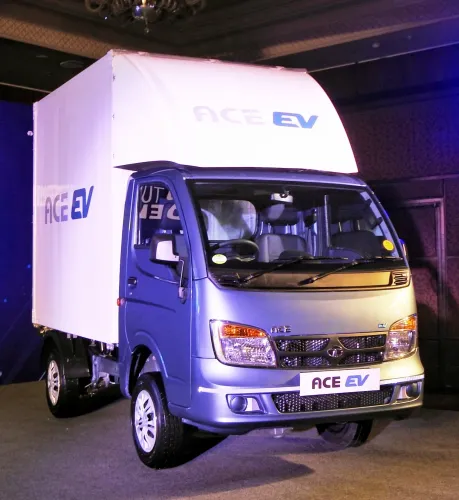
Tata Motors on Thursday, 18 June announced a price increase of up to 2.5 per cent across its commercial vehicle range, with revised prices set to take effect from 1 July. The hike is aimed at partially offsetting the impact of rising commodity prices and higher input costs, the company said in an official statement.
What the Company Said
According to Tata Motors, the extent of the price revision will vary by model and variant. 'The price increase is being undertaken to partially offset the impact of rising commodity prices and other input costs,' the company stated. The automaker added that it continues to absorb a significant portion of cost escalation internally, making the hike only a partial pass-through to customers.
Passenger Vehicles Already Hit Earlier This Month
This is the second price action from Tata Motors within a short span. Earlier in June, Tata Motors Passenger Vehicles (TMPV) announced a price increase of up to 1.5 per cent across its passenger vehicle portfolio, covering both internal combustion engine (ICE) and electric vehicle (EV) models, effective the same month. That hike was also attributed to rising input costs and continued inflationary pressures.
Industry-Wide Trend
Tata Motors is not alone in raising prices. Hyundai Motor India last month announced a price increase of up to ₹12,800 across its model range, citing higher commodity prices, rising input costs, and elevated operating expenses. Maruti Suzuki India similarly revised prices across several models earlier this year to mitigate the impact of rising production costs. Automobile manufacturers have increasingly resorted to calibrated price hikes in recent months to protect margins amid raw material price fluctuations and higher operational expenses.
Market Reaction
Shares of Tata Motors Commercial Vehicles (TMCV) were trading flat at ₹404.85 per share on the National Stock Exchange (NSE) on Thursday. The stock had touched a 52-week high of ₹509 and a 52-week low of ₹306.30 on the exchange, reflecting the broader volatility in the auto sector over the past year.
With input cost pressures showing no immediate signs of easing, further calibrated price adjustments across the auto sector cannot be ruled out in the months ahead.
Point of View
Now commercial — signal that input cost pressures have crossed the threshold where internal absorption is no longer viable. What is notable is the sequencing: CV hikes tend to have a wider inflationary ripple, since freight and logistics costs feed into nearly every supply chain. With Hyundai and Maruti moving in the same direction, this is not a company-specific margin defence — it is a sector-wide repricing event. The flat stock reaction suggests the market had already priced in the move, but fleet operators and logistics firms absorbing higher vehicle costs alongside fuel prices will feel the squeeze more acutely.
NationPress
25 Sept 2026
Frequently Asked Questions
Why is Tata Motors hiking commercial vehicle prices?
Tata Motors is raising commercial vehicle prices by up to 2.5 per cent to partially offset rising commodity prices and higher input costs. The company stated it continues to absorb a significant share of cost escalation internally, making this a partial pass-through.
When will the new Tata Motors commercial vehicle prices take effect?
The revised commercial vehicle prices will take effect from 1 July . The extent of the increase will vary depending on the specific model and variant.
Has Tata Motors raised passenger vehicle prices too?
Yes. Earlier in June, Tata Motors Passenger Vehicles (TMPV) announced a price increase of up to 1.5 per cent across its passenger vehicle portfolio, covering both ICE and EV models, also citing rising input costs.
Are other automakers also raising prices?
Yes. Hyundai Motor India raised prices by up to ₹12,800 last month, and Maruti Suzuki India revised prices across several models earlier this year. Calibrated price hikes have become an industry-wide response to commodity inflation and higher operational expenses.
How did Tata Motors stock react to the price hike announcement?
Shares of Tata Motors Commercial Vehicles (TMCV) traded flat at ₹404.85 on the NSE on Thursday. The stock's 52-week range is ₹306.30 to ₹509, reflecting broader auto-sector volatility over the past year.