Tax appeal threshold hike cuts disputed demand by ₹16,690 crore: Sitharaman
Synopsis
Raising the bar for departmental tax appeals has quietly cleared ₹16,690 crore in disputed demand — with the high court tier alone accounting for over half. The numbers, disclosed by Finance Minister Sitharaman in Parliament, reveal how a procedural tweak can move more money than most headline tax schemes.
Key Takeaways
Raising monetary thresholds for tax appeals post Union Budget 2024-25 reduced disputed demand by an estimated ₹16,690 crore .
At the ITAT , 443 cases withdrawn and 11,390 not filed — demand cut by ₹3,662.82 crore .
Before high courts , 4,791 cases withdrawn and 5,565 not filed — demand cut by ₹9,218.71 crore .
At the Supreme Court , 744 cases withdrawn and 534 not filed — demand cut by ₹3,807.15 crore .
New limits effective 17 September 2024 : ₹60 lakh (ITAT), ₹2 crore (High Courts), ₹5 crore (Supreme Court).
CBDT has also introduced faceless assessments, pre-filled ITRs, and updated return filing over the past 12 years .
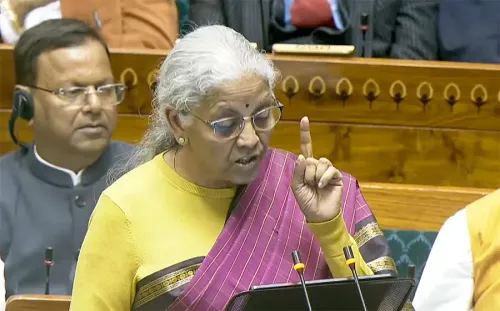
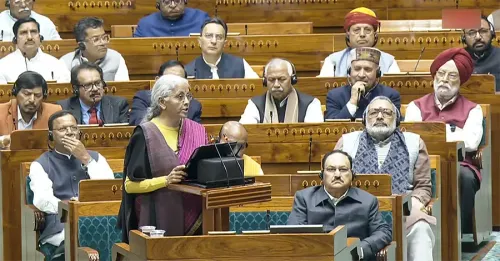
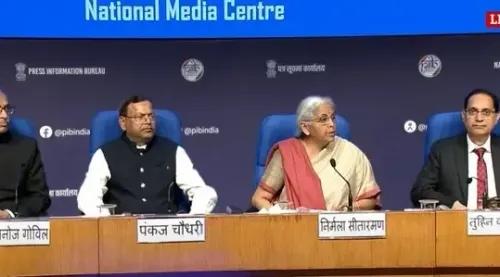
Finance Minister Nirmala Sitharaman on Monday informed Parliament that raising monetary thresholds for departmental tax dispute appeals has led to an estimated ₹16,690 crore reduction in disputed tax demand. The disclosure came in a written reply to the Lok Sabha, linking the outcome directly to enhanced limits notified following the Union Budget 2024-25.
Forum-wise Breakdown of Withdrawn Appeals
At the Income Tax Appellate Tribunal (ITAT), 443 cases were withdrawn and 11,390 appeals were not filed, trimming disputed demand by an estimated ₹3,662.82 crore. Before the high courts, 4,791 cases were withdrawn and 5,565 appeals were not pursued, resulting in a reduction of ₹9,218.71 crore. At the Supreme Court, 744 cases were withdrawn and 534 appeals were not filed, cutting disputed demand by a further ₹3,807.15 crore.
What the New Thresholds Look Like
Through the Union Budget 2024-25, effective 17 September 2024, the government raised the monetary limits for filing departmental appeals in direct tax matters to ₹60 lakh before the ITAT, ₹2 crore before high courts, and ₹5 crore before the Supreme Court. The intent was to reduce the government's own litigation footprint and unclog appellate forums that had long been burdened with low-value disputes.
Broader Tax Compliance Reforms
Sitharaman also highlighted that the Central Board of Direct Taxes (CBDT) has rolled out a series of compliance-easing measures over the past 12 years. These include pre-filled income tax returns, a revamped Form 26AS, the facility to file updated returns, faceless assessment and appeal schemes, removal of higher TDS/TCS provisions for non-filers, rationalisation of the safe harbour regime, and expansion of the presumptive taxation scheme.
Why This Matters
India's tax litigation backlog has historically been among the largest in the world, with tens of thousands of cases pending across forums. By raising the floor below which the department will not contest, the government is effectively conceding that the cost of litigation on smaller demands outweighs potential recovery — a pragmatic, if long-overdue, course correction. Notably, the bulk of the demand reduction — ₹9,218.71 crore — came from the high court tier, suggesting that mid-value disputes were the most clogged segment. The policy's full impact will take several assessment cycles to measure, but the early numbers point to a meaningful clearing of the pipeline.
Point of View
690 crore figure is significant, but it measures withdrawal of government appeals — not actual tax collected or written off. The distinction matters: a reduction in 'disputed demand' does not automatically mean taxpayer relief or revenue loss; it means the department chose not to contest. What the data does reveal is the scale of low-value litigation the government was generating against its own interest — a systemic inefficiency that these thresholds begin to address. The real accountability question is whether CBDT will now track how many of these withdrawn cases had merit, and whether the new limits are calibrated correctly or will need further revision as inflation erodes their real value.
NationPress
17 Sept 2026
Frequently Asked Questions
What is the ₹16,690 crore reduction in disputed tax demand?
It refers to the estimated drop in disputed tax demand resulting from the government withdrawing or not filing departmental appeals below new monetary thresholds set after the Union Budget 2024-25. Finance Minister Nirmala Sitharaman disclosed this figure in a written reply to the Lok Sabha on Monday.
What are the new monetary limits for filing tax appeals?
Effective 17 September 2024, the government raised the minimum disputed amount required to file a departmental appeal to ₹60 lakh before the ITAT, ₹2 crore before high courts, and ₹5 crore before the Supreme Court. Cases below these thresholds are not contested by the department.
Which appellate forum saw the largest reduction in disputed demand?
High courts accounted for the largest share, with ₹9,218.71 crore in disputed demand reduced through 4,791 withdrawn cases and 5,565 appeals not filed. The ITAT and Supreme Court contributed ₹3,662.82 crore and ₹3,807.15 crore respectively.
What other tax compliance reforms has the CBDT introduced?
Over the past 12 years, the CBDT has introduced pre-filled income tax returns, a revamped Form 26AS, updated return filing, faceless assessment and appeal schemes, removal of higher TDS/TCS for non-filers, safe harbour rationalisation, and an expanded presumptive taxation scheme.
Does this mean taxpayers no longer owe the disputed amounts?
Not necessarily. A reduction in disputed demand means the government has chosen not to pursue appeals on those amounts, not that the underlying tax liability has been waived. The practical effect varies case by case depending on the original assessment outcome.