TDB, NeoSeekermetals sign ₹20 crore deal to recover critical minerals from e-waste
Synopsis
India's push to secure critical minerals got a concrete nudge on Monday as TDB committed ₹10 crore under its RDI Fund to back NeoSeekermetals' patented e-waste recycling tech. The ₹20 crore project aims to take the technology all the way to commercial scale — a potential game-changer for domestic supply chains in EVs and clean energy.
Key Takeaways
TDB and NeoSeekermetals Pvt.
Ltd. signed an agreement on 16 November 2026 to develop indigenous critical minerals recovery technology.
Total project cost: ₹20 crore ; government backing of ₹10 crore approved under the RDI Fund , disbursed via Optionally Convertible Debt (OCD) .
The patented process targets recovery of critical metals and battery materials from both e-waste and lithium-ion battery waste .
Technology will be scaled from TRL-5 to TRL-9 , moving from demonstration stage to full commercial deployment.
The initiative supports India's strategic goals in electric mobility , clean energy , and electronics manufacturing .
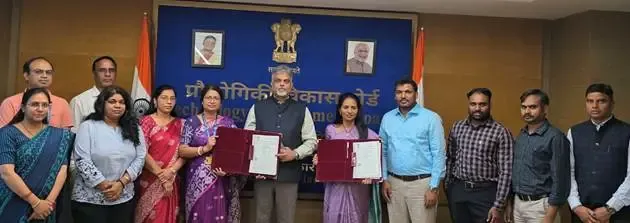
The Technology Development Board (TDB), operating under the Department of Science and Technology, has signed a formal agreement with Hyderabad-based NeoSeekermetals Pvt. Ltd. to develop and commercialise an indigenous technology for extracting critical minerals from e-waste and lithium-ion battery waste. The announcement was made on Monday, 16 November 2026, through an official statement.
The project carries a total cost of ₹20 crore, of which ₹10 crore has been approved under the government's Research, Development and Innovation (RDI) Fund. The financial support will be channelled through Optionally Convertible Debt (OCD).
What the Technology Does
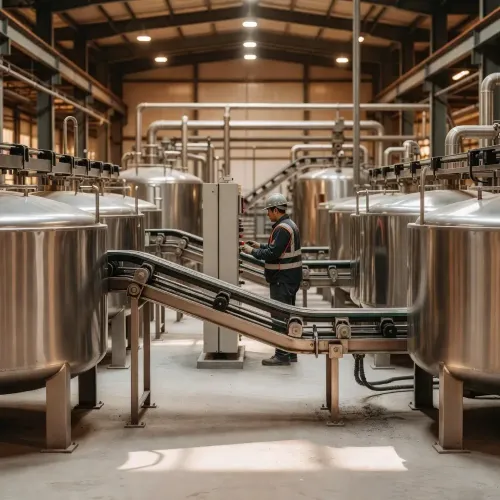
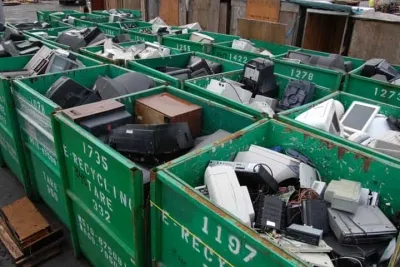
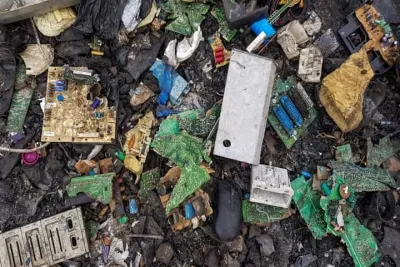
NeoSeekermetals has developed an integrated and patented recycling process designed to handle both e-waste and end-of-life lithium-ion batteries. The technology aims to recover valuable metals and battery materials from these complex waste streams, creating a viable pathway to return discarded materials to the productive economy.
The project is set to advance the technology from Technology Readiness Level (TRL)-5 to TRL-9, effectively moving it from laboratory scale to full commercial deployment. A range of valuable materials is expected to be recoverable through the proposed process.
Why This Matters for India
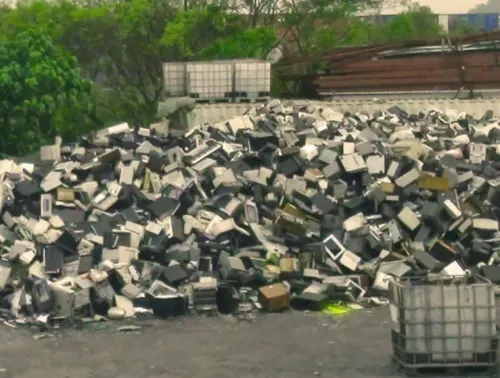
India is ramping up its ambitions in electric mobility, clean energy, electronics, and advanced manufacturing — all sectors that depend heavily on critical minerals. At the same time, volumes of electronic waste and end-of-life batteries are rising sharply, creating both a supply challenge and an environmental liability. This initiative attempts to address both simultaneously by building domestic recycling capabilities.
Notably, India currently relies significantly on imports for many of these critical minerals, making indigenous recovery infrastructure a matter of strategic as well as economic importance.
What the Government Said
Rajesh Kumar Pathak, Secretary of the Technology Development Board, underscored the dual purpose of the initiative. 'Developing indigenous capabilities to recover these resources from e-waste and end-of-life batteries is an important part of this larger effort. Through the RDI Fund, TDB is supporting technologies that can combine innovation with strategic relevance, helping transform waste streams into valuable resources and strengthening the foundations of a circular economy,' he said.
NeoSeekermetals' Outlook
A spokesperson for NeoSeekermetals described the TDB backing as a critical enabler for scaling up. 'The support from TDB under the RDI Fund will help us take our technology forward towards commercial deployment. Our focus is on building an efficient and sustainable process for recovering critical and valuable materials from e-waste and lithium-ion battery waste,' the spokesperson said.
With the agreement now formalised, the focus shifts to execution — moving from a proven laboratory concept to a commercially viable, domestically scaled operation that could meaningfully reduce India's dependence on imported critical minerals.
Point of View
And domestic recycling capacity remains a fraction of projected demand. TRL-9 is the right target, but moving from lab to commercially viable output at scale requires sustained follow-on investment beyond this first tranche.
NationPress
16 Nov 2026
Frequently Asked Questions
What is the TDB-NeoSeekermetals agreement about?
The Technology Development Board has signed an agreement with Hyderabad-based NeoSeekermetals Pvt. Ltd. to co-fund the development and commercialisation of a patented technology that recovers critical minerals from e-waste and lithium-ion battery waste. The total project cost is ₹20 crore, with ₹10 crore approved under the government's RDI Fund.
What is the RDI Fund and how does it support this project?
The Research, Development and Innovation (RDI) Fund is a government mechanism managed by TDB to support high-impact technology projects with strategic relevance. In this case, it is providing ₹10 crore in financial support through Optionally Convertible Debt (OCD) to help NeoSeekermetals scale its recycling technology.
What critical minerals can be recovered from this process?
The patented integrated recycling process developed by NeoSeekermetals is designed to recover a range of valuable metals and battery materials from e-waste and end-of-life lithium-ion batteries, though specific mineral names were not detailed in the official statement.
What does TRL-5 to TRL-9 mean for this technology?
Technology Readiness Level (TRL) is a scale from 1 to 9 measuring how close a technology is to full deployment. Moving from TRL-5 (technology validated in a relevant environment) to TRL-9 (actual system proven in operational environment) means NeoSeekermetals' process will progress from a proven prototype to full commercial-scale production.
Why is critical mineral recovery from e-waste strategically important for India?
India is aggressively expanding in electric vehicles, clean energy, and advanced electronics — sectors that depend on critical minerals currently imported in large quantities. Developing indigenous recycling capabilities reduces import dependence, lowers supply chain risk, and addresses the growing environmental challenge posed by e-waste and end-of-life battery disposal.