TDB signs ₹64 crore deal with Astrome for AI-enabled ELINT satellite constellation
Synopsis
India is building its own AI-driven eye in the sky. The Technology Development Board's ₹64.05 crore deal with Bengaluru-based Astrome Technologies — part of a ₹128.11 crore project — sets the stage for a sovereign ELINT satellite constellation that could transform how India monitors electronic threats from space, without depending on foreign intelligence systems.
Key Takeaways
The Technology Development Board (TDB) has signed a ₹64.05 crore funding agreement with Astrome Technologies on 12 November 2026 .
The total project cost is ₹128.11 crore , funded under the Research, Development and Innovation (RDI) Fund .
Astrome will develop a constellation of 50-kg class microsatellites with AI-enabled electronic intelligence (ELINT) and inter-satellite communication capabilities in low-Earth orbit .
The programme targets technology advancement from TRL-4 to TRL-9 , moving from prototype to full operational readiness.
In October 2026 , TDB also committed ₹116 crore to Manastu Space Technologies for a green propulsion system, underscoring a broad sovereign space push.
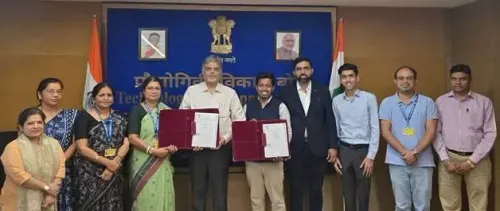
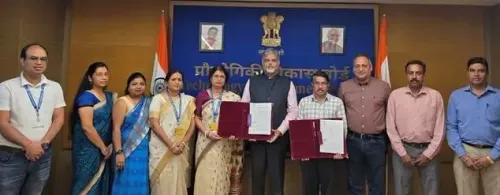
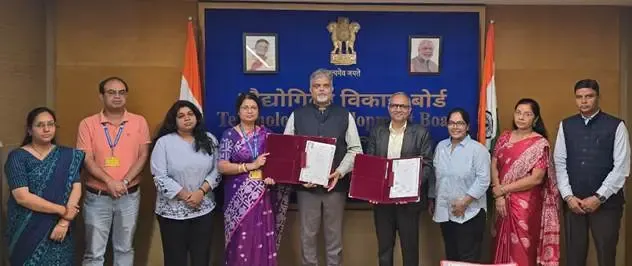
The Technology Development Board (TDB) has signed a funding agreement with Bengaluru-based Astrome Technologies to provide financial support of ₹64.05 crore for the development of an indigenous artificial intelligence-enabled electronic intelligence (ELINT) satellite constellation for national security applications, according to an official statement released on Thursday, 12 November 2026. The project, with a total outlay of ₹128.11 crore, will be funded under the Research, Development and Innovation (RDI) Fund under the Ministry of Science and Technology.
What the Project Entails
Astrome Technologies plans to develop and deploy a constellation of 50-kg class microsatellites designed to provide wider area coverage and more frequent observation of designated regions. The company will also build inter-satellite communication technology, enabling individual satellites to exchange data and function as an integrated network in low-Earth orbit (LEO).
Critically, the programme is designed to advance technologies from Technology Readiness Level (TRL)-4 to TRL-9 — moving the constellation from early prototype stage to full operational deployment. Financial support will be channelled through Optionally Convertible Debt (OCD), a structure that gives the government a potential equity stake if milestones are not met, adding an accountability layer to the disbursement.
Why This Matters for National Security
An indigenous ELINT constellation would give India the ability to monitor electronic emissions — radar signals, communication intercepts and electronic warfare activity — from space, without dependence on foreign intelligence assets. As countries increasingly lean on space-based systems for strategic and security purposes, a sovereign ELINT capability represents a significant force-multiplier for India's defence establishment.
The project is intended to strengthen India's indigenous capabilities in space-based intelligence gathering, data processing, and secure communications. Notably, this comes at a time when India is rapidly expanding its dual-use space infrastructure following policy liberalisation for private players in the sector.
What the Government Said
Rajesh Kumar Pathak, Secretary of the Technology Development Board, said the programme reflected the potential of India's deep-tech ecosystem to develop advanced space-based technologies combining artificial intelligence, electronic intelligence, and next-generation communications. Astrome said the funding would help accelerate the integration of critical technologies and support the programme's path to operational readiness.
TDB's Broader Deep-Tech Push
The Astrome agreement is part of a wider pattern of TDB-backed investments in advanced space technology. In October 2026, TDB signed a separate agreement with Manastu Space Technologies Private Limited for financial support of ₹116 crore under the same RDI Fund. That project — with a total cost of ₹277.63 crore — focuses on developing a scalable, integrated green propulsion system for satellites and launch vehicles across the 5 mN to 300 N thrust class. Together, the two deals signal an accelerating push by the Centre to build sovereign space capabilities across propulsion, communications, and intelligence.
What Comes Next
With funding now formalised, Astrome is expected to begin the technology integration phase targeting TRL-9 readiness, after which the constellation would move toward launch and operational deployment. The timeline for first satellite launch has not yet been officially disclosed. Industry observers will watch whether the OCD financing structure — relatively new in India's deep-tech funding landscape — becomes a template for future RDI Fund deployments.
Point of View
And the Optionally Convertible Debt structure, while accountability-forward, is untested at scale in India's space sector. The TDB's back-to-back deals — Astrome in November, Manastu in October — suggest a deliberate sprint toward sovereign space capabilities, but sprint financing without robust milestone verification risks repeating the gaps that have dogged earlier Make-in-India defence programmes.
NationPress
12 Nov 2026
Frequently Asked Questions
What is the TDB-Astrome deal for the ELINT satellite constellation?
The Technology Development Board has agreed to provide ₹64.05 crore to Bengaluru-based Astrome Technologies for developing an AI-enabled electronic intelligence (ELINT) satellite constellation for national security use. The total project cost is ₹128.11 crore, with the remainder to be funded through other means.
What will Astrome Technologies build with this funding?
Astrome will develop a constellation of 50-kg class microsatellites in low-Earth orbit, equipped with AI-driven electronic intelligence capabilities and inter-satellite communication technology. The satellites are designed to monitor electronic emissions and provide wider, more frequent coverage of designated areas.
What is ELINT and why does it matter for India?
ELINT, or electronic intelligence, involves collecting and analysing electronic signals — such as radar emissions and communication intercepts — to support national security decisions. A sovereign space-based ELINT capability reduces India's dependence on foreign intelligence systems and strengthens its strategic autonomy.
What is the Technology Readiness Level (TRL) target for this project?
The project aims to advance the constellation's core technologies from TRL-4 (early validation) to TRL-9 (full operational deployment). This represents the full arc from laboratory prototype to a functioning, mission-ready system.
How does this deal fit into India's broader space programme?
It is part of a larger push by the Centre to build sovereign space capabilities through the RDI Fund. In October 2026, TDB separately committed ₹116 crore to Manastu Space Technologies for a green satellite propulsion system worth ₹277.63 crore in total, indicating a coordinated effort to develop indigenous propulsion, communication, and intelligence systems.