Vikram-1 success: TDB-DST hails Skyroot Aerospace's private space milestone
Synopsis
Vikram-1's success is more than a rocket launch — it is institutional validation. TDB-DST's formal congratulations, combined with Skyroot's pending RDI Fund proposal, signal that India's private space ecosystem is moving from recognition to sustained government-backed scale-up.
Key Takeaways
TDB-DST congratulated Skyroot Aerospace on the successful Vikram-1 mission on 19 July , calling it a watershed for India's private space sector.
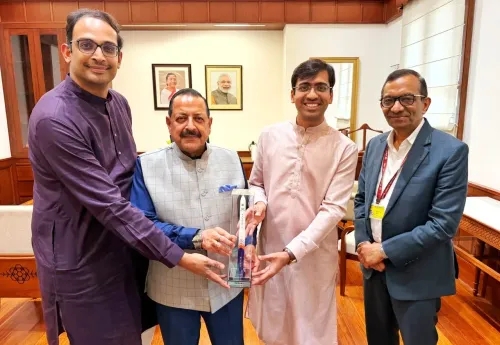
Skyroot received the National Technology Start-up Award 2022 , presented by Dr.
Jitendra Singh , for its work in indigenous cryogenic, liquid, and solid propulsion technologies.
Rajesh Kumar Pathak , Secretary TDB, said the milestone reflects the strength of India's innovation ecosystem.
Skyroot has submitted a proposal to TDB under the Research, Development and Innovation (RDI) Fund , currently under consideration.
TDB supports commercialisation across sectors including aerospace, defence, clean energy, and digital technologies.
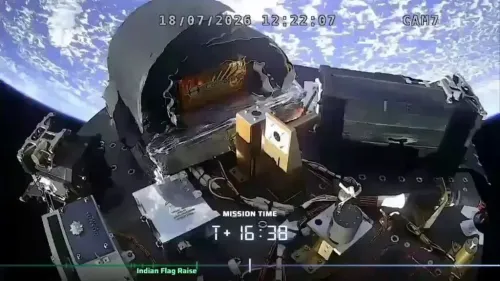
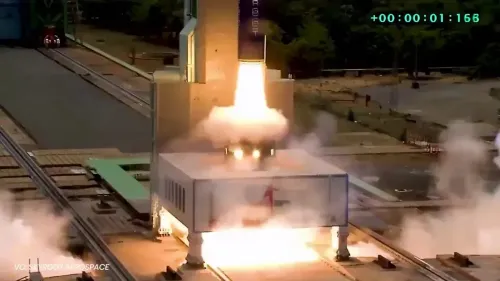
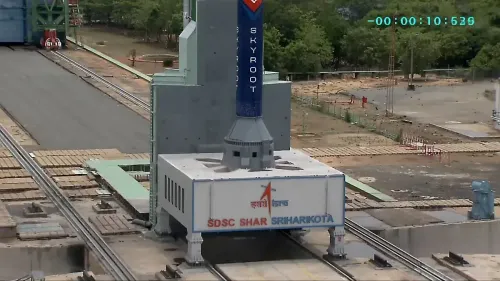
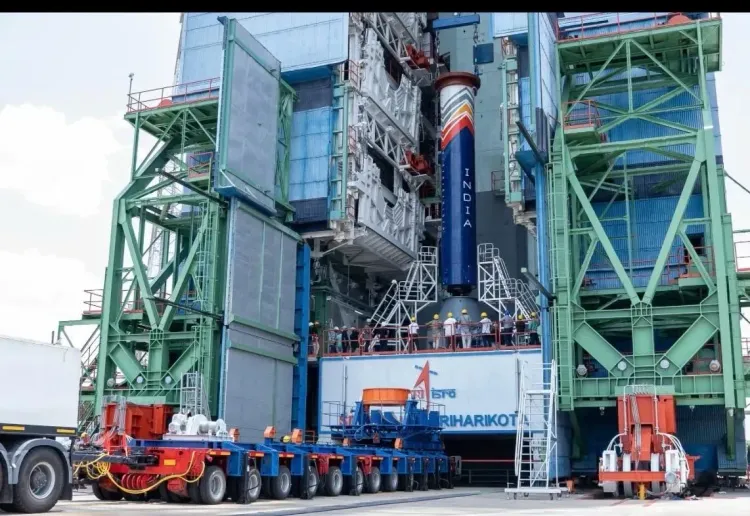
The Technology Development Board (TDB) under the Department of Science and Technology (DST) on Sunday, 19 July congratulated Skyroot Aerospace on the successful Vikram-1 mission, calling it a watershed moment for India's private space sector and a clear signal of the country's growing stature as a global hub for indigenous space technologies and deep-tech innovation.
TDB's Statement on the Mission
In an official statement, the Board said the Vikram-1 mission demonstrates the transformative potential of home-grown deep-tech innovation and reaffirms TDB's long-standing commitment to identifying and promoting indigenous technologies with strong commercialisation potential. The Board described the achievement as validating its broader mandate to back breakthrough Indian technologies capable of creating significant national and global impact.
The National Technology Start-up Award Connection
TDB noted that it had recognised Skyroot Aerospace at an early stage of its journey, conferring the National Technology Start-up Award 2022 during the National Technology Day celebrations. The award was presented by Union Minister of State (Independent Charge) for Science and Technology, Dr. Jitendra Singh, in recognition of the company's pioneering work in developing indigenous cryogenic, liquid, and solid propulsion technologies for the small satellite launch market. The successful Vikram-1 mission, according to the Board, now validates the vision behind those awards.
What TDB's Secretary Said
Rajesh Kumar Pathak, Secretary, Technology Development Board, said Skyroot's journey — from an emerging start-up recognised through the National Technology Start-up Award to achieving a historic milestone in India's private space programme — 'reflects the strength of the country's innovation ecosystem.' He added that Skyroot Aerospace has also submitted a proposal to TDB under the Research, Development and Innovation (RDI) Fund, which is currently under consideration.
India's Broader Deep-Tech Push
TDB stated it has consistently supported the commercialisation of indigenous technologies across strategic sectors including aerospace, defence, healthcare, clean energy, biotechnology, advanced manufacturing, and digital technologies. The Vikram-1 success is the latest in a series of milestones that have positioned India's private space ecosystem as a credible alternative to established global players. Notably, Skyroot became the first Indian private company to launch a rocket into orbit, making the Vikram-1 achievement a landmark not just for the company but for the entire domestic space industry.
What Comes Next
With Skyroot's RDI Fund proposal currently under TDB consideration, further institutional support could accelerate the company's next phase of development. Industry observers expect the Vikram-1 success to attract fresh investor interest in India's private space sector and encourage other deep-tech start-ups to pursue indigenous propulsion and satellite launch capabilities.
Point of View
Which is precisely what India's deep-tech sector has historically lacked. The real question is whether TDB's backing translates into competitive commercial scale, or whether Skyroot — like many award-winning start-ups before it — finds that government recognition outpaces government funding. Vikram-1 is a genuine milestone; the harder test is what comes after the congratulations.
NationPress
18 Oct 2026
Frequently Asked Questions
What is the Vikram-1 mission by Skyroot Aerospace?
Vikram-1 is a private satellite launch vehicle developed by Skyroot Aerospace, an Indian space start-up. Its successful mission marked a landmark achievement for India's private space sector, making Skyroot one of the first Indian private companies to demonstrate indigenous orbital launch capability.
Why did TDB-DST congratulate Skyroot Aerospace?
TDB-DST congratulated Skyroot because the Vikram-1 success validates the Board's early recognition of the company through the National Technology Start-up Award 2022. The Board sees the mission as proof that its mandate to identify and promote indigenous deep-tech innovation is delivering results.
What is the National Technology Start-up Award 2022?
It is an award conferred by TDB during National Technology Day celebrations, presented by Union Minister of State Dr. Jitendra Singh. Skyroot Aerospace received the 2022 award for its pioneering work in cryogenic, liquid, and solid propulsion technologies for the small satellite launch market.
What is Skyroot's RDI Fund proposal?
Skyroot Aerospace has submitted a proposal to TDB under the Research, Development and Innovation (RDI) Fund, a government mechanism to support technology commercialisation. The proposal is currently under consideration and could provide further institutional funding for the company's next phase of development.
How does Vikram-1 fit into India's broader space ambitions?
Vikram-1's success reinforces India's emergence as a global hub for indigenous space technologies. It demonstrates that private Indian companies can develop and launch rockets using home-grown propulsion systems, complementing the government-led efforts of ISRO and strengthening the overall domestic space ecosystem.