TDB signs ₹116 crore RDI deal with Manastu Space for green propulsion tech
Synopsis
India's Technology Development Board has committed ₹116 crore to Manastu Space Technologies to develop a hydrogen peroxide-based green propulsion system — one of the largest RDI grants in the private space segment. The programme aims to bring the technology to full deployment readiness, potentially ending India's reliance on imported or hazardous propellants for satellites and launch vehicles.
Key Takeaways
TDB (DST) signed a ₹116 crore RDI Fund agreement with Manastu Space Technologies on 26 October 2026 .
Total project cost is ₹277.63 crore ; TDB support will be provided via Optionally Convertible Debt (OCD) .
The project targets advancing propulsion technology from TRL-6 to TRL-9 , covering a thrust range of 5 mN to 300 N .
The system uses a hydrogen peroxide-based green propellant with an ultra-high-temperature ceramic catalyst, replacing conventional hazardous propellants.
Manastu Space is headquartered in Navi Mumbai, Maharashtra and focuses on integrated propulsion solutions for satellites and launch vehicles.
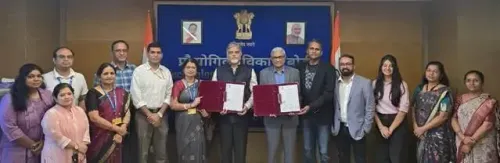
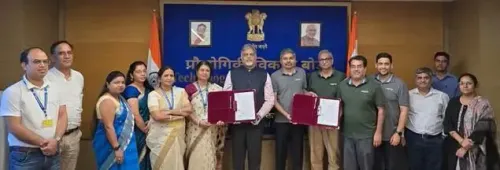
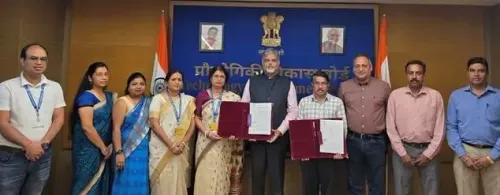
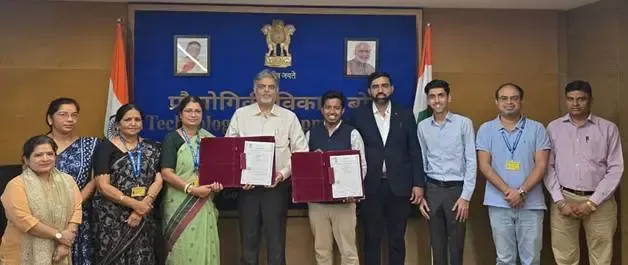
The Technology Development Board (TDB), under the Department of Science & Technology (DST), on Monday, 26 October 2026, signed a formal agreement with Manastu Space Technologies Private Limited, based in Navi Mumbai, Maharashtra, for financial support of ₹116 crore under the Research Development and Innovation (RDI) Fund. The deal marks a significant push to accelerate India's indigenous green propulsion capabilities for satellites and launch vehicles.
What the Project Involves
The total project cost stands at ₹277.63 crore, with TDB's ₹116 crore contribution provided through Optionally Convertible Debt (OCD). The programme focuses on developing a scalable, integrated green propulsion system covering a thrust range of 5 mN to 300 N, serving everything from small satellite applications to higher-thrust launch vehicle requirements.
A key technical objective is advancing the propulsion technology from Technology Readiness Level (TRL)-6 to TRL-9 — the stage of full operational deployment. This encompasses further development, ground validation, and in-orbit demonstration of the propulsion system.
The Technology Behind It
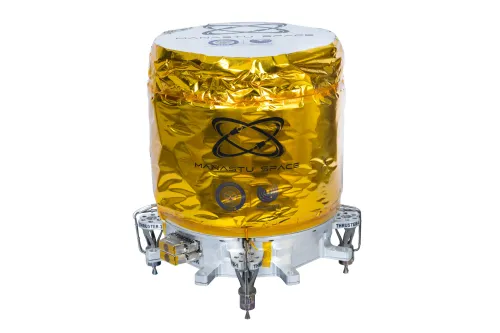
Manastu Space's system uses a hydrogen peroxide-based green propellant with proprietary additives, supported by an integrated engine and catalyst system. A standout component is an ultra-high-temperature ceramic catalyst, engineered for reliable performance under demanding operational conditions. The company asserts the system offers improved performance and cost efficiency compared to conventional, often toxic, propellants such as hydrazine, while reducing associated handling and safety risks.
The project also covers the development of propulsion engines and propellant feed systems, making it a comprehensive end-to-end propulsion platform rather than a point-solution component.
What the Government Said
Rajesh Kumar Pathak, Secretary, TDB, underscored the strategic importance of the initiative. 'Indigenous propulsion technologies are important for strengthening India's capabilities across the space value chain. As the country's space ecosystem continues to expand, there is a growing need for propulsion systems that combine performance, reliability, operational safety and cost efficiency,' he said.
The Co-Founder and CTO of Manastu Space noted that TDB's support would help the company 'advance our green propulsion technology through further development, integration and validation,' with the stated objective of building 'a scalable propulsion platform that combines performance, reliability and cost efficiency while addressing the need for safer and more sustainable propellant systems.'
Why This Matters for India's Space Sector
India's private space ecosystem has expanded rapidly since the government opened the sector to private players, and propulsion remains one of the most critical — and historically import-dependent — sub-systems. Manastu Space's programme directly addresses that gap. Notably, green propulsion is gaining traction globally as satellite operators seek to reduce regulatory and environmental hurdles associated with hazardous propellants.
This is also one of the larger single-company RDI fund commitments in the space technology segment, signalling a broader shift in DST's funding posture toward deep-tech, high-capital commercial space ventures. The success of this programme could serve as a template for similar public-private co-investments in adjacent areas such as electric propulsion and in-space manufacturing.
With TRL-9 validation on the horizon, Manastu Space is positioning itself to supply indigenous propulsion systems to India's growing fleet of commercial satellites and next-generation launch vehicles in the coming years.
Point of View
But the real test is execution speed — TRL-6 to TRL-9 transitions in propulsion are notoriously time-consuming, and India's commercial satellite pipeline is accelerating faster than the domestic supply chain. If Manastu delivers on schedule, it could displace hydrazine-based imported systems on a significant share of future missions; if it slips, the gap widens. The OCD financing structure is also worth watching: it preserves the government's option to convert to equity, which could raise questions about the 'commercial' nature of the venture if the startup later seeks private capital. DST's willingness to write one of its larger single-company space cheques here reflects a maturing funding posture — but accountability mechanisms and milestone-linked disbursement criteria remain unpublished.
NationPress
26 Oct 2026
Frequently Asked Questions
What is the TDB–Manastu Space agreement about?
The Technology Development Board (TDB) has signed a ₹116 crore funding agreement with Manastu Space Technologies to develop an indigenous green propulsion system for satellites and launch vehicles. The total project cost is ₹277.63 crore, with TDB support provided through Optionally Convertible Debt.
What technology is Manastu Space developing?
Manastu Space is developing a hydrogen peroxide-based green propulsion system supported by a proprietary catalyst and integrated engine. The system covers a thrust range of 5 mN to 300 N and is designed to replace conventional, hazardous propellants like hydrazine, offering improved safety, performance, and cost efficiency.
What does TRL-6 to TRL-9 advancement mean?
Technology Readiness Level (TRL) is a scale from 1 (basic concept) to 9 (fully operational in mission environment). Advancing from TRL-6 to TRL-9 means taking a technology from demonstrated prototype stage to full flight-proven deployment — the final hurdle before commercial use on real missions.
Why is green propulsion important for India's space sector?
India's growing private space ecosystem has long depended on imported or hazardous propellants for satellites and launch vehicles. A domestic green propulsion solution reduces import dependence, lowers handling risks, and aligns with global regulatory trends pushing away from toxic propellants like hydrazine.
Who is Manastu Space Technologies?
Manastu Space Technologies Private Limited is a Navi Mumbai-based space-tech startup developing indigenous propulsion systems for satellites and launch vehicles. The company focuses on scalable green propulsion platforms combining performance, reliability, and operational safety.