Agnikul Cosmos gets ₹200 crore govt backing to build reusable launch vehicle
Synopsis
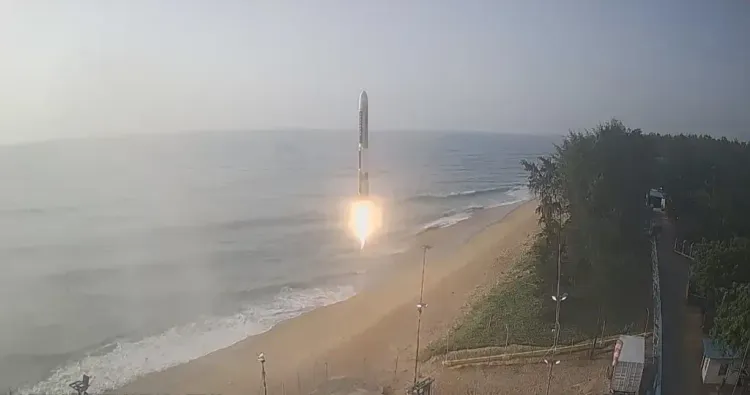
India's government has committed ₹200 crore to Agnikul Cosmos to build Agnibaan RLV — a fully reusable orbital launch vehicle, not just first-stage recovery. If it works, India would join a very small club of nations with homegrown, end-to-end reusable space transportation, potentially reshaping the economics of satellite launches from Indian soil.
Key Takeaways
TDB signed an agreement with Agnikul Cosmos on 25 September 2026 for ₹200 crore under the RDI Fund .
The funding backs development of Agnibaan RLV , targeting full-system reusability — not just first-stage recovery.
The project aims to advance the vehicle from TRL-4 to TRL-8 , moving it close to deployment readiness.
Agnikul previously developed the Agnilet engine , a single-piece 3D-printed rocket engine , and the Agnibaan orbital-class vehicle.
The architecture targets high-frequency, low-cost launches while reducing space debris generation.
TDB had earlier supported Agnikul's modular configurable launch vehicle for small satellite missions .
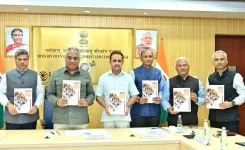
The Technology Development Board (TDB), under the Department of Science and Technology (DST), has signed a formal agreement with Chennai-based space startup Agnikul Cosmos on 25 September 2026, committing ₹200 crore in financial support under the Research, Development and Innovation (RDI) Fund. The funding will back the development of Agnibaan RLV, a fully reusable orbital launch vehicle aimed at transforming India's space transportation capabilities.
What the Programme Aims to Achieve
The Agnibaan RLV project is designed to advance the vehicle's technology readiness from TRL-4 to TRL-8 — a significant leap that would take it from a validated laboratory prototype toward a near-deployable system. Crucially, the programme goes beyond the conventional approach of recovering only the first stage of a rocket, targeting full-system reusability across propulsion, guidance, recovery, and mission operations.
The architecture is engineered to enable high-frequency and repeatable launches, with the twin goals of reducing per-launch costs and minimising the generation of space debris — two of the most pressing challenges in modern commercial spaceflight.
What the Government Said
Rajesh Kumar Pathak, Secretary of TDB, said the next phase of India's space journey would demand technologies capable of reaching orbit 'with greater frequency, flexibility and efficiency.' He described reusability as 'an important technology frontier' and framed the RDI Fund as a vehicle for sustaining ambitious indigenous development through its most capital-intensive stages.
'Through the RDI Fund, TDB is supporting the development of ambitious indigenous technologies that require sustained investment to progress from advanced technology stages towards deployment,' Pathak said.
Agnikul's Track Record
Agnikul Cosmos is not starting from scratch. The startup has already demonstrated several foundational technologies through its earlier development programmes. These include Agnibaan, its indigenous orbital-class launch vehicle, and the Agnilet engine — a single-piece, 3D-printed rocket engine developed and manufactured entirely in-house. TDB had previously supported Agnikul's work on a modular, configurable launch vehicle for small satellite missions, making this new agreement a continuation of a long-standing institutional relationship.
Why This Matters for India's Space Sector
India's commercial space sector is at an inflection point following the liberalisation of the sector in 2023 and the establishment of IN-SPACe as the regulatory body for private players. A domestically developed, fully reusable launch vehicle would give Indian operators a cost-competitive alternative to foreign providers such as SpaceX's Falcon 9, which has set the global benchmark for reusability. This is particularly significant for the growing small satellite segment, where launch frequency and affordability are decisive factors.
The promoters of Agnikul Cosmos noted that integrating propulsion, vehicle design, guidance, recovery, and mission operations into a single, highly reliable system is an enormous technical undertaking. 'TDB providing support for this is unique and special for us as it shows that the government is willing to back original technology development in India,' the company said in a statement.
Road Ahead
With the RDI Fund agreement now formalised, Agnikul is expected to accelerate test campaigns for the Agnibaan RLV architecture. Reaching TRL-8 would position the vehicle for system qualification and eventual commercial deployment, potentially making India one of a small number of countries with an indigenous, fully reusable launch capability. The broader success of the programme will depend on sustained government support, rigorous testing milestones, and Agnikul's ability to integrate complex recovery systems at scale.
Point of View
But the harder question is whether government funding cycles can match the pace that reusability development demands. Full-system reusability — integrating propulsion, guidance, and recovery — is an order of magnitude more complex than recovering a first stage, and no country outside the US has fully cracked it at commercial scale. Agnikul's 3D-printed engine heritage is a genuine differentiator, but TRL-4 to TRL-8 is a long road, and cost and timeline overruns are the norm in aerospace. The real test will be whether TDB's funding is structured as tranched milestone-based support rather than a lump-sum grant — the former aligns incentives, the latter historically does not.
NationPress
25 Sept 2026
Frequently Asked Questions
What is the Agnibaan RLV project funded by the government?
Agnibaan RLV is a fully reusable orbital launch vehicle being developed by Chennai-based startup Agnikul Cosmos, with ₹200 crore in support from the Technology Development Board under the RDI Fund. The project aims to advance the vehicle's technology readiness from TRL-4 to TRL-8, targeting full-system reusability rather than just first-stage recovery.
What is the RDI Fund and who manages it?
The Research, Development and Innovation (RDI) Fund is managed by the Technology Development Board (TDB) under the Department of Science and Technology (DST). It provides sustained financial support to Indian companies developing advanced indigenous technologies that require significant investment to progress from prototype to near-deployment stages.
How is Agnibaan RLV different from conventional rockets?
Unlike conventional rockets that recover only the first stage, Agnibaan RLV is designed for full-system reusability, covering propulsion, vehicle design, guidance, recovery, and mission operations. This approach targets high-frequency launches at lower costs while also minimising space debris.
What has Agnikul Cosmos developed previously?
Agnikul Cosmos has developed Agnibaan, an indigenous orbital-class launch vehicle, and the Agnilet engine — a single-piece 3D-printed rocket engine built entirely in-house. TDB had also previously supported the company's modular configurable launch vehicle for small satellite missions.
Why is a reusable launch vehicle significant for India?
A domestically developed, fully reusable launch vehicle would make India one of a handful of countries with an indigenous end-to-end reusable space transportation capability. It could substantially lower launch costs for the growing small satellite segment and reduce dependence on foreign providers, positioning India more competitively in the global commercial space market.