TRAI Unveils New Recommendations for Radio Frequency Spectrum Auction
Synopsis
The TRAI has released pivotal recommendations aimed at optimizing the auction process for radio frequency spectrum, targeting various frequency bands. This initiative seeks to enhance mobile telecommunications in India.
Key Takeaways
TRAI recommends auctioning all available spectrum in specified frequency bands.
Net-worth requirements for new entrants are proposed to be reduced.
A spectrum cap of 35% is applied to certain bands.
Telecom Circle/Metro Area basis auction with a 20-year validity is suggested.
Digital Bharat Nidhi initiative aims to improve coverage in underserved areas.
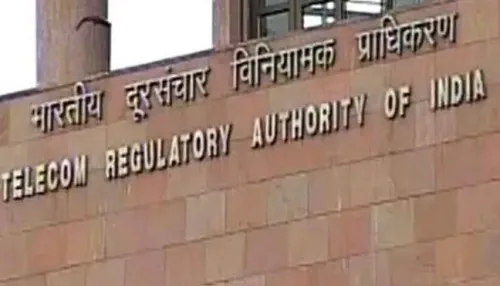
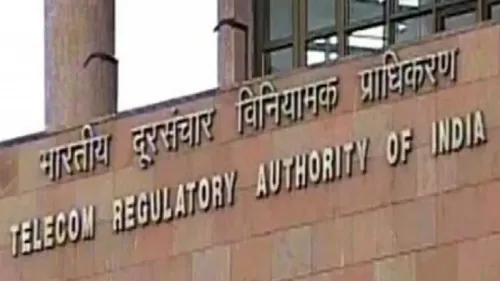
New Delhi, February 24 (NationPress) - The Telecom Regulatory Authority of India (TRAI) has officially unveiled its recommendations regarding the auction of radio frequency spectrum within the frequency bands designated for International Mobile Telecommunications (IMT).
These recommendations stem from stakeholder feedback collected during the consultation phase, along with comprehensive analysis.
TRAI asserts that all available spectrum in the 600 MHz, 800 MHz, 900 MHz, 1800 MHz, 2100 MHz, 2300 MHz, 2500 MHz, 3300 MHz, and 26 GHz bands “should be auctioned in the upcoming auction.”
Furthermore, it is advised that the Department of Telecommunications (DoT) should promptly act to reclaim the spectrum held by telecom service providers undergoing the corporate insolvency resolution process as per the Insolvency and Bankruptcy Code, 2016, with the intention of including this spectrum in the forthcoming auction.
The spectrum allocated for IMT should be auctioned based on Telecom Circle/Metro Area with a validity of 20 years, continuing the Simultaneous Multiple Round Auction (SMRA) model.
In a significant shift, the net-worth requirement for new entrants in the upcoming IMT spectrum auction is proposed to be lowered from Rs 100 crore per Licensed Service Area to Rs 50 crore per Licensed Service Area (and from Rs 50 crore to Rs 25 crore for Jammu & Kashmir and North East Licensed Service Areas).
It is important that telecom service providers receive spectrum allocation in a contiguous manner, and the DoT should conduct a harmonization exercise immediately after the auction, ideally within a six-month timeframe following the auction's conclusion.
Additionally, existing band plans for frequency bands such as 800 MHz, 900 MHz, 1800 MHz, 2100 MHz, 2300 MHz, 2500 MHz, 3300 MHz, and 26 GHz should remain effective in the upcoming auction.
A spectrum cap of 35 percent on total spectrum for access services in the 600 MHz band is also recommended, with a similar cap on the combined spectrum in the 700 MHz, 800 MHz, and 900 MHz bands.
To facilitate the expansion of mobile network coverage in areas lacking service, a new initiative should be launched, incentivizing access service providers to improve coverage in regions not currently served under the Universal Service Obligation Fund (USOF), now referred to as Digital Bharat Nidhi (DBN).
Point of View
The release of TRAI's recommendations reflects a proactive approach to updating India's telecom infrastructure. By addressing stakeholder feedback and proposing critical changes to spectrum allocation, this move is expected to foster competition and improve service delivery across the nation.
NationPress
27 Sept 2026
Frequently Asked Questions
What are the key recommendations from TRAI regarding the spectrum auction?
TRAI recommends auctioning all available spectrum in several frequency bands, lowering net-worth requirements for new entrants, and implementing a spectrum cap of 35 percent for access services.
How will the auction process be structured?
The spectrum will be auctioned on a Telecom Circle/Metro Area basis with a validity of 20 years, using the Simultaneous Multiple Round Auction (SMRA) method.
What changes are proposed for existing telecom service providers?
TRAI suggests that the DoT reclaim spectrum from providers in corporate insolvency and include this in the upcoming auction.
What is the purpose of the Digital Bharat Nidhi initiative?
This initiative aims to incentivize telecom service providers to expand mobile network coverage in underserved areas not covered by existing USOF schemes.
Why is harmonization of spectrum important post-auction?
Harmonization ensures that the spectrum allocation is efficient and contiguous, which enhances the quality of service and network performance.