UN Rights Chief warns of 'unprecedented risks' from frontier AI, urges action

Synopsis
The UN's top human rights official has declared the world is 'on the cusp of irreversible change' driven by frontier AI — and that governments and tech companies must act now, before the risks become uncontrollable. With no binding global AI treaty in place, Türk's warning crystallises a widening gap between the pace of AI capability growth and the international community's ability to govern it.
Key Takeaways
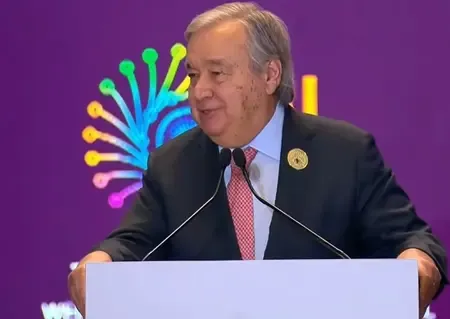
UN human rights chief Volker Türk has warned that frontier AI poses 'unprecedented risks' with consequences that could last for generations.
Türk said the world is 'on the cusp of irreversible change' and called for urgent action from governments and technology companies.
Key rights concerns flagged include privacy , freedom of expression , equality , and employment .
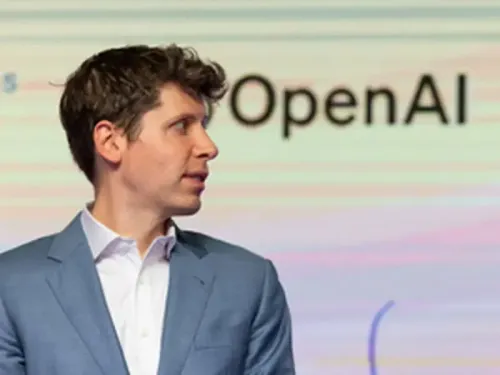
Anthropic CEO Dario Amodei has advocated slowing frontier AI development; OpenAI CEO Sam Altman and Elon Musk have also raised risk warnings.
No binding global treaty on AI governance currently exists, heightening pressure on international institutions to act.
United Nations human rights chief Volker Türk has issued an urgent warning over the rapid development of frontier artificial intelligence, stating that the world is 'on the cusp of irreversible change' and that increasingly powerful AI systems pose risks whose consequences could last for generations. Türk called on governments and technology companies to act before these risks become significantly harder to contain.
What Türk Said
Türk stressed that the pace of AI capability advancement is outrunning the safeguards needed to protect fundamental rights. He underscored that without adequate guardrails introduced alongside technological progress, frontier AI could have significant implications for privacy, freedom of expression, equality, and employment — areas already at the centre of the global AI governance debate.
His remarks reflect a growing consensus among policymakers that the question is no longer whether AI will transform society, but at what pace and under what oversight framework that transformation should occur.
What Is Frontier AI
Frontier AI refers to the most capable and advanced artificial intelligence models currently in existence — systems increasingly able to perform complex tasks involving reasoning, coding, scientific research, and autonomous decision-making. As these capabilities have expanded sharply in recent years, so too have concerns over their potential societal impact and the adequacy of existing legal and regulatory frameworks to manage them.
A Chorus of Concern from the Tech World
Türk's warning aligns with a broader current of unease within the technology industry itself. Anthropic CEO Dario Amodei has advocated slowing the development of frontier AI to allow safety research to keep pace. OpenAI CEO Sam Altman and entrepreneur Elon Musk have also separately warned about risks posed by increasingly powerful AI systems, even as their own organisations continue to push capability frontiers. Critics argue this reflects a structural tension in the industry — acknowledging risk while accelerating development.
This comes amid intensifying debate among governments worldwide over whether frontier AI should be subjected to stronger oversight or mandatory development slowdowns, and how to balance regulation against the risk of stifling innovation.
The UN's Stake in AI Governance
For the United Nations, the stakes extend well beyond the technological and economic rivalry between major powers. The potential impact of increasingly autonomous AI systems on human rights and social and economic structures has become a central institutional concern. AI-influenced decisions affecting people's livelihoods — in areas such as hiring, credit, judicial processes, and public services — raise acute accountability questions that existing international human rights frameworks were not designed to address.
With no binding global treaty on AI currently in force, the UN's push for urgent action underscores the mounting pressure on international institutions to establish enforceable norms before the window for doing so narrows.
Point of View
But because of who is saying it and what institutional weight it carries — a UN human rights chief framing AI risk as a fundamental rights emergency, not merely a technological policy puzzle. Yet the structural problem remains: the same companies warning about AI risk are the ones accelerating it, and the UN has no enforcement mechanism to close that gap. The real question is whether this intervention catalyses binding international norms or joins a long line of strongly worded statements that did not slow the clock. For India, which is investing heavily in AI capability while also shaping domestic regulation, the pressure to join a global governance framework — on its own terms — is growing.
NationPress
14 Sept 2026
Frequently Asked Questions
What did UN human rights chief Volker Türk say about frontier AI?
Volker Türk warned that frontier AI poses 'unprecedented risks' to humanity and that the world is 'on the cusp of irreversible change.' He called on governments and technology companies to introduce adequate safeguards urgently, before the risks become harder to control.
What is frontier AI and why is it concerning?
Frontier AI refers to the most advanced AI models capable of complex reasoning, coding, research, and autonomous decision-making. Concerns centre on their potential to influence decisions affecting people's lives — in employment, privacy, freedom of expression, and equality — faster than existing legal frameworks can respond.
Which tech leaders have also warned about advanced AI risks?
Anthropic CEO Dario Amodei has advocated slowing frontier AI development to allow safety research to keep pace. OpenAI CEO Sam Altman and Elon Musk have also separately raised warnings about risks from increasingly powerful AI systems.
What is the United Nations doing about AI governance?
The UN has raised AI governance as a central human rights concern, with Türk calling for urgent multilateral action. However, no binding global treaty on AI currently exists, leaving the international response largely limited to voluntary frameworks and national-level regulation.
Why does this warning matter for India?
India is among the fastest-growing AI investment markets and is developing domestic AI regulation, while also participating in multilateral forums. A UN push for binding global AI norms could shape the terms under which Indian technology companies and policymakers operate internationally.