Varanasi elevated corridors: NHAI gets 32 bids for Ganga, Varuna
Synopsis
Developers are lining up for Varanasi's riverside highways. NHAI's Ganga and Varuna elevated corridors drew 32 bids across four packages. The two corridors are worth about ₹25,446 crore combined and include a 910-metre cable-stayed bridge. The Varuna stretch promises to cut the NH-31 to Kashi Railway Station trip from 40 minutes to 20.
Key Takeaways
NHAI received 32 bids across four packages for the Ganga and Varuna elevated corridors in Varanasi .
The two corridors span about 89.2 km and were approved by the CCEA in July 2026 .
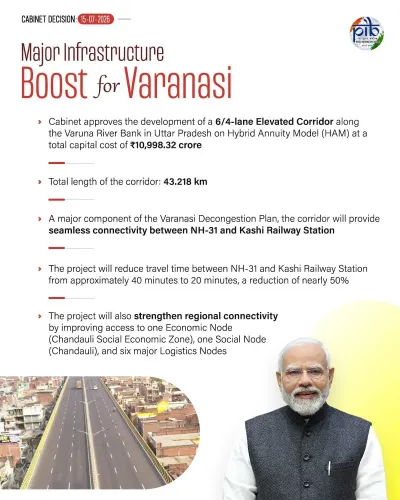
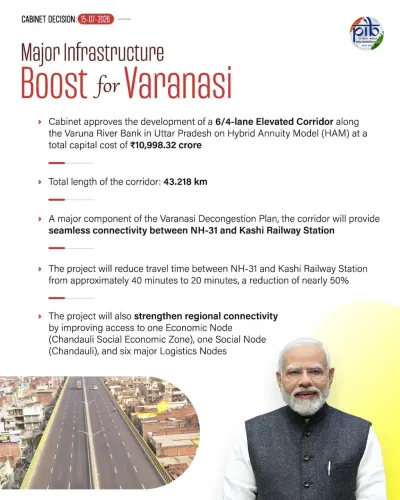
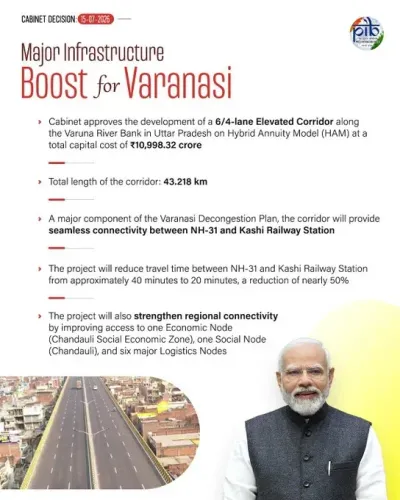
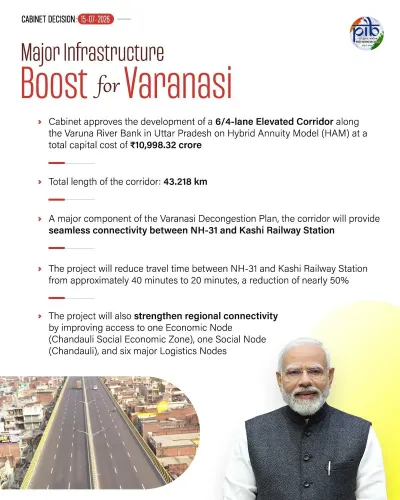
The 43.2-km Varuna corridor costs ₹10,998.32 crore and will cut NH-31 to Kashi Railway Station travel time from 40 to 20 minutes .
The 46-km six-lane Ganga corridor costs ₹14,447.64 crore and includes a 910-metre cable-stayed bridge.
Both projects will be built under the Hybrid Annuity Model (HAM) .
The National Highways Authority of India (NHAI) on Friday, 27 November 2026, said it has received an encouraging response from bidders for two major elevated corridor projects along the Ganga and Varuna rivers in Varanasi, Uttar Pradesh. The four packages together drew 32 bids, according to an official statement. The projects are aimed at decongesting the city and improving access to its key religious, cultural and transport hubs.
The two corridors have a combined length of around 89.2 km. They will link NH-31 to the Varanasi Ring Road along the River Varuna, and NH-19 to the Ring Road along the River Ganga.
Key Developments in the Bidding
The projects were approved by the Cabinet Committee on Economic Affairs (CCEA) in July 2026. Each corridor will be built in two packages.
The Varuna Elevated Corridor received eight bids for Package-I and seven bids for Package-II. The Ganga Elevated Corridor drew eight bids for Package-I and nine bids for Package-II.
According to the official statement, the total of 32 bids reflects encouraging participation from highway developers. Notably, the bidding comes roughly four months after Cabinet clearance.
Varuna Elevated Corridor: Cost and Design
The 43.2-km Varuna corridor will connect NH-31 with the Varanasi Ring Road, running along the River Varuna. It will be built on the Hybrid Annuity Model (HAM) at a total capital cost of ₹10,998.32 crore.
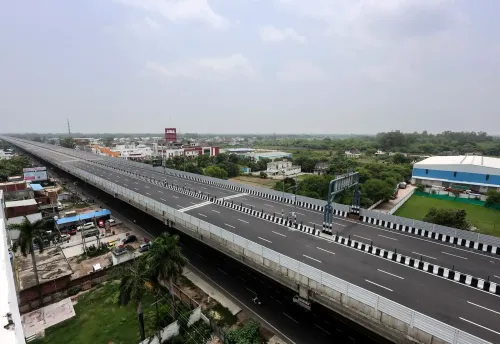
The project is a 6/4-lane, predominantly elevated corridor. It includes a main carriageway, flyovers, loops, ramps and service roads. It is expected to improve access to important transport terminals and key locations in the city.
The corridor is designed for an operating speed of 80–100 km per hour. Travel time between NH-31 and Kashi Railway Station is projected to fall from about 40 minutes to 20 minutes, a cut of nearly 50 per cent.
Ganga Elevated Corridor: Bridges and Riverbank Link
The 46-km, six-lane Ganga corridor will connect NH-19 with the Varanasi Ring Road and provide riverbank connectivity along the Ganga. It will also be built on the HAM model, at a total capital cost of ₹14,447.64 crore.
The project includes a six-lane elevated main carriageway and a 910-metre cable-stayed bridge. It also includes a 1.32-km extradosed Foot Over Bridge-cum-Major Bridge, along with loops, ramps, link roads and service roads.
The statement described the corridor as a transformative urban mobility project. It is meant to decongest the road networks of Varanasi and Chandauli through a high-speed, access-controlled link between NH-19, the Varanasi Ring Road (NH-135B), Ramnagar/BHU and other major urban destinations.
Why the Projects Matter
Taken together, the two corridors carry a combined capital cost of about ₹25,446 crore. That makes them among the larger urban highway investments planned for a single city.
Varanasi's narrow roads regularly carry heavy pilgrim and tourist traffic. Commuters, pilgrims and freight operators reaching the city's railway stations, riverfront and educational hubs are expected to benefit most.
Under the HAM model, the government pays a part of the project cost during construction and the rest as annuities over time. This shares financial risk between the government and private developers.
What Happens Next
The next step is the evaluation of the bids and the award of the four packages. Timelines for awarding contracts and starting construction have not been specified in the official statement.
Point of View
But bid counts are the easy part. Elevated corridors along the Ganga and Varuna run through one of India's most heritage-sensitive and ecologically fragile urban riverfronts, and execution is where similar projects tend to slip. The promised 50 per cent cut in travel time will matter only if land, environmental and riverbed clearances keep pace with the bidding. Watch whether the contracts come with enforceable completion timelines, because Varanasi's congestion problem will not wait for cost overruns to be resolved.
NationPress
27 Nov 2026
Frequently Asked Questions
What are the Ganga and Varuna elevated corridor projects in Varanasi?
They are two NHAI highway projects with a combined length of about 89.2 km. The Varuna corridor links NH-31 to the Varanasi Ring Road, and the Ganga corridor links NH-19 to the Ring Road.
How many bids did the Varanasi elevated corridors receive?
The four packages together received 32 bids. The Varuna corridor drew 8 and 7 bids for its two packages, and the Ganga corridor drew 8 and 9.
What is the cost of the Ganga and Varuna elevated corridors?
The Varuna corridor has a capital cost of ₹10,998.32 crore and the Ganga corridor ₹14,447.64 crore. Both will be built under the Hybrid Annuity Model.
How much travel time will the Varuna corridor save?
Travel time between NH-31 and Kashi Railway Station is expected to fall from about 40 minutes to 20 minutes, a cut of nearly 50 per cent. The corridor is designed for speeds of 80–100 km per hour.
When were the Varanasi elevated corridor projects approved?
The Cabinet Committee on Economic Affairs approved both projects in July 2026. NHAI announced the bidding response on 27 November 2026.