Vedaranyam salt output hits 85% of 1.75 lakh tonne target as summer heat drives recovery
Synopsis
After heavy rains gutted last year's output to just 40 per cent of normal, Vedaranyam's 800 small-scale salt producers are on the verge of a full-season recovery — with 85 per cent of their 1.75 lakh tonne target already in the bag and summer heat doing the heavy lifting. The clock is ticking before the northeast monsoon arrives in October.
Key Takeaways
Vedaranyam salt producers have completed nearly 85 per cent of their 1.75 lakh tonne seasonal target as of 20 August 2025 .
Around 800 small-scale manufacturers operate across 3,000 acres in Agasthiyampalli , Kodiyakkadu , and Kadinalvayal .
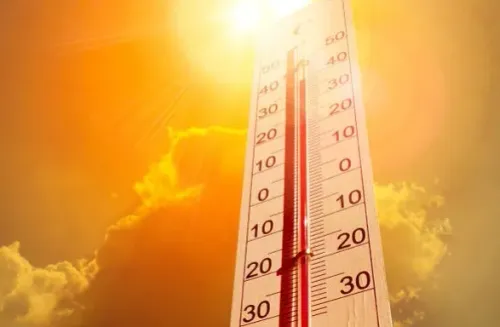
Intense summer heat from May onwards reversed early-season disruptions caused by unseasonal rainfall.
Last year's output was limited to just 40 per cent of normal due to heavy rainfall — making this season's recovery significant.
Edible salt accounts for 60 per cent of output; industrial salt the remaining 40 per cent , priced at around ₹1,000 per tonne .
Workers begin shifts as early as 3 am to avoid peak daytime heat while maximising harvest hours.
Salt manufacturers in Vedaranyam, Nagapattinam district, Tamil Nadu, have completed nearly 85 per cent of this season's production target of 1.75 lakh tonnes, with producers expressing confidence of crossing the full mark before the season closes in October 2025. A sustained spell of intense summer heat has accelerated output after unseasonal rains disrupted operations during the opening months of the year.
Production Landscape and Key Centres
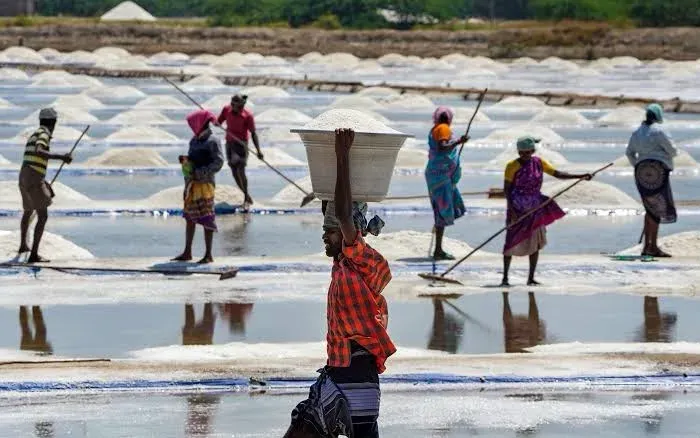
Salt is cultivated across approximately 3,000 acres spanning the villages of Agasthiyampalli, Kodiyakkadu, and Kadinalvayal — the three principal production zones within the Vedaranyam belt. Around 800 small-scale manufacturers are active in the industry, which generates seasonal employment for a significant number of workers in the region. The production season typically runs from February through to the arrival of the northeast monsoon in October.
How Summer Heat Reversed an Early Setback
The current season began on a difficult note, with intermittent showers through the early months repeatedly flooding salt pans and halting crystallisation. Output recovered sharply after persistent hot weather set in from May onwards. The high temperatures have boosted evaporation rates, allowing salt crystals to form more rapidly than usual. Manufacturers noted that salt pans require at least one full week of uninterrupted sunshine after any rainfall before crystallisation can properly resume — a requirement that is now being met consistently.
With more than a month of the season still remaining and the northeast monsoon not expected until around October, producers believe the outstanding target can be comfortably achieved, provided dry conditions hold.
Last Year's Sharp Contrast
The recovery this season stands in stark contrast to 2024, when heavy and prolonged rainfall severely curtailed operations, limiting annual output to just around 40 per cent of the normal target. Under favourable weather, the Vedaranyam cluster typically produces between 1.7 lakh and 2 lakh tonnes per year, making last year's shortfall an exceptional disruption for the region's small-scale producers.
Workers Adapt to Extreme Heat
To cope with the severe daytime temperatures driving production, workers have restructured their schedules significantly. Many begin as early as 3 am, completing harvesting, collection, and heaping of salt during the cooler pre-dawn and morning hours. The practice reflects the dual pressure of maximising output while managing occupational heat stress — a recurring challenge in coastal salt farming.
Markets, Prices, and Output Mix
Vedaranyam produces both edible and industrial-grade salt. Edible salt accounts for roughly 60 per cent of total output, with industrial salt making up the remaining 40 per cent. The produce is distributed to markets across Tamil Nadu and neighbouring states including Andhra Pradesh, Karnataka, and Kerala. Prices fluctuate daily based on demand and supply conditions, with the average selling price hovering around ₹1,000 per tonne. Each acre yields approximately 150 tonnes annually under favourable weather, according to manufacturers' estimates.
Whether this season ultimately meets or exceeds its target will hinge on the weather over the next four to five weeks — a variable that has defined the fortunes of Vedaranyam's salt industry for generations.
Point of View
Then this year's early showers — have exposed just how precarious a ₹1,000-per-tonne commodity business becomes when it depends entirely on uninterrupted sunshine. The fact that 800 small producers have clawed back to 85 per cent of target is a testament to adaptive scheduling, not structural support. There is no mention of government price intervention, insurance cover, or post-monsoon compensation for the 2024 losses — and that silence matters. If a single bad monsoon can halve a region's output, the absence of a formal risk-mitigation framework for coastal salt farmers is a policy gap worth examining.
NationPress
5 Oct 2026
Frequently Asked Questions
What is the salt production target for Vedaranyam in 2025?
The target for the current season is 1.75 lakh tonnes . As of 20 August 2025, producers have completed nearly 85 per cent of that figure, with confidence of achieving the full target before the season ends in October.
Why did salt production in Vedaranyam recover this season?
Production recovered after persistent hot weather set in from May 2025, boosting evaporation rates and accelerating salt crystal formation. Earlier in the season, intermittent rains had repeatedly disrupted operations in the salt pans.
How badly was last year's output affected?
Heavy rainfall in 2024 severely curtailed operations, limiting annual output to approximately 40 per cent of the normal target — a sharp contrast to the current season's recovery. The Vedaranyam cluster typically produces between 1.7 lakh and 2 lakh tonnes in a normal year.
Who are the salt producers in Vedaranyam and where do they sell?
Around 800 small-scale manufacturers operate across 3,000 acres in Agasthiyampalli, Kodiyakkadu, and Kadinalvayal. Their produce is supplied to markets across Tamil Nadu and neighbouring Andhra Pradesh, Karnataka, and Kerala.
What types of salt does Vedaranyam produce and at what price?
Vedaranyam produces both edible salt (about 60 per cent of output) and industrial salt (40 per cent). The average selling price is around ₹1,000 per tonne, with prices varying daily based on demand and availability.