Sridhar Vembu explains Modi's call to skip gold, foreign travel
Synopsis
Zoho's Sridhar Vembu has done what few in the private sector dare — publicly explain the economic logic behind PM Modi's unpopular ask to skip foreign holidays and gold. His argument: India's 7.8% growth is actually widening its import bill for energy and technology, making forex conservation a strategic necessity, not a lifestyle lecture.
Key Takeaways
Sridhar Vembu , co-founder of Zoho , posted an economic defence of PM Modi 's appeal to avoid foreign travel, gold purchases, and overseas weddings on 2 September .
Vembu argued that India's 7.8% GDP growth increases — not decreases — demand for imported energy, CPUs, GPUs, precision machines, and advanced software.
He drew parallels with East Asian economies that conserved foreign exchange even while growing rapidly, calling it a multi-decade process.
India currently carries significant import dependence in critical technology and energy sectors, requiring higher export earnings to balance outflows.
Vembu said the need for forex conservation will end once India achieves competence in advanced technologies and energy independence through domestically developed renewables.
Zoho co-founder and Chief Scientist Sridhar Vembu on Wednesday, 2 September offered a detailed economic rationale for Prime Minister Narendra Modi's repeated appeals to citizens to avoid foreign travel, gold purchases, and overseas weddings — arguing that the goal is to conserve foreign exchange at a critical stage of India's industrial development.
What Vembu Said
In a social media post, Vembu framed the question bluntly: 'If economy is growing at 7.8 per cent why is the PM asking us not to travel abroad, not to buy gold, not to have foreign weddings etc.' He then answered his own question, explaining that rapid GDP growth paradoxically intensifies India's dependence on imported inputs rather than reducing it.
'In fact, the faster the economy grows, the greater the need for both energy and technology inputs,' Vembu wrote, pointing to precision machines, materials, CPUs, GPUs, and advanced software as key categories that currently require foreign exchange to procure.
The Import Dependence Argument
Vembu acknowledged that India's economy 'is growing at a good rate but we still have an import dependence' in critical sectors. He argued that bridging this gap requires exporting more while simultaneously curbing discretionary outflows — such as gold imports and leisure travel abroad — that drain foreign reserves without building productive capacity.
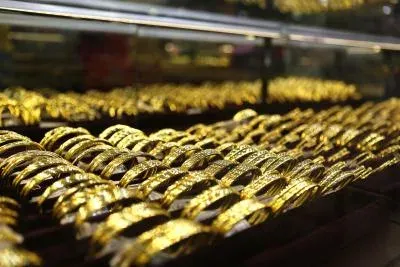
Gold, in particular, is one of India's largest import categories by value, consistently pressuring the current account deficit. Foreign travel and overseas weddings similarly represent outflows that do not generate reciprocal technology or energy gains for the domestic economy.
The East Asia Parallel
Drawing on historical precedent, Vembu pointed to East Asian economies — widely understood to include Japan, South Korea, and Taiwan — as models that sustained rapid GDP growth while deliberately conserving foreign exchange over decades. 'Look at how long it took East Asia to catch up with the West. Their economies were growing rapidly even as they worked hard to conserve foreign exchange,' he said.
He noted that catching up in advanced technologies 'takes time, often measured in decades,' and said India has made a good start but needs more time to achieve self-sufficiency.
The Long-Term Vision
Vembu indicated that the current phase of restraint is not permanent. 'Once we gain competence in all the advanced technologies, and achieve energy independence through renewable energy that we develop the technology for, we would no longer need to conserve foreign exchange,' he added.
The remarks come as India pursues an ambitious push in semiconductors, clean energy, and domestic manufacturing — sectors where import substitution remains a stated policy priority. Vembu's intervention lends a rare private-sector voice to a message that has largely been framed in nationalist terms by the government.
Point of View
Globally mobile audience it targets most directly. The East Asia analogy is historically valid but glosses over a key difference: South Korea and Taiwan built export-competitive industries rapidly through state-directed credit and industrial policy, not primarily through consumption restraint. Whether India's current policy mix replicates that outcome — or merely asks citizens to sacrifice without a credible technology-indigenisation timeline — is the question mainstream coverage has largely left unasked.
NationPress
17 Oct 2026
Frequently Asked Questions
Why is PM Modi asking Indians not to buy gold or travel abroad?
Prime Minister Narendra Modi has urged citizens to limit gold purchases, foreign travel, and overseas weddings to reduce discretionary outflows of foreign exchange. According to Sridhar Vembu, this is because India remains import-dependent in critical areas like energy and advanced technology, and conserving forex is essential during the country's rapid growth phase.
What is Sridhar Vembu's explanation for India's forex conservation push?
Vembu argues that India's 7.8% GDP growth actually increases its need for imported inputs — including CPUs, GPUs, precision machines, and energy — which requires more foreign exchange, not less. He says curbing non-productive outflows like gold imports and leisure travel abroad helps balance the current account while India builds domestic technological capability.
How does the East Asia comparison apply to India?
Vembu cited East Asian economies such as Japan, South Korea, and Taiwan as examples of nations that sustained high GDP growth while deliberately conserving foreign exchange over several decades. He argues India is on a similar path and needs time — often measured in decades — to achieve self-sufficiency in advanced technologies.
When will India no longer need to conserve foreign exchange, according to Vembu?
Vembu said the need for forex conservation will ease once India gains competence in advanced technologies and achieves energy independence through domestically developed renewable energy. He did not specify a timeline but indicated it is a long-term, decade-scale process.
Why does gold buying hurt India's foreign exchange reserves?
Gold is one of India's largest import categories by value and is a significant contributor to the current account deficit. Since gold imports require payment in foreign currency without generating productive economic capacity or export revenue, they place sustained pressure on India's forex reserves.