EAC-PM's Gourav Vallabh dismisses panic over fuel conservation call, cites global disruptions
Synopsis
EAC-PM member Gourav Vallabh's defence of Modi's fuel conservation call goes further than a routine rebuttal — he names Rahul Gandhi, Owaisi, and Akhilesh Yadav by name and frames the entire exercise as a national-interest test that opposition leaders are failing. The 'smart substitution' framing is a quiet signal that the government sees forex conservation as a structural priority, not a one-off advisory.
Key Takeaways
Gourav Vallabh of the EAC-PM on 15 May defended PM Modi's fuel conservation appeal as a rational response to global disruptions.
He cited three concurrent conflicts — West Asia , Russia-Ukraine , and the US-China commodity dispute — as the backdrop for the conservation drive.
Vallabh said a 5–10 per cent shift to domestic consumption alternatives would stabilise the economy; a 15–20 per cent shift would eliminate the concern entirely.
He rejected claims of fuel shortages, challenging opposition leaders to cite a single instance of petrol, diesel, or LPG inconvenience.
Rahul Gandhi , Asaduddin Owaisi , and Akhilesh Yadav were named and urged to lead by example on public transport use.
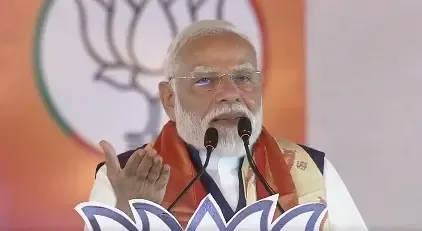
PM Modi had earlier made the conservation appeal at a BJP meeting at Parade Grounds, Secunderabad .
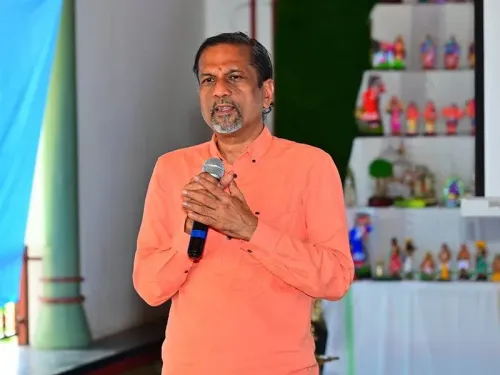
Prof. Gourav Vallabh, a member of the Economic Advisory Council to the Prime Minister (EAC-PM), on Friday, 15 May pushed back against opposition criticism of Prime Minister Narendra Modi's fuel conservation appeal, asserting that India's economy rests on strong fundamentals and that citizens should not be misled by what he called deliberate confusion-mongering.
Global Disruptions Behind the Conservation Call
Vallabh outlined three concurrent geopolitical pressures shaping India's economic environment. 'There are three major geopolitical conflicts going on all over the world,' he said. 'The first is the West Asia conflict. The second is the Russia-Ukraine war, which has left a negative impact on European economies. And the third is the commodity price conflict between the US and China.' He argued that the resulting global supply-chain disruption is affecting every country, making domestic conservation a rational, not alarmist, response.
On PM Modi's reported request to postpone gold purchases, Vallabh was emphatic: 'This is not a ban. You can buy it, but if possible, postpone it.' He framed the appeal as a voluntary, time-bound adjustment rather than a policy restriction.
Smart Substitution as the Economic Strategy
Vallabh articulated a concept he called 'smart substitution of forex-sensitive consumption' — replacing imported goods and experiences with domestically produced alternatives. 'If smart substitution of forex-sensitive consumption is done through domestic production, then there is no problem,' he said, projecting that even a 5–10 per cent shift in consumption patterns would meaningfully strengthen the domestic economy, and a 15–20 per cent shift would eliminate the concern entirely.
He also pointed to India's diplomatic resilience as evidence of economic strength. 'India's foreign policy and the strength of the Tiranga were evident when ships across the world were halted in the Strait of Hormuz, but ships carrying the Indian flag continued transporting gas and crude oil to Indian ports,' he said.
Modi Leads by Example, Says EAC-PM Member
Responding to reports that PM Modi had downsized his personal convoy, Vallabh said the Prime Minister's conduct sets a national benchmark. 'Whatever the Prime Minister says, he first applies it to himself. If the Prime Minister can travel with two cars, it becomes a benchmark,' he said. He extended the appeal to opposition figures, urging them to adopt similar practices — travelling in a single vehicle and choosing domestic tourism destinations like Jaisalmer, Barmer, or Shillong over overseas trips.
Opposition Criticism Called Misleading
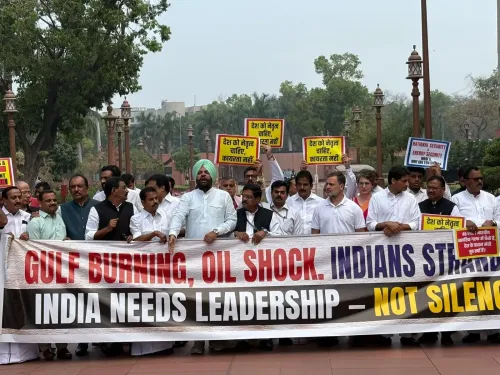
Vallabh directly addressed what he described as a months-long misinformation campaign by some opposition leaders. 'For two months, they have been claiming there's a shortage of petrol and diesel. Did you face any inconvenience even once regarding petrol or diesel? Did you face any inconvenience with LPG cylinders?' he asked. He called the conservation drive a matter of national interest, not partisan politics, and named Congress leader Rahul Gandhi, AIMIM chief Asaduddin Owaisi, and Samajwadi Party president Akhilesh Yadav by name, urging them to lead by example on public transport use.
The Collective Pledge PM Modi Has Sought
Earlier, PM Modi had appealed to citizens at a Bharatiya Janata Party (BJP) public meeting at Parade Grounds, Secunderabad to conserve fuel, use public transport, revive work-from-home arrangements, avoid non-essential imports, and defer overseas vacations — all aimed at conserving foreign exchange amid global uncertainty. Vallabh echoed this, saying that if every citizen pledged to use public transport, work from home, and hold virtual meetings just once a week, 'the Indian economy will not be affected by even one per cent' from the current geopolitical headwinds.
With global commodity markets remaining volatile, the government's messaging around voluntary conservation is likely to intensify in the weeks ahead.
Point of View
Not spontaneous defence. Deploying an economist from the EAC-PM — rather than a party spokesperson — lends a technocratic veneer to what is partly a political counter-offensive. The 'smart substitution' framing is notable: it quietly repositions a voluntary advisory as a structural economic argument, which could be the precursor to harder policy nudges if global forex pressure intensifies. What the messaging conspicuously avoids is any quantification — how much foreign exchange is actually at stake, and whether voluntary conservation at the margins can move the needle on India's import bill. Opposition leaders have political incentives to amplify any perception of scarcity; the government has equal incentive to project calm. The truth of India's forex resilience likely lies between the two narratives, and independent data — not EAC-PM statements — will be the arbiter.
NationPress
14 Sept 2026
Frequently Asked Questions
Who is Gourav Vallabh and why is he speaking on India's economy?
Prof. Gourav Vallabh is a member of the Economic Advisory Council to the Prime Minister (EAC-PM), a body that advises the PM on economic policy. He spoke on 15 May 2025 to defend PM Modi's fuel conservation appeal against opposition criticism, framing it as a response to global geopolitical disruptions.
What did PM Modi ask citizens to do regarding fuel conservation?
PM Modi appealed to citizens to conserve fuel, use public transport, revive work-from-home arrangements, avoid non-essential imports, and defer overseas holidays to protect India's foreign exchange reserves amid global uncertainty caused by conflicts in West Asia and elsewhere. The appeal was made at a BJP public meeting at Parade Grounds, Secunderabad.
Why is the government asking people to postpone gold purchases?
Vallabh clarified that the PM's request is not a ban but a voluntary appeal to defer gold buying for a year in order to reduce forex outflows at a time when global supply chains are disrupted. Gold is one of India's largest import categories and a significant drain on foreign exchange.
What is 'smart substitution of forex-sensitive consumption'?
It is a concept articulated by Vallabh referring to the replacement of imported goods and overseas experiences with domestically produced alternatives. He argued that even a 5–10 per cent shift in such consumption patterns would strengthen the domestic economy and reduce India's dependence on foreign exchange.
Is there an actual shortage of petrol, diesel, or LPG in India?
Vallabh categorically denied any shortage, challenging opposition leaders to cite a single instance of consumer inconvenience with petrol, diesel, or LPG cylinders. He described opposition claims of shortages as misleading information spread over two months without factual basis.