PM Modi chairs EAC-PM meet to bolster growth amid West Asia conflict risks
Synopsis
With India's GDP growing at 7.7% for FY2025-26 and the West Asia conflict threatening energy markets and trade routes, PM Modi convened the EAC-PM to map out a resilience strategy. The meeting signals that New Delhi is not treating the external environment as background noise — it is actively stress-testing policy for a prolonged period of global disruption.
Key Takeaways
PM Narendra Modi chaired an EAC-PM meeting on 6 June in New Delhi to review India's economic strategy.
India's GDP grew 7.8% in Q4 FY2025-26 and 7.7% for the full financial year, led by agriculture, construction, and services.
The West Asia conflict featured prominently, with discussions on risks to energy markets and trade routes .
Deliberations covered reforms to improve ease of doing business and reduce compliance burdens.
India imports a large share of its energy needs, making it vulnerable to crude oil price volatility from regional instability.
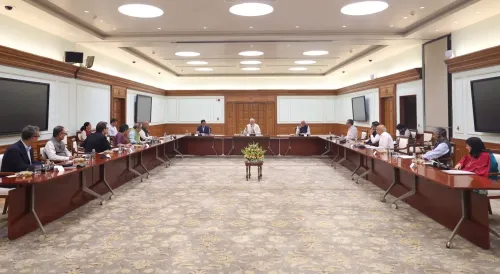
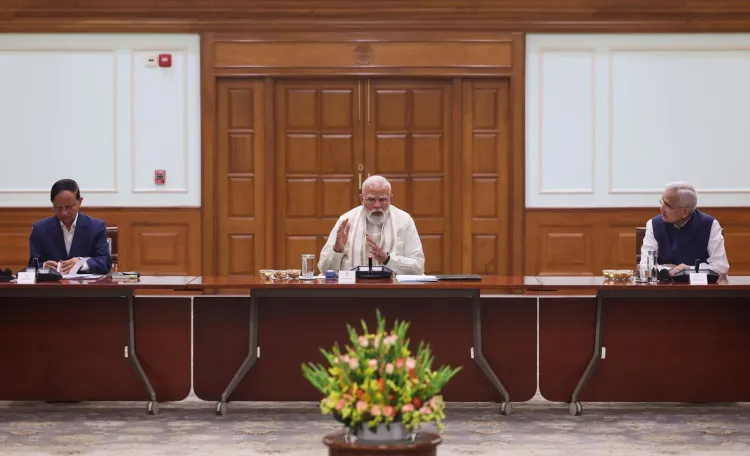
Prime Minister Narendra Modi on Saturday, 6 June chaired a high-level meeting of the Economic Advisory Council to the Prime Minister (EAC-PM) in New Delhi, where economists and policy experts deliberated on strategies to sustain India's growth momentum, reinforce macroeconomic resilience, and navigate a turbulent global environment shaped by the ongoing West Asia conflict, according to officials. The session underscores the government's intent to stay ahead of external shocks at a time when India's economy is posting some of its strongest growth numbers in years.
Key Discussions at the Meeting
The council's agenda spanned a wide range of economic priorities. Members exchanged views with PM Modi on policy levers to maintain India's growth trajectory while guarding macroeconomic stability. Deliberations also covered structural reforms to improve ease of living and ease of doing business, with a focus on enhancing governance efficiency, cutting compliance burdens, and fostering a more investment-friendly environment.
A dedicated segment of the discussions examined the direct and indirect implications of the West Asia conflict on India and the broader global economy. Concerns around energy markets, disrupted trade routes, and wider economic stability featured prominently, given that prolonged regional tensions continue to inject uncertainty into global commodity and financial markets.
India's Growth Backdrop
The meeting comes against a broadly positive domestic economic backdrop. India's GDP growth was estimated at a robust 7.8 per cent in the January–March quarter (Q4) of 2025-26, with the full financial year clocking 7.7 per cent expansion — driven by strong performances in agriculture, construction, and services. India continues to rank among the fastest-growing major economies globally, even as peers grapple with slowing demand, supply chain stress, and geopolitical headwinds.
The West Asia Risk Factor
India imports a significant share of its energy requirements, making it acutely sensitive to crude oil price swings triggered by regional instability. Officials noted that the government has been closely monitoring developments in West Asia, given the potential for sustained conflict to influence crude prices and disrupt international trade flows. Any sharp rise in energy costs could pressure India's current account and inflation trajectory — two variables the advisory council is keeping a close watch on.
About the EAC-PM
The Economic Advisory Council to the Prime Minister is a body of independent economists and policy experts that provides the government with non-partisan inputs on economic and developmental issues, advises on long-term growth priorities, and flags emerging macroeconomic trends. Its recommendations inform but do not bind government policy, lending the body an advisory rather than executive character.
With global uncertainty showing no signs of rapid resolution, the council's next set of recommendations is expected to feed into the government's mid-year policy review.
Point of View
But the EAC-PM meeting is a reminder that the external environment is the variable no domestic policy can fully control. The West Asia conflict is not a distant geopolitical abstraction for India — it is a crude oil price risk and a shipping-lane risk rolled into one. What the meeting does not resolve is the structural question: India's growth has been services- and construction-led, and manufacturing's contribution remains underwhelming. Advisory councils can flag trends; translating those flags into durable policy before the global cycle turns is the harder task.
NationPress
21 Oct 2026
Frequently Asked Questions
What was discussed at PM Modi's EAC-PM meeting on 6 June?
The meeting focused on strategies to sustain India's growth momentum, improve ease of doing business, and manage risks from the West Asia conflict. Members also discussed energy market vulnerabilities, trade route disruptions, and macroeconomic stability measures.
What is India's current GDP growth rate?
India's GDP grew at 7.8 per cent in the January–March quarter of 2025-26, with the full financial year recording 7.7 per cent growth, according to official estimates. The expansion was supported by strong performances in agriculture, construction, and services.
Why is the West Asia conflict a concern for India's economy?
India imports a large share of its energy requirements, making it sensitive to crude oil price swings that can result from regional conflict. Prolonged instability in West Asia also risks disrupting key trade routes, which could affect both import costs and export competitiveness.
What is the Economic Advisory Council to the Prime Minister?
The EAC-PM is an independent body of economists and policy experts that advises the Prime Minister on economic and developmental issues, long-term growth priorities, and emerging macroeconomic trends. Its role is advisory, not executive.
How does India's growth compare to other major economies?
India continues to rank among the fastest-growing major economies globally, with a 7.7% full-year growth rate for FY2025-26, even as many advanced and emerging economies face slowing demand, supply chain disruptions, and geopolitical pressures.