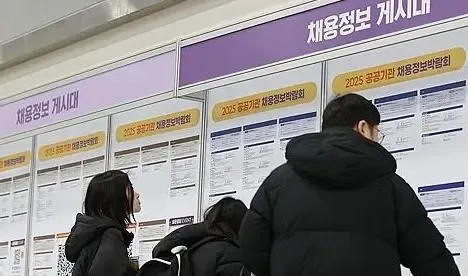
Why Are More Young South Koreans Leaving the Labor Market Amid AI Changes and Economic Slowdown?
Synopsis
An alarming trend emerges in South Korea as the number of young individuals opting out of the labor market has significantly increased. This report delves into the factors driving this shift, including the impact of AI and changing economic conditions, calling for urgent reforms to address these structural challenges in youth employment.
Key Takeaways
Significant increase in young South Koreans opting out of the labor market.
Classified as 'resting', 22.3% of youth are not working or seeking jobs.
Approximately 450,000 youths expressed a desire not to work.
Rising trend among university graduates in the 'resting' category.
Need for reforms to address youth employment challenges.
Seoul, Jan 20 (NationPress) The proportion of young individuals in South Korea who are neither employed nor actively seeking work has dramatically increased in recent years, raising alarms about underlying challenges within the labor market, according to a report from the central bank released on Tuesday.
As stated in the Bank of Korea (BOK) analysis on youth employment, the percentage of those aged 20 to 34 identified as "resting" has risen to 22.3% in 2025 from 14.6% in 2019, as reported by Yonhap news agency.
This category encompasses individuals who are not in jobs and are not pursuing job searches, education, or training without valid reasons, such as caregiving or health issues.
Among this group, the number of young people expressing a complete disinterest in working reached approximately 450,000 last year, up from 287,000 in 2019.
Those with a junior college education or less made up a larger segment of the "resting" demographic, although the share of university graduates in this group has been notably increasing in recent years, according to the BOK.
The BOK attributed this trend to various structural factors, including transformations in the labor market driven by artificial intelligence (AI), a growing preference among companies for seasoned workers, and a slowdown in economic growth.
The central bank challenged common assumptions by indicating that "resting" youths do not necessarily harbor high salary expectations. Their average anticipated minimum annual salary is around 31 million won (approximately US$20,975), which aligns closely with other unemployed young individuals.
"The rise in young individuals exiting the job market could diminish labor supply not only in the short term but also in the long run, negatively impacting the nation's overall economic growth potential," stated Yoon Jin-young, a BOK official and report author.
"This situation should be viewed not only as a temporary issue but also as a structural one," Yoon emphasized, urging the need for enhanced incentives and policy initiatives to motivate young people to rejoin the labor market and to enhance employment conditions through reforms.
Point of View
The increasing trend of young South Koreans withdrawing from the labor market signals urgent structural issues that need to be addressed. This situation demands a collective effort from policymakers and stakeholders to create an environment conducive to youth employment. By fostering better job opportunities and conditions, we can safeguard the future economic potential of our nation.
NationPress
24 Sept 2026
Frequently Asked Questions
What factors are contributing to young South Koreans opting out of the labor market?
Key factors include changes driven by artificial intelligence, a preference for experienced workers, and slower economic growth.
What does it mean when young people are classified as 'resting'?
'Resting' refers to those who are not employed and are not actively looking for work, education, or training for various reasons.
How has the number of young individuals not wanting to work changed?
Last year, around 450,000 young people reported not wanting to work, up from 287,000 in 2019.
Are young people expecting high salaries while not working?
No, the average expected salary for those not working is about 31 million won, similar to other unemployed youths.
What solutions are being proposed to address this issue?
Experts suggest stronger incentives and policy measures to motivate young people to return to the labor market and improve employment conditions.