Abhishek Bachchan's first Bollywood love: the Zeenat Aman story from 'Mahaan'
Synopsis
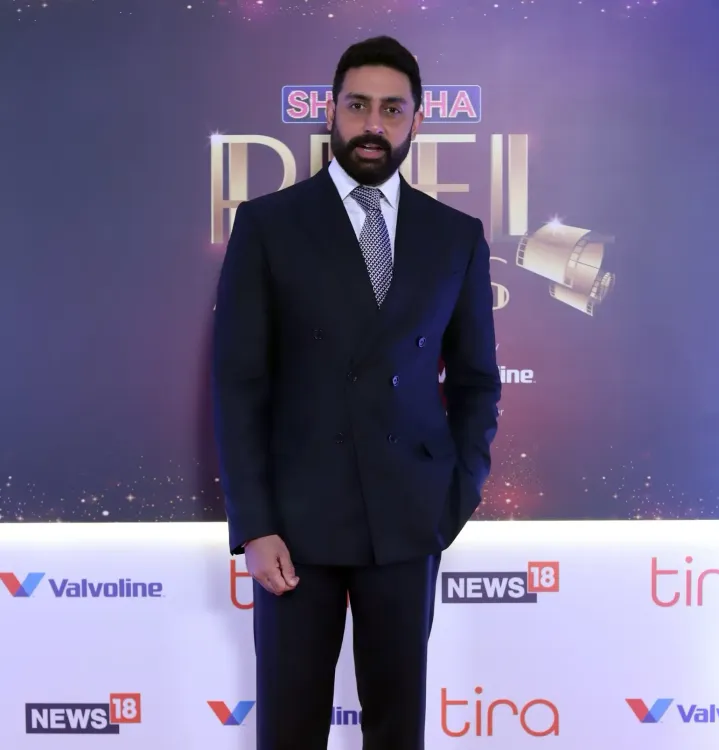
Long before the film sets, award shows, or controversy, a young Abhishek Bachchan fell for Zeenat Aman during the Kathmandu shoot of 'Mahaan' — and his innocent dinner-table question to her became one of Bollywood's most charming childhood anecdotes. It is a rare, unguarded look at the star-studded world the Bachchans grew up in.
Key Takeaways
Abhishek Bachchan named veteran actress Zeenat Aman as his first love from Bollywood .
The anecdote emerged on the chat show 'Yaaron Ki Baraat' , hosted by Sajid Khan and Riteish Deshmukh .
The incident took place during the shoot of 'Mahaan' in Kathmandu , where a young Abhishek innocently asked Zeenat if he could sleep in her room. 'Mahaan' , directed by S.
Ramanathan , featured Amitabh Bachchan in a triple role and music by R.D.
Burman ; it was a remake of the 1978 Kannada film 'Shankar Guru' .
Zeenat Aman rose to fame with 'Haré Rama Haré Krishna' (1971) alongside Dev Anand and starred in numerous blockbusters through the 1970s and early 1980s .
Actor Abhishek Bachchan once charmed audiences with a candid confession — his very first love from Bollywood was none other than veteran star Zeenat Aman, a revelation he made during an appearance on the celebrity chat show 'Yaaron Ki Baraat', hosted by Sajid Khan and Riteish Deshmukh. The anecdote, rooted in the making of the 1983 action thriller 'Mahaan', quickly became one of the most endearing stories to emerge from that era.
The Kathmandu Dinner That Started It All
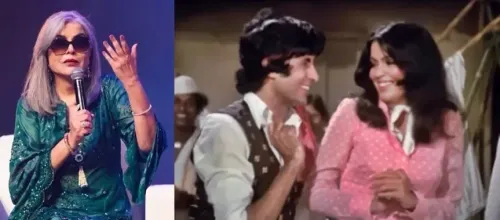
Abhishek recalled a disarmingly innocent exchange he had with Zeenat Aman during the 'Mahaan' shoot in Kathmandu. 'She was my first love,' the 'Dhoom' star said, setting the stage for the story. One evening, after the cast had shared a meal at a restaurant, a young Abhishek watched Zeenat prepare to head back to her room.
When he asked where she was going and learned she was retiring alone for the night, the then-little boy — unaccustomed to the idea of sleeping by oneself — looked up at her and asked innocently, 'Should I come and sleep with you?' The anecdote drew laughter for its pure, guileless charm, capturing a child's complete unawareness of social convention.
About 'Mahaan' — A Landmark Multi-Starrer
Directed by S. Ramanathan and produced by Satyanarayana and Suryanarayana, 'Mahaan' was an ambitious production that placed Amitabh Bachchan in a rare triple role. The film featured an ensemble cast including Waheeda Rehman, Parveen Babi, Ashok Kumar, Amjad Khan, Kader Khan, Aruna Irani, Sujit Kumar, and Shakti Kapoor.
The musical score was composed by the legendary R.D. Burman. Notably, 'Mahaan' was an official remake of the 1978 Kannada film 'Shankar Guru', underscoring the cross-regional storytelling that defined Indian cinema of the period.
Zeenat Aman's Iconic Bollywood Journey
Zeenat Aman made her acting debut in 1970 with 'The Evil Within', before stepping into Hindi cinema with 'Hungama' in 1971, followed by 'Hulchul'. Her meteoric rise, however, came with 'Haré Rama Haré Krishna' (1971), co-starring Dev Anand, which established her as a cultural icon of her generation.
The decades that followed were studded with landmark films: 'Yaadon Ki Baaraat' (1973), 'Roti Kapada Aur Makaan' (1974), 'Ajanabee' (1974), 'Don' (1978), 'Satyam Shivam Sundaram' (1978), 'The Great Gambler' (1979), and 'Qurbani' (1980). Her body of work across the 1970s and early 1980s cemented her status as one of Bollywood's most enduring stars.
Why the Story Still Resonates
Anecdotes like this one offer a rare, humanising glimpse into the lives of Bollywood's most celebrated families — particularly the Bachchans, who grew up on film sets. For audiences, it is also a nostalgic window into the golden age of Hindi cinema, when the likes of Zeenat Aman, Amitabh Bachchan, and R.D. Burman collaborated on productions that remain benchmarks of the craft. Abhishek's willingness to retell the story with self-deprecating humour reflects a generational comfort with Bollywood's storied past — one that continues to capture new audiences decades later.
Point of View
A rivalry, or a rivalry, but a child's unadulterated wonder at the world of film. Yet beneath the laughter, it points to something mainstream coverage of Bollywood nostalgia often glosses over: star children like Abhishek did not merely inherit fame, they were shaped by it, on location, across decades of sets. That lived intimacy with the golden era is a cultural inheritance that no amount of formal film school can replicate — and it is a reminder that Bollywood's mythology is partly built on such quietly formative human moments.
NationPress
13 Sept 2026
Frequently Asked Questions
Who did Abhishek Bachchan say was his first love from Bollywood?
Abhishek Bachchan said veteran actress Zeenat Aman was his first love from Bollywood. He made this revelation on the chat show 'Yaaron Ki Baraat', hosted by Sajid Khan and Riteish Deshmukh.
What was the Zeenat Aman anecdote Abhishek Bachchan shared?
During the shoot of 'Mahaan' in Kathmandu, a young Abhishek shared a dinner with Zeenat Aman. When she got up to leave for her room, he innocently asked if he could come and sleep with her — unaware of the social awkwardness — drawing laughter for its childlike guilelessness.
What is the film 'Mahaan' about and who starred in it?
'Mahaan' is a 1983 action thriller directed by S. Ramanathan in which Amitabh Bachchan played a triple role. The film also starred Waheeda Rehman, Parveen Babi, Zeenat Aman, Ashok Kumar, Amjad Khan, and others, with music by R.D. Burman. It was a remake of the 1978 Kannada film 'Shankar Guru'.
What are some of Zeenat Aman's most iconic films?
Zeenat Aman rose to fame with 'Haré Rama Haré Krishna' (1971) alongside Dev Anand. Her notable films include 'Yaadon Ki Baaraat' (1973), 'Don' (1978), 'Satyam Shivam Sundaram' (1978), and 'Qurbani' (1980), making her one of Bollywood's defining stars of the 1970s.
Where did Abhishek Bachchan share this story about Zeenat Aman?
Abhishek Bachchan shared the anecdote on 'Yaaron Ki Baraat', a celebrity chat show hosted by Sajid Khan and Riteish Deshmukh. The story became a widely recalled moment from the show for its warmth and humour.