Angad Hasija met people with mental health conditions to play Alekh in Bidaai

Synopsis
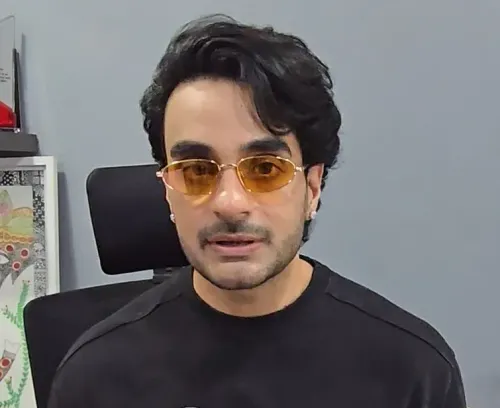
Angad Hasija didn't just study a script to play Alekh — he met real people living with mental health conditions, observing their speech patterns and reactions to fear. Now reprising a version of the same character in 'Tumm Se Tumm Tak', his immersive preparation raises a pointed question about how rarely Indian television actors go this far.
Key Takeaways
Angad Hasija played Alekh Rajvansh in 'Sapna Babul Ka…Bidaai' opposite Sara Khan .
He met people with mental health conditions to study their body language, speech patterns, and reactions for the role.
Hasija described the performance as requiring a 'very thin line' between authenticity and overacting.
His current character in 'Tumm Se Tumm Tak' is, according to him, essentially the same as Alekh — with a changed name but the same psychological profile.
The Alekh character is written as a man separated from family since childhood, shaped by trauma, and struggling with memory loss.
Television actor Angad Hasija has revealed the depth of preparation that went into portraying Alekh, his celebrated role in the popular Hindi television series 'Sapna Babul Ka…Bidaai'. In a candid conversation, Hasija disclosed that he met people living with mental health conditions, closely studying their behaviour and mannerisms to bring authenticity to a character that remains one of his most recognised performances.
The Research Behind the Role
Hasija described a meticulous process of observation — watching how individuals with mental health conditions carried themselves, the way they spoke, and the involuntary pauses in their speech. 'I met people who were mentally disturbed and observed their body language and dialogue delivery. I observed how they would get stuck while speaking and how they would react when they were scared,' he said.
The actor noted that the challenge lay in walking a fine line between authenticity and excess. 'It is very difficult. There is a very thin line, and it is important that the performance does not look like overacting. It should not look fake,' he explained. 'If you are portraying such a character, people should accept it.'
The Character of Alekh
Alekh Rajvansh, the role Hasija played opposite Sara Khan in 'Sapna Babul Ka…Bidaai', was written as a man with a complex psychological profile — separated from his family since childhood, shaped by difficult experiences, and prone to childlike behaviour as a result of trauma. Hasija said the character received considerable appreciation from audiences, validating his immersive approach to preparation.
The Connection to 'Tumm Se Tumm Tak'
Hasija also revealed that his current character in the show 'Tumm Se Tumm Tak' is closely connected to Alekh, though the name has changed. 'The character I am playing is the same Alekh. Alekh Rajvansh was in Bidaai. His name has changed, but he is essentially the same character,' the actor explained.
According to Hasija, this new character carries similar emotional baggage — a boy estranged from his family, burdened with secrets, and struggling with memory loss. The continuity, he suggested, is intentional and offers him an opportunity to deepen a portrayal he first developed years ago.
Why Method Preparation Matters in Indian Television
Hasija's approach stands out in an industry where production timelines are often tight and method-style preparation is uncommon. His decision to engage directly with individuals experiencing mental health conditions reflects a growing awareness, among some actors, of the responsibility that comes with depicting psychological conditions on screen. Notably, portrayals of mental health in mainstream Indian television have historically drawn both praise and criticism for accuracy.
With 'Tumm Se Tumm Tak' reviving the Alekh archetype, audience and critical response to Hasija's reprisal will be closely watched.
Point of View
And the line between sensitisation and spectacle is thin. That Hasija himself acknowledges the 'thin line' between authentic and fake suggests he is aware of the stakes. Whether 'Tumm Se Tumm Tak' handles that responsibility as carefully as he claims 'Bidaai' did remains to be seen.
NationPress
12 Aug 2026
Frequently Asked Questions
Who is Angad Hasija and what role is he known for?
Angad Hasija is an Indian television actor best known for playing Alekh Rajvansh, a character with a complex mental health profile, in the popular show 'Sapna Babul Ka…Bidaai' opposite Sara Khan. The role earned him significant audience appreciation.
How did Angad Hasija prepare for the role of Alekh?
Hasija conducted extensive research by meeting people living with mental health conditions and observing their body language, dialogue delivery, and reactions to fear. He aimed to ensure the performance felt authentic rather than exaggerated.
What is Angad Hasija's connection between 'Bidaai' and 'Tumm Se Tumm Tak'?
According to Hasija, the character he plays in 'Tumm Se Tumm Tak' is essentially the same as Alekh from 'Bidaai' — a man estranged from family since childhood, burdened with secrets, and struggling with memory loss — though the character's name has changed.
Why did Angad Hasija call playing Alekh one of his most difficult roles?
Hasija said portraying a character with a complex mental state requires navigating a very thin line — the performance must feel real without tipping into overacting. He stressed that audience acceptance is the true measure of whether such a portrayal succeeds.
Who did Angad Hasija star opposite in 'Sapna Babul Ka…Bidaai'?
Angad Hasija played Alekh Rajvansh opposite Sara Khan in 'Sapna Babul Ka…Bidaai', one of the more popular Hindi television dramas of its era.