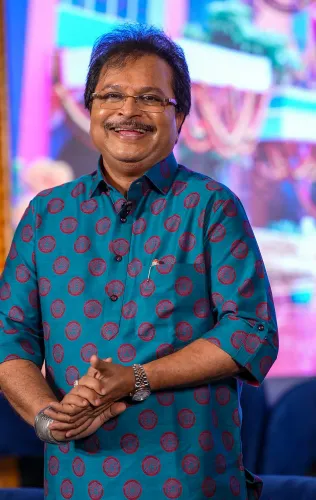
TMKOC producer Asit Modi on religion, caste obsession dividing India
Synopsis
The man behind India's longest-running sitcom isn't just making television — he's worried about the country it reflects. Asit Kumarr Modi says the first question Indians ask each other is no longer 'How are you?' but 'What religion are you?' His chawl-era memories of Bhuleshwar and Kalbadevi aren't nostalgia — they're a rebuke to modern urban anonymity, and reportedly, some colonies are already taking the lesson seriously.
Key Takeaways
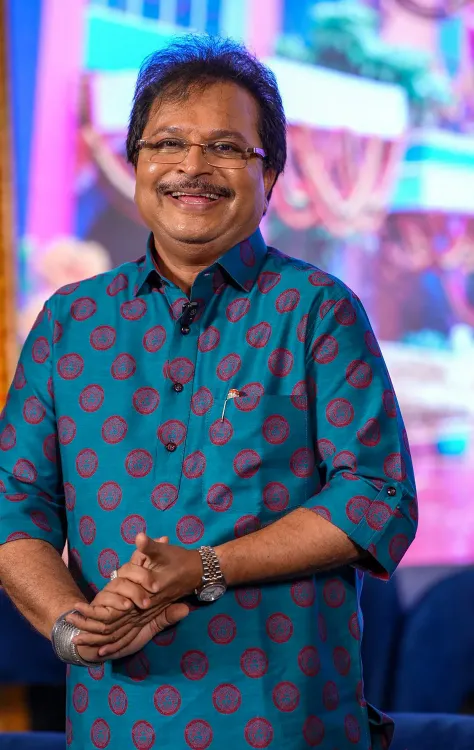
Asit Kumarr Modi , producer of Taarak Mehta Ka Ooltah Chashmah , has expressed concern over society's growing obsession with religion, caste, and language.
Modi urged Indians to identify as 'Indian first' , arguing it would resolve many social divisions.
He drew on his childhood in Mumbai's chawl neighbourhoods — Bhuleshwar , Kalbadevi , Dadar — as a model of community living.
Modi said TMKOC has reportedly inspired real residential colonies built on the show's spirit of multi-community coexistence, including one in Rajkot .
He flagged modern urban anonymity — people not knowing neighbours, not greeting watchmen — as a sign of social erosion.
Taarak Mehta Ka Ooltah Chashmah producer Asit Kumarr Modi has voiced deep concern over what he sees as society's growing fixation on religion, caste, and language — divisions he believes are eroding the spirit of community living that once defined Indian neighbourhoods. Speaking in a candid conversation, Modi urged people to identify as Indians first, arguing that this single shift in mindset could dissolve many of the fault lines fracturing society today.
The Question That Troubles Him
Modi said the problem surfaces in everyday interactions. 'Today, whenever we meet someone, the first questions are: 'Which religion do you belong to? What is your caste? Which community do you belong to? What language do you speak?' I always say that if we first say, 'I am an Indian,' then this problem will be solved and everyone will be able to live together,' he said.
The sentiment reflects a broader anxiety about identity politics seeping into social spaces — a concern increasingly echoed by public figures across culture and civil society.
Lessons From Mumbai's Chawl Life
Drawing on his own upbringing, Modi reflected on the community bonds forged in Mumbai's chawl neighbourhoods — areas like Bhuleshwar, Kalbadevi, and Dadar — where cramped living quarters made neighbourliness a necessity and, over time, a virtue.
'In my childhood, and even in Dilip (Joshi) bhai's childhood, we lived in a chawl system. The neighbours became our family because the houses were small. There wasn't the concept of a nuclear family in the way we see it today. Even today, I am connected with the neighbours I had when I was six or seven years old,' he recalled.
For Modi, that lived experience is not mere nostalgia — it is the template for what urban India has lost and must recover.
What Community Living Actually Teaches
Modi argued that proximity to neighbours builds emotional and moral capacity. 'When you live with your neighbours, you have to let go of many things. You learn community living. You learn to live together. Community living is a very important thing, and today I feel it is extremely important for our country,' he said.
He extended the thought to everyday gestures — celebrating festivals together, greeting neighbours with warmth, forgiving small mistakes. 'If you forgive your neighbours' mistakes, just like Jethalal forgives so many mistakes, then we can all live with love,' he added, drawing a parallel with the long-running show's most beloved character.
Modern Life's Quiet Erosion
The producer was candid about how urban anonymity has replaced community warmth. 'Today, people don't even know who lives in the neighbouring house. Many don't even speak to the watchman or the lift operator with a smile. We should be grateful to the watchman, the liftman and everyone who serves us. Our neighbour is our first family. Our neighbour is everything,' he said.
The observation points to a structural shift in Indian city life — rising apartment culture, gated communities, and digital immersion have all contributed to neighbours becoming strangers.
The Show's Real-World Impact
Modi revealed that Taarak Mehta Ka Ooltah Chashmah's message of multi-community coexistence has reportedly inspired the formation of actual residential colonies modelled on the fictional Gokuldham Society. 'Many colonies have been created with this spirit. People have told us they were inspired by our show to build such communities. I have even been invited to visit a colony in Rajkot,' he said.
The show, which has aired for over 17 years, continues to be one of Indian television's longest-running sitcoms, built on the premise of diverse families living harmoniously under one roof. Whether its message is translating beyond the screen into how Indians actually treat their neighbours remains, as Modi himself implies, an open and urgent question.
Point of View
But they also sidestep a harder question: can a television show, however beloved, substitute for the structural conditions — affordable housing, walkable neighbourhoods, shared public spaces — that once made chawl-style community living possible? The nostalgia for Bhuleshwar and Kalbadevi glosses over the fact that chawls were products of economic constraint, not civic design. India's identity-politics problem will not be solved by Jethalal's forgiveness arcs. Modi is right that the diagnosis is urgent; the prescription, however, needs more than prime-time goodwill.
NationPress
22 Sept 2026
Frequently Asked Questions
What did TMKOC producer Asit Modi say about religion and caste?
Asit Kumarr Modi said society's habit of asking about religion, caste, and language before anything else is a root cause of social division. He argued that if people identified as Indians first, many of these divisions would dissolve naturally.
Why did Asit Modi talk about Mumbai's chawl culture?
Modi drew on his own childhood in Mumbai's chawl neighbourhoods — including Bhuleshwar, Kalbadevi, and Dadar — to illustrate how close-quarter living fostered genuine community bonds. He said neighbours became family, and those relationships have stayed with him decades later.
Has Taarak Mehta Ka Ooltah Chashmah inspired real communities?
According to Modi, the show has reportedly inspired the formation of actual residential colonies modelled on its fictional Gokuldham Society. He said he has even been invited to visit one such colony in Rajkot, Gujarat.
What concern did Asit Modi raise about modern urban life?
Modi said urban Indians have grown disconnected from their immediate neighbours — many do not know who lives next door and do not greet building staff like watchmen or lift operators. He described the neighbour as 'our first family' and called this disconnection a serious social problem.
How long has Taarak Mehta Ka Ooltah Chashmah been on air?
Taarak Mehta Ka Ooltah Chashmah has been on air for over 17 years, making it one of the longest-running sitcoms in Indian television history. The show is built on the premise of diverse families from different communities living harmoniously together.