Did Chris Pratt Almost Go by Christo?
Click to start listening
Synopsis
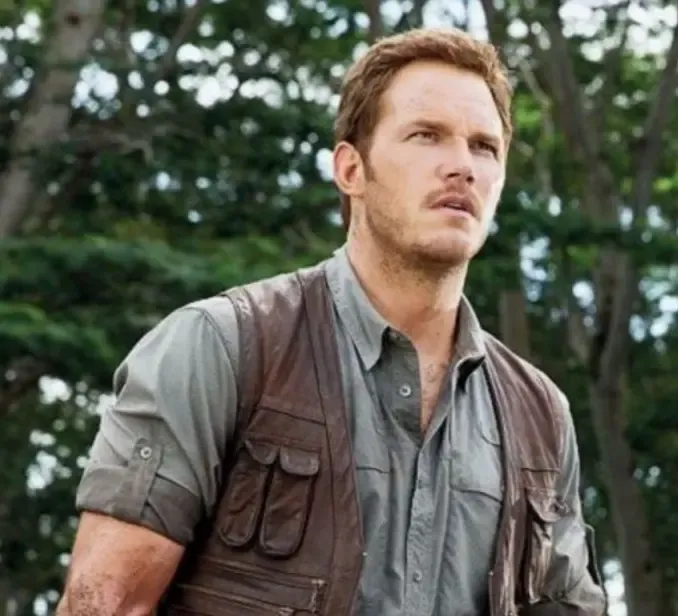
Hollywood star Chris Pratt recently revealed on a podcast that he almost adopted the stage name 'Christo' during his time working at a shrimp restaurant. His humorous take on the name and concerns about AI actors make for an engaging discussion about identity in the entertainment industry.
Key Takeaways
- Chris Pratt almost adopted the name Christo during his waitering days.
- The name tag mishap led to a unique nickname among coworkers.
- AI's role in acting raises concerns for many traditional actors.
- Pratt's journey reflects the personal nature of fame.
- Hollywood is evolving with technology, prompting discussions about identity.
Los Angeles, Jan 23 (NationPress) Hollywood actor Chris Pratt disclosed that he once thought about adopting a stage name that reflected his experience with a shrimp restaurant.
During his appearance on the recent episode of Josh Horowitz’s Happy Sad Confused podcast, Chris, whose birth name is Christopher Michael Pratt, recounted his time as a waiter at the Bubba Gump Shrimp Company in Maui, Hawaii. He said, "I was going to be Christo. I had a name tag that read 'Christopher' - but this was at Bubba Gump.”
“However, the P-H-E-R part wore off, so it simply read Christo, and everyone referred to me as Christo for quite a while during my stint at Bubba Gump. With a high turnover rate, the new hires believed my name was Christo," he explained.
Nonetheless, the nickname didn’t become popular in Hollywood, as reported by femalefirst.co.uk.
The actor, who first gained fame in 2000 with the short film Cursed Part 3, which was brought to light by director Rae Dawn Chong, remarked: "As I made my way to Los Angeles to pursue my dreams, part of me genuinely contemplated, 'Perhaps I should just go by Christo.'"
Furthermore, the star, known for his role in The Super Mario Bros. Movie, humorously stated: "It’s never too late."
Meanwhile, the Jurassic World actor expressed concerns that artificial intelligence could threaten his acting career, particularly criticizing the AI 'actress' Tilly Norwood.
He told variety.com: "I don't feel like I'm replaceable by AI. This Tilly Norwood thing, I think is nonsense. I’ve never seen her in any film, I don’t know who she is. It’s all artificial until it becomes something real."
In 2025, Tilly's creator, Eline van der Velden, asserted that it was not intended to replace human actors, but rather to serve as a piece of art.
Point of View
Chris Pratt's candid reflections on his past and the evolution of identity in the entertainment industry highlight both the whimsical and serious dimensions of fame. His humor coupled with genuine apprehensions about AI's role in acting presents a balanced viewpoint, reminding audiences that the landscape is ever-changing, yet deeply personal.
NationPress
23/01/2026
Frequently Asked Questions
What was Chris Pratt's original stage name idea?
Chris Pratt considered the stage name 'Christo' during his time working at the Bubba Gump Shrimp Company.
Why did Chris Pratt not use the name Christo in Hollywood?
The nickname 'Christo' didn't catch on in Hollywood, despite being popular among his coworkers at the shrimp restaurant.
What are Pratt's thoughts on AI in acting?
Pratt expressed skepticism about AI actors, believing they cannot replace him and critiqued AI actress Tilly Norwood as 'fake.'
How did Chris Pratt get discovered?
Pratt was discovered by director Rae Dawn Chong while working as a waiter, leading to his first professional role in Cursed Part 3.
What was Pratt's first major role?
His first professional role was in the short film Cursed Part 3, released in 2000.