FWICE demands ₹50 lakh for worker killed on Bhansali's 'Love & War' set
Synopsis
A carpenter died by electrocution on Sanjay Leela Bhansali's 'Love & War' set — and the fallout has exposed a far bigger problem. FWICE president BN Tiwari says crew members across Indian film and TV sets are routinely working 16–20 hours against a 12-hour limit. The federation is now pushing for ₹50 lakh in compensation and threatening unannounced safety audits on all productions.
Key Takeaways
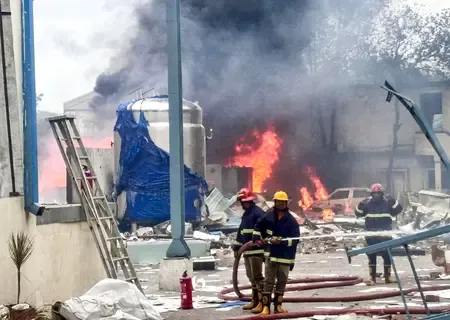
Chandradhari Singh Yadav , a 42-year-old carpenter, died by electrocution on the sets of Sanjay Leela Bhansali's 'Love & War' in Mumbai .
FWICE president BN Tiwari confirmed Bhansali offered ₹40 lakh to the family; the federation has demanded this be raised to ₹50 lakh .
No response from Bhansali or his production house to the revised compensation demand as of 28 June .
Tiwari flagged that crew members across productions are reportedly working 16–20 hours a day, against a maximum of 12 hours .
AICWA has separately called for an independent investigation into the exact circumstances of the death.
FWICE confirmed it will conduct unannounced set audits but does not plan to file an FIR against any producer.
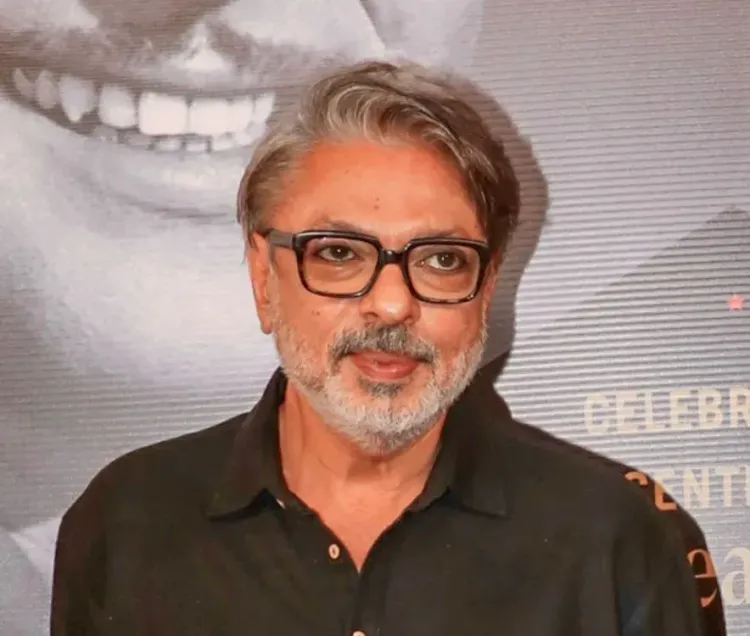
The Federation of Western India Cine Employees (FWICE) has called for stricter safety standards and improved working conditions on film and television sets after Chandradhari Singh Yadav, a 42-year-old carpenter, died by electrocution on the sets of director Sanjay Leela Bhansali's upcoming film 'Love & War' in Mumbai. The federation's president, BN Tiwari, confirmed the incident on 28 June and outlined the body's demands from the production.
Compensation Dispute
According to BN Tiwari, Bhansali had offered ₹40 lakh to the deceased worker's family following the incident. The federation, however, has formally requested the production to raise the amount to ₹50 lakh, citing that Yadav was 42 years old and the sole breadwinner of his family. As of the time of reporting, neither Bhansali nor his production house had responded to this demand.
'SLB helped his family by donating ₹40 lakh. It is a good amount, but we have requested him, because the worker was 42 years old, he was the only earning person. So, we requested the production to give him ₹50 lakh. There has been no response from his side yet,' Tiwari said.
Wider Safety Concerns
Tiwari was emphatic that the federation's concerns extend well beyond this single incident. He pointed to a systemic pattern of overwork across film and television productions, where crew members are reportedly being made to work 16 to 20 hours a day against a stipulated maximum of 12 hours.
'It is not just about Sanjay Leela Bhansali. On maximum sets, where serials are being made, where series are being made, where other works are being done, there is a problem everywhere. This is totally unacceptable,' Tiwari said, adding that FWICE teams would conduct unannounced visits to sets to audit working hours and safety compliance.
He stressed that the federation's objective is not to disrupt production schedules but to end what he described as slave-like working conditions for technicians, junior artistes, and daily-wage workers.
Cause of Death Under Scrutiny
The circumstances surrounding Yadav's death drew additional attention after the All India Cine Workers Association (AICWA) questioned initial reports and called for an independent investigation into the exact cause. Tiwari pushed back on the ambiguity, stating that exposed live wires were involved and that the post-mortem report confirmed electrocution as the cause of death.
'The wires were open due to the current and the cause of death is unknown — he died on the spot. If we say that it was caused by the current and the post-mortem report also says that he died due to the current, then it is not true,' Tiwari clarified, noting that multiple colleagues — including sound recordists and camerapersons — were present with Yadav at the time.
FWICE's Approach: Dialogue Over Legal Action
Despite the gravity of the situation, Tiwari confirmed that FWICE does not intend to file a First Information Report (FIR) against any producer. The federation has historically relied on its organisational influence to compel compliance rather than pursuing criminal complaints.
'The federation has never filed an FIR against anyone. Our power, the strength of our organisation, is such that people listen to us and respect us. Our organisation is set up to protect our workers, to fight for their rights and safety,' he said.
This comes amid growing scrutiny of occupational safety standards across India's entertainment industry, where long shooting hours and inadequate on-set infrastructure have drawn repeated criticism from worker bodies. How the production responds to the federation's compensation demand, and whether broader safety reforms follow, will be closely watched.
Point of View
Not an anomaly. India's entertainment industry has long run on an informal economy of overworked, under-protected daily-wage labour — and the 16-to-20-hour shift culture Tiwari describes is an open secret. FWICE's refusal to file FIRs, while understandable as a negotiating posture, also limits accountability: dialogue works only when the other side has an incentive to engage. Bhansali's silence on the ₹50 lakh demand is telling. The real test is whether this incident triggers enforceable safety regulations or dissolves into another round of condolences and closed-door settlements.
NationPress
27 Sept 2026
Frequently Asked Questions
Who died on the sets of 'Love & War' and how?
Chandradhari Singh Yadav , a 42-year-old carpenter, died by electrocution on the sets of Sanjay Leela Bhansali's upcoming film 'Love & War' in Mumbai. The post-mortem report confirmed electrocution as the cause of death, according to FWICE president BN Tiwari.
What compensation is FWICE demanding for the deceased worker's family?
FWICE has requested the production raise the compensation from the offered ₹40 lakh to ₹50 lakh, citing that Yadav was 42 years old and the sole earner in his family. As of 28 June, neither Bhansali nor his production house had responded to this demand.
Is the 'Love & War' set safety incident an isolated case?
According to FWICE president BN Tiwari, the problem is industry-wide. He stated that crew members across film and television productions are routinely working 16 to 20 hours a day, well above the stipulated 12-hour maximum, and that safety lapses are common across sets.
What action is FWICE planning to take?
FWICE has announced unannounced safety audits across film and TV sets to check working hours and safety compliance. The federation has, however, confirmed it will not file an FIR against any producer, preferring dialogue and organisational pressure as its primary tools.
Why has the AICWA called for an independent investigation?
The All India Cine Workers Association (AICWA) raised questions about initial reports on the circumstances of Yadav's death and demanded a comprehensive, independent investigation. FWICE's BN Tiwari responded that the post-mortem report and the presence of multiple witnesses confirm electrocution as the cause.