Monalisa on women's objectification: 'Regional cinema lacks aesthetic treatment'
Synopsis
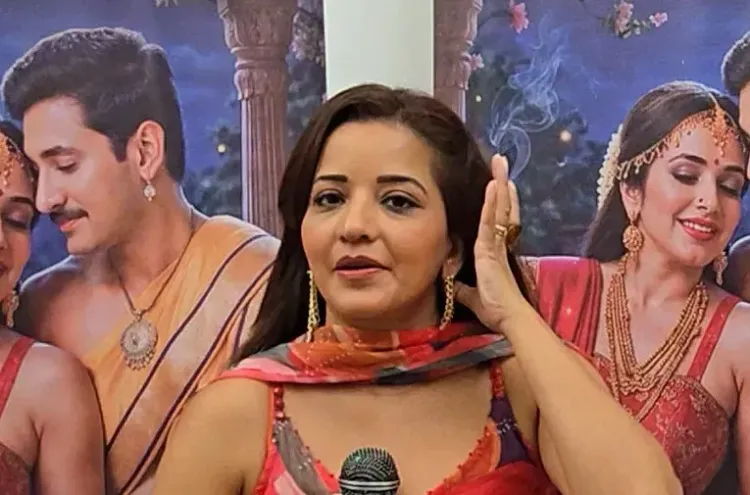
Monalisa has stepped into one of Indian cinema's most charged debates, conceding that Bhojpuri films have sometimes lacked the aesthetic sensibility that can make the difference between art and exploitation. Her comments land in the wake of the Peddi controversy — and signal a rare moment of self-critique from within the regional industry.
Key Takeaways
Actress Monalisa said Bhojpuri cinema has at times lacked the aesthetic treatment seen in mainstream Hindi films when depicting women.
She argued that presentation and cinematography determine whether a scene feels exploitative or artistic.
Her remarks follow controversy over the film Peddi , which faced criticism for the portrayal of Janhvi Kapoor 's character opposite Ram Charan .
A scene in Peddi showing a non-consensual kiss drew reactions from film industry members who raised concerns about objectification.
Monalisa emphasised: 'Presentation is also very important' in how women are portrayed on screen.
Actress Monalisa has spoken candidly about the objectification of women in Indian cinema, drawing a pointed distinction between how mainstream Hindi films and regional cinema — particularly Bhojpuri films — handle the portrayal of women on screen. Her remarks, made in an exclusive interview, reignite a debate that has grown louder in recent months following controversies around specific film releases.
What Monalisa Said
The actress argued that the difference between acceptable and problematic depictions often lies not in the content itself, but in how it is filmed. 'I think in Hindi cinema, even when there is a lot of skin show, the way it is shot is often very aesthetic. Because of the way it is presented, people may not feel that it looks wrong,' she said.
Turning to regional cinema, Monalisa was candid in her assessment. 'I would say that perhaps regional cinema, particularly Bhojpuri cinema, has lacked that aesthetic treatment at times,' the Nazar actress acknowledged. She elaborated that elements such as showing the waist or a little skin can be handled differently when filmed with care. 'If the same thing is shot beautifully and aesthetically, whether you want to show the waist or a little skin, it can look different,' she added.
The Broader Context
Monalisa's comments arrive months after the makers of Peddi faced significant criticism over the portrayal of actress Janhvi Kapoor's character, Achiyamma, opposite Ram Charan. The film sparked a social media debate over what several users described as the hypersexualisation and objectification of the female lead. Certain scenes drew widespread attention for repeatedly focusing the camera on Janhvi's cleavage and waist.
A separate sequence — in which Ram Charan's character kisses her without consent and later frames the act as an expression of love — drew sharp reactions from within the film industry. Several industry members publicly questioned the treatment of the female character and raised broader concerns about how women are depicted on screen.
Presentation as the Key Variable
At the heart of Monalisa's argument is the idea that cinematic craft can determine whether a scene feels exploitative or artistic. She emphasised that the same visual, depending on how it is composed and presented, can create an entirely different impression on the audience. 'So, I think presentation is also very important,' she concluded.
This is not the first time the Bhojpuri film industry has faced scrutiny over its on-screen treatment of women. Critics have long argued that a segment of Bhojpuri cinema relies on item numbers and suggestive sequences that lack the production sensibility to contextualise them within a narrative. Monalisa, who has worked extensively in the industry, appears to be acknowledging that critique from the inside.
What This Signals for Indian Cinema
The conversation around women's objectification in Indian entertainment has gained fresh momentum in the post-#MeToo era, with audiences and critics increasingly scrutinising not just content but intent and craft. Monalisa's perspective — that aesthetics and presentation are not merely stylistic choices but ethical ones — adds a nuanced voice to a debate that often defaults to binary positions. How filmmakers across regional industries respond to this growing scrutiny will likely shape casting, scripting, and directorial choices in the years ahead.
Point of View
Mainstream productions can attract the same objectification charge, suggesting the problem is not confined to regional cinema's production values. The real shift will require not better cinematography, but better writing and stronger female agency in scripts — something no amount of aesthetic treatment can substitute.
NationPress
15 Oct 2026
Frequently Asked Questions
What did Monalisa say about the objectification of women in cinema?
Monalisa said that while skin show exists in both Hindi and regional cinema, the difference lies in how scenes are filmed. She acknowledged that Bhojpuri cinema has sometimes lacked the aesthetic treatment that can make such depictions feel less problematic to audiences.
What is the Peddi controversy Monalisa's comments are linked to?
The film Peddi faced criticism for what viewers described as the hypersexualisation of Janhvi Kapoor's character, Achiyamma, opposite Ram Charan. Specific scenes — including one showing a non-consensual kiss — drew reactions from industry members and sparked a broader debate about the objectification of women in Indian films.
Why does Monalisa believe Hindi cinema handles such scenes differently?
Monalisa argued that Hindi cinema often shoots such sequences with greater aesthetic care, which shapes how audiences perceive them. She said that when the same visual content is presented in a more artistically composed manner, it can look entirely different and feel less objectionable.
Has Bhojpuri cinema faced criticism over women's portrayal before?
Yes, critics have long raised concerns about a segment of Bhojpuri films relying on item numbers and suggestive sequences that lack narrative context. Monalisa's comments represent a rare acknowledgement of this critique from a prominent figure within the industry itself.
What broader debate do Monalisa's remarks contribute to?
Her remarks feed into a growing conversation about women's objectification in Indian entertainment, which has intensified in the post-MeToo era. The debate increasingly focuses not just on content but on directorial intent, cinematic craft, and the agency given to female characters in scripts.