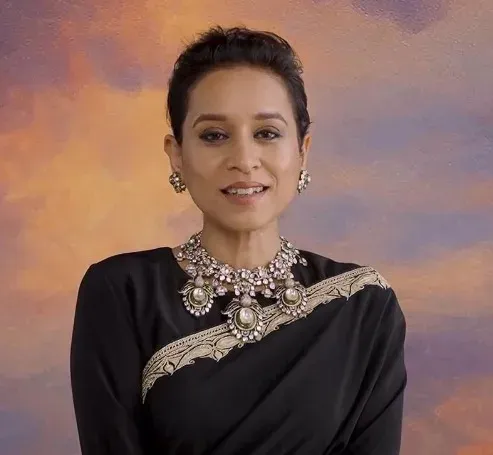
Naila Grrewal on women-centric films: 'Box office must not stop us'

Synopsis
Naila Grrewal, the 'Thappad' actress, is sounding the alarm on a quiet retreat from women-centric cinema in Bollywood — and she's naming box-office anxiety as the culprit. Her call for women to lead these stories, not just appear in them, cuts through the usual industry platitudes.
Key Takeaways
Naila Grrewal says she is 'very driven' by women-centric issues and wants to headline films that explore them.
She observes a 'slight decline' in women-centric films in Bollywood over recent years.
Grrewal praised co-star Taapsee Pannu for consistently choosing purpose-driven roles, citing the Netflix film 'Gandhari' on child trafficking.
She argued that box office considerations should not deter filmmakers from tackling women's issues.
Grrewal stressed that women in the industry have a responsibility to 'support and uplift other women.'
Actress Naila Grrewal has called on Indian cinema to recommit to women-centric storytelling, arguing that women in the film industry carry a collective responsibility to champion issues that affect their gender — both on screen and off it. Speaking in an exclusive interaction, the Mumbai-based actress made a pointed case for putting women's voices at the centre of mainstream narratives.
A Personal Drive for Women-Centric Stories
Grrewal, best known for her role in the critically acclaimed 'Thappad', said she feels a strong personal pull toward projects that explore the lived realities of women. 'Definitely, I feel that as an individual, I am very driven when it comes to women-centric issues, and I would certainly like to do a film that focuses on and explores women's issues,' she said. She added that she perceives 'a slight decline in such films over the past few years,' lamenting that audiences are 'not seeing enough of them anymore.'
Praising Taapsee Pannu's Choices
Grrewal reserved particular praise for her 'Thappad' co-star Taapsee Pannu, describing herself as 'very fortunate' to have shared the project with her. She pointed to Pannu's recent Netflix release 'Gandhari' — which reportedly deals with child trafficking — as an example of the kind of purposeful cinema she hopes to see more of. 'She recently had another film released on Netflix (Gandhari), I believe, which deals with child trafficking and highlights the importance of bringing women's issues to the forefront,' Grrewal noted.
Box Office Should Not Be a Barrier
One of Grrewal's sharpest observations concerned the commercial hesitation that, in her view, discourages studios from greenlighting women-led social dramas. She argued that the gravity of the issues at stake outweighs any commercial calculation. 'When it comes to box office numbers, I feel that should not, cannot, and must not stop us. These issues are so important that we should not be limited by questions like, "Which male star is in the film?"' she said.
Women Must Lead the Movement
Grrewal framed the push for women-centric cinema not merely as an artistic preference but as a moral imperative. 'Women have a responsibility to support and uplift other women. And if we do not do that, then who will?' she said. She expressed a clear desire to occupy that space going forward, positioning herself as an advocate for films that put women's stories front and centre. This comes amid a broader industry conversation about gender representation in Bollywood, following a run of high-profile women-led releases that have demonstrated strong audience appetite. Whether that commercial proof-of-concept translates into a sustained slate of such films remains to be seen.
Point of View
Yet the pipeline of socially engaged, women-centric dramas appears thinner than it was in the early 2020s. The industry's reluctance is less about audience appetite — which data repeatedly shows exists — and more about risk aversion at the green-light stage. Grrewal's framing of this as a collective moral duty, rather than a niche creative preference, is worth noting. Whether that sentiment converts into actual casting choices and producer commitments, or stays in the register of interview idealism, is the real test.
NationPress
13 Sept 2026
Frequently Asked Questions
Who is Naila Grrewal?
Naila Grrewal is a Bollywood actress best known for her role in the 2020 social drama 'Thappad', which also starred Taapsee Pannu. She has been a vocal advocate for women-centric storytelling in Indian cinema.
What did Naila Grrewal say about women-centric films?
Grrewal said she personally feels driven to act in films that explore women's issues, and expressed concern that such films have declined in number in recent years. She called on women in the industry to lead this movement rather than wait for male-star-driven vehicles.
Why did Naila Grrewal praise Taapsee Pannu?
Grrewal praised Taapsee Pannu for consistently choosing purposeful roles, citing her Netflix film 'Gandhari' — reportedly about child trafficking — as a recent example of the kind of women-centric cinema she wants to see more of in Bollywood.
What is Naila Grrewal's view on box office pressure?
Grrewal argued that box office considerations 'should not, cannot, and must not' prevent filmmakers from making films on women's issues. She said the social importance of these subjects outweighs commercial calculations.
What is the broader context for Grrewal's remarks?
Her comments come amid a continuing industry debate about gender representation in Bollywood. While several women-led films have performed well commercially, critics and insiders argue the pipeline of socially engaged, women-centric projects remains thin compared to the early 2020s.