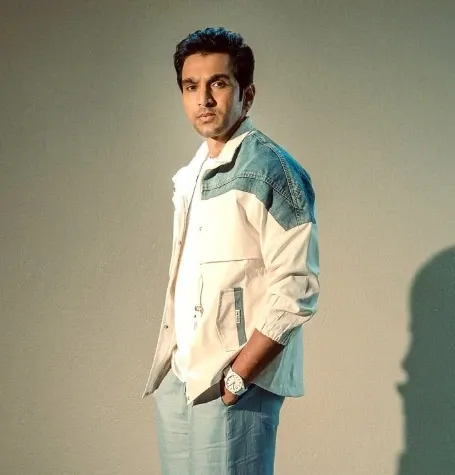
'Raakh' co-director Sandeep Saket on language and 1970s India detail

Synopsis
Raakh co-director Sandeep Saket reveals that language is not just dialogue in the show — it is a deliberate layer of period authenticity anchoring the series in late-1970s India, a decade whose political and social textures demand more than set design to recreate convincingly.
Key Takeaways
Sandeep Saket , co-director of 'Raakh' , has spoken about the role of language in building the show's period authenticity.
The series is set in India in the late 1970s , a politically and socially charged era.
Saket described language as a distinct storytelling layer, not merely background detail.
Period-accurate dialogue is central to the creative approach behind 'Raakh' .
Sandeep Saket, co-director of the recently released series 'Raakh', has opened up about the meticulous linguistic choices that shape the show's authenticity, explaining how language functions as a distinct storytelling layer in a narrative set in late-1970s India.
Language as a Character
Saket has described how the dialogue and vocabulary used in 'Raakh' are carefully calibrated to reflect the idiom and cadence of the era. Period-accurate language, he noted, does more than set the scene — it embeds the audience in a specific social and political atmosphere that visual design alone cannot achieve. The series, set against the backdrop of India in the late 1970s, draws on the linguistic textures of that decade to deepen its dramatic weight.
The Period Setting and Its Demands
Recreating late-1970s India on screen is a layered undertaking. The period sits at a politically charged juncture — the tail end of the Emergency and the churn that followed — making tonal and linguistic precision especially critical for credibility. Saket's attention to this detail signals an approach that treats language not as background dressing but as an active narrative tool.
About 'Raakh'
The series 'Raakh' has drawn attention since its release for its period setting and production design. Saket serves as co-director on the project, and his public commentary on the creative process offers a rare behind-the-scenes perspective on how the team approached historical verisimilitude. Further details about the cast, platform, and full creative team have not been specified in available information.
What to Watch
As 'Raakh' continues to reach audiences, the conversation around its craft — particularly its use of period-specific language — is likely to grow. Saket's insights suggest the series was built with a deliberate, research-backed sensibility that sets it apart from more surface-level period productions.
Point of View
Where period dramas are increasingly held to a higher research standard. Yet the conversation around craft often remains surface-level in promotional cycles — Saket's focus on vocabulary and idiom as active storytelling tools is a more substantive claim than the usual 'we did extensive research' line. Whether the series delivers on that promise is a question audiences and critics are best placed to answer, but the intent itself is worth noting in a landscape where period aesthetics frequently outpace period accuracy.
NationPress
24 Sept 2026
Frequently Asked Questions
What is 'Raakh' about?
'Raakh' is a recently released series set in India during the late 1970s. It has drawn attention for its period setting and its co-director Sandeep Saket's deliberate use of era-specific language as a storytelling device.
Who is Sandeep Saket?
Sandeep Saket is the co-director of the series 'Raakh'. He has spoken publicly about the linguistic and period-detail choices that shape the show's authenticity.
Why does language matter in 'Raakh'?
According to co-director Sandeep Saket, language adds a distinct layer of detailing that anchors the series in late-1970s India. Period-accurate dialogue helps embed the audience in the social and political atmosphere of the era beyond what visual design alone can achieve.
What period does 'Raakh' depict?
'Raakh' is set in India in the late 1970s, a decade marked by significant political upheaval including the aftermath of the Emergency period. The creative team has cited this context as central to the show's tone and language choices.